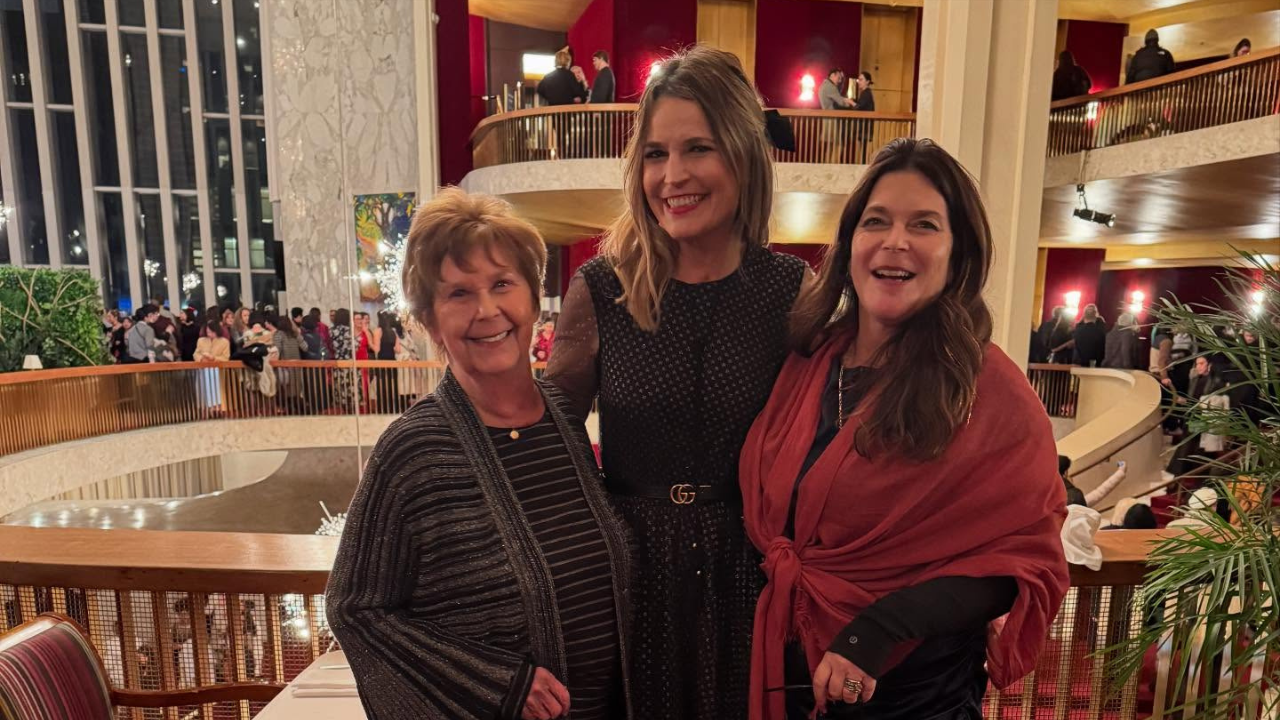
Former detectiveChris McDonoughis examining whetherSavannah Guthriemay have received'wrong information'from her sister Annie in the chaotic hours after their mother, Nancy Guthrie, was allegedly taken from her Arizona home on 1 February.
The line of questioning has added fresh scrutiny to how some of the earliest details in the case were relayed and repeated. It also shifts attention back to the confusion of the first few hours, when family members were trying to work out what had happened.
Nancy Guthrie, 84, was reported missing on 1 February from her home in the Catalina Foothills near Tucson. Authorities believe she was taken from the property the previous night. The case drew immediate national attention because Nancy is the mother of TODAY anchor Savannah Guthrie. It also intensified after FBI footage appeared to show a masked intruder at the house. The Pima County Sheriff's Department has since said the investigation remains ongoing. It has also stated that no members of the Guthrie family are suspects.
The latest doubts were aired on McDonough's true crime programmeThe Interview Room, where he and his guests examined the first hours after Nancy Guthrie's disappearance. Much of the discussion focused on the information Savannah has said she received from Annie.
One speaker pointed toSavannah's televised account, in which she said she called local hospitalsto see whether her mother had been admitted, while also saying Annie had already made the same calls. The panellist questioned why both sisters would need to repeat the same task.
Another contributor went further, openly questioning the reliability of the information Savannah had been given. 'We don't know if any of the information she's providing is accurate,' the speaker said, before asking where Savannah had got details such as the wallet and phone supposedly being at the house.
In that panellist's view, much of Savannah's early public account was 'merely supposition' based on information that had likely come from Annie. The panel also challenged some of the language used in coverage of the case.
One contributor objected to the word 'pandemonium' being used to describe the atmosphere after Nancy's disappearance. The concern was that emotionally loaded language can blur the distinction between verified fact and dramatic shorthand.
Clinical psychologistDr Gary Brucato, co founder of the Cold Case Foundation, tried to place those doubts in a wider context. Drawing on research into witness memory, he said people often recall events differently in the moment from how they later reconstruct them in interviews or court.
He argued that witnesses can appear calmer and more organised in hindsight than they actually were at the time. In a case like this, where so much of the early timeline comes from family accounts, that gap can matter.
Source: International Business Times UK