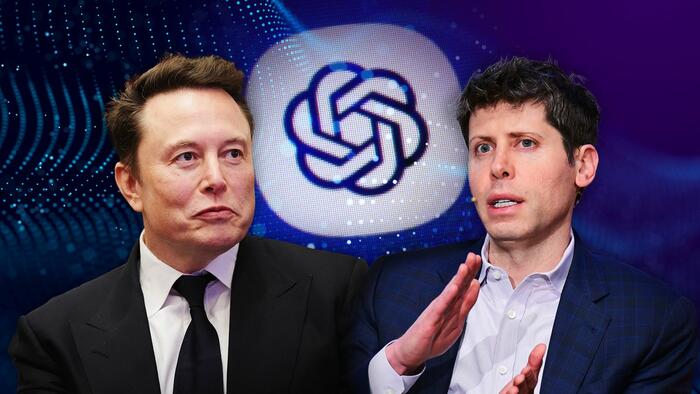
A courtroom victory for Elon Musk in his high-stakes federal trial against Sam Altman and OpenAI would deliverone of the most disruptive blows to the artificial intelligence sectorin its brief but explosive history- potentially forcing the $850-billion-plus company to unwind its for-profit empire, ousting its top leaders, and handing Musk a symbolic and financial hammer to reshape the global race for AGI while weakening one of its fiercest competitors.
The case is now being argued in a federal courtroom in Oakland, before Judge Yvonne Gonzalez Rogers.The trial opened on April 28 and entered its second week on Monday, when OpenAI president Greg Brockman took the stand and confirmed his personal stake in the company is worth roughly$30 billion. Musk's counsel returned to the figure more than a dozen times in two hours of questioning.
Musk co-founded OpenAI in late 2015 as a nonprofit and contributed roughly $38 million in its early years. He left the board in 2018. The following year, OpenAI created a capped-profit subsidiary to attract the capital that frontier AI now requires; Microsoft has since invested more than $13 billion. ChatGPT launched in November 2022. By 2025, OpenAI was preparing for what would have been one of the largest initial public offerings in history.
Musk sued in 2024. The original complaint contained twenty-six claims; only two survive - breach of charitable trust and unjust enrichment - whilethe fraud claims weredismissedbefore trial.Microsoft is named as a co-defendant for allegedly aiding and abetting the breach, a detail often elided in summary coverage.
The remedies sought are unusually sweeping. Musk wants OpenAI's for-profit structure unwound and its assets returned to the nonprofit foundation. He wants Sam Altman and Brockman removed from leadership. And he is seeking up to$150 billionin damages from OpenAI and Microsoft combined, with any award flowing directly to OpenAI's charitable arm rather than to Musk personally.
Judge Gonzalez Rogers has bifurcated the proceedings into aliability phase, expected to conclude around May 21, and a separate remedies phase that would follow only if the defendants are found at fault.Anine-person jurysits during liability alone, and its verdict is advisory. Structural remedies - including any order to dissolve the for-profit subsidiary - fall solely to the judge.
This procedural detail matters more than it may appear. Coverage that casts the jury as the decisive actor misreads the case. The jury can shape narrative momentum and offer a finding the judge may weigh, but it cannot order OpenAI to unwind anything. Whatever the verdict, Gonzalez Rogers writes the remedy.
Setting aside the $150 billion headline - which is a ceiling, not a floor, and is divided across defendants - three concrete consequences would follow a substantive ruling against OpenAI.
The first is restructuring.A finding that the 2019 capped-profit conversion and its 2025 successor breached a charitable trust would, at minimum,force a reorganization placing the nonprofit foundation back in unambiguous control. The IPO would be delayed indefinitely, if not foreclosed. Investor returns would be capped or rewritten.Microsoft's roughly $13 billion stake, and the larger commitments that followed from Amazon, SoftBank, and Nvidia, would all face revaluation.
The second is leadership.Musk's complaint seeks the removal of Altman and Brockman. Whether the court orders that remedy in full is uncertain; partial governance reform is the likelier outcome. Either way, the result would be destabilizing for an organization whose competitive position rests substantially on the people at the top of it.
Source: ZeroHedge News
