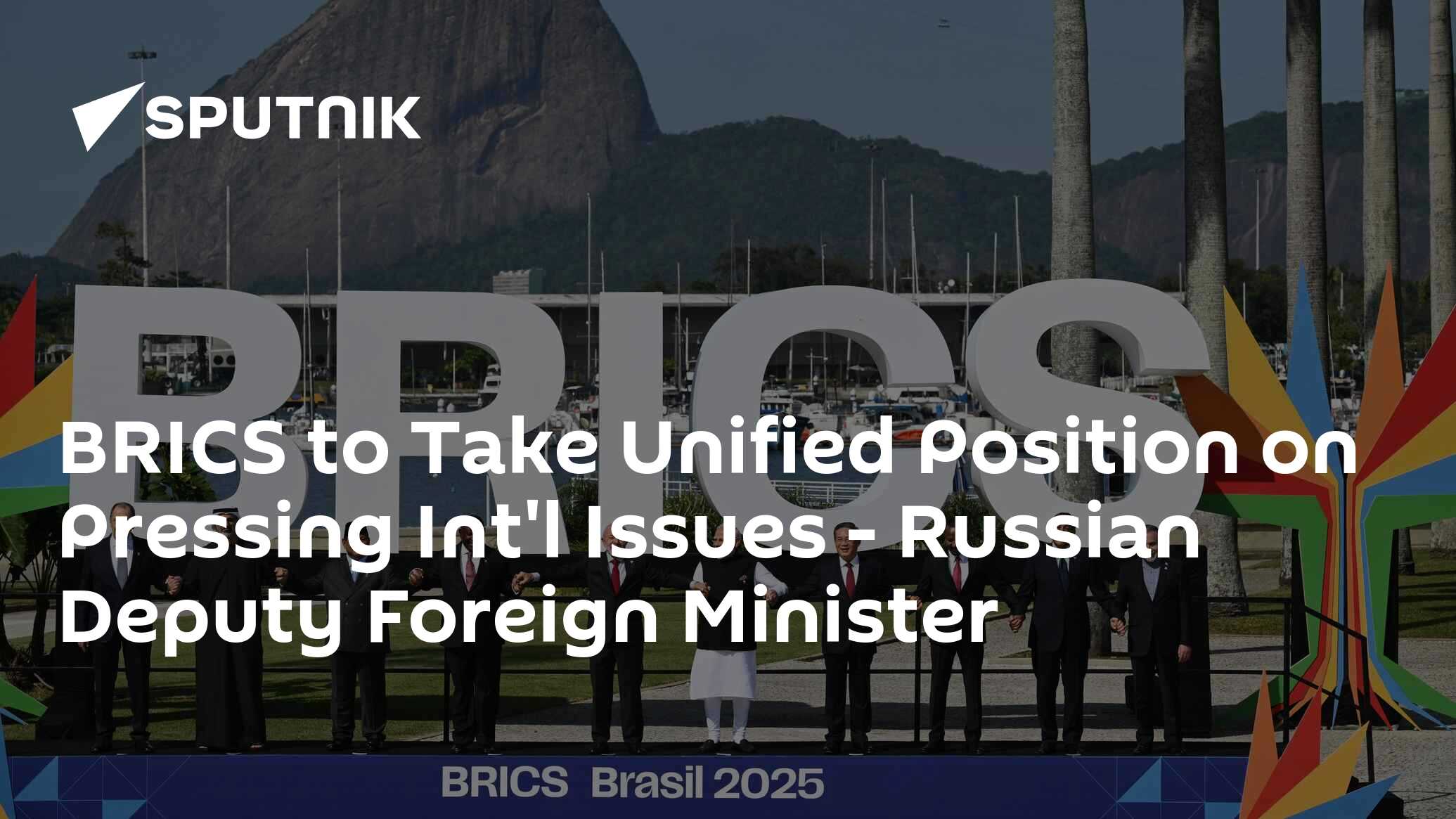
In a bold assertion amid escalating global tensions, Russia's Deputy Foreign Minister announced that the BRICS bloc—now encompassing Brazil, Russia, India, China, South Africa, Egypt, Ethiopia, Iran, and the United Arab Emirates—will forge a unified stance on critical international issues. Speaking at a high-level forum in Moscow, the official emphasized the group's determination to counter Western dominance and promote a multipolar world order, signaling a potential shift in global power dynamics.
The statement comes ahead of the upcoming BRICS summit, where leaders are expected to address flashpoints including the Ukraine conflict, Middle East instability, and economic sanctions imposed by the United States and its allies. Russian diplomats have long advocated for coordinated positions within BRICS to amplify the voices of the Global South, particularly on matters like reforming the United Nations Security Council and challenging the supremacy of the U.S. dollar in international trade.
BRICS, originally formed in 2009 as an economic counterweight to G7 nations, has evolved into a geopolitical powerhouse representing over 45% of the world's population and nearly 30% of global GDP. Recent expansions have bolstered its influence, with new members bringing diverse strategic assets—from Iran's oil reserves to Ethiopia's African gateway status. This unity is seen as a direct response to perceived Western aggression, including frozen Russian assets and exclusion from global financial systems.
Analysts interpret the deputy minister's remarks as a strategic pivot, potentially leading to joint initiatives such as a BRICS payment system to bypass SWIFT and increased de-dollarization efforts. While internal differences persist—India's neutral stance on Ukraine contrasts with China's assertive South China Sea claims—the bloc's growing cohesion could reshape alliances, pressuring NATO and the EU to recalibrate their approaches.
Critics in Western capitals dismiss BRICS cohesion as aspirational, pointing to economic disparities and political divergences. Yet, with trade volumes surging and infrastructure projects under the New Development Bank thriving, the alliance's momentum appears undeniable. As the deputy minister put it, "BRICS is not just an economic club; it's a platform for sovereign nations to defend their interests collectively."
