Iran has launched a new body called the Persian Gulf Strait Authority, requiring all ships wishing to cross the Strait of Hormuz to register, fill out forms, and pay a toll before receiving a transit permit. The move represents Tehran's most formalised attempt yet to assert sovereign governance over a waterway that carries roughly 20 per cent of the world's seaborne oil trade.
Under the new system, vessels intending to transit the strait receive an email from an address associated with the Persian Gulf Strait Authority, informing them of the passage regulations. 'Ships intending to transit the Strait of Hormuz [will] receive an email [email protected], informing them of the transit regulations of the Strait of Hormuz. They then adjust themselves to this framework and receive a transit permit,' astatementattributed to the PGSA said. The authority's logo, bearing the name 'Persian Gulf Strait Authority — Islamic Republic of Iran,' was also shared publicly on social media on 5 May 2026.
The PGSA did not emerge in a vacuum. Merchant ships had already been trickling through the Strait of Hormuz as the Islamic Revolutionary Guards Corpsset upa tolled passageway in an earlier attempt to control the vital waterway, with ships navigating around Iran's Larak Island rather than through the previously standard international corridor.
Iranian lawmakerAlaeddin Boroujerdihad already confirmed the toll practice in late March, stating that 'now, because war has costs, naturally, we must do this and take transit fees from ships passing through the Strait of Hormuz.' The formalisation of that system through the PGSA now gives it an institutional face.
Iranian state media had previouslyreportedon plans to continue charging transit fees to some ships, making it lucrative for Iran to try to retain control of the waterway. The PGSA appears to be the formal realisation of those plans.
⚡️BREAKINGIran has launched the Persian Gulf Strait AuthorityShips must contact this authority, fill out the necessary forms, and pay the tollThey will then receive an email and permission to pass through the Strait of Hormuz - Tasnimpic.twitter.com/rUPcmief0w
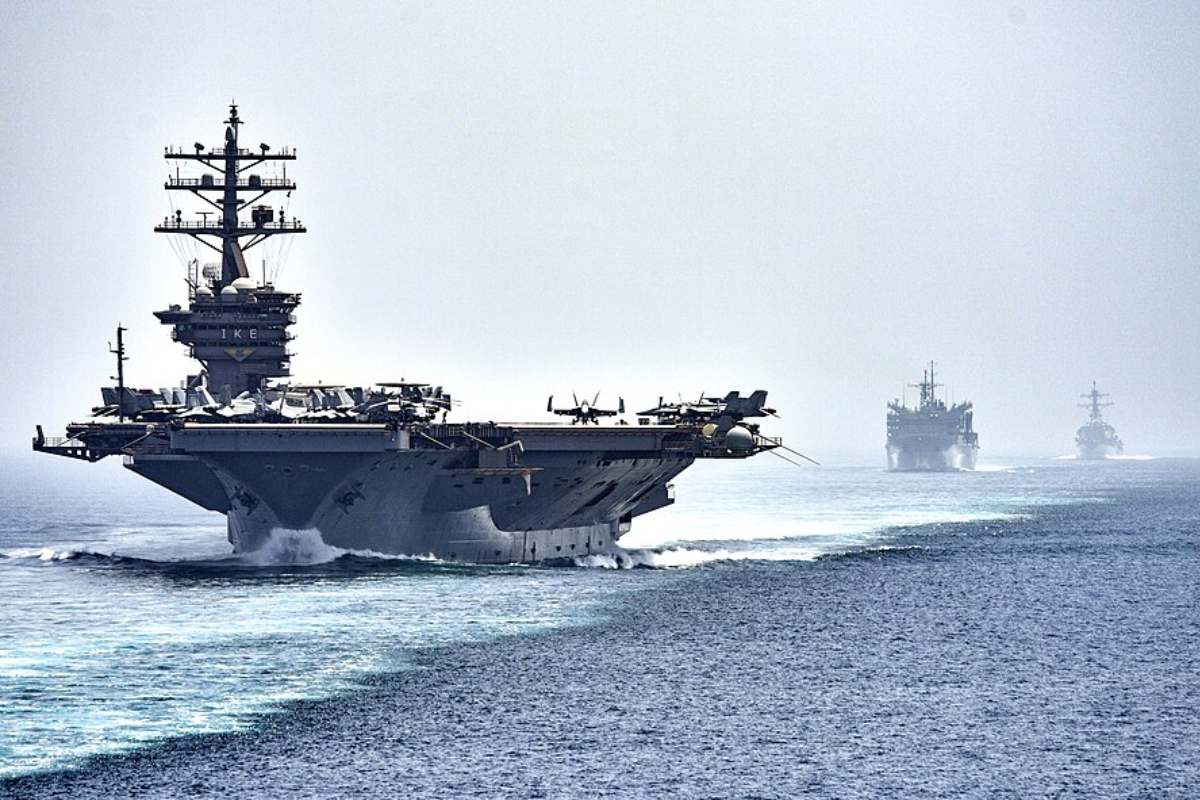
Iran's claims of a policy shift came on the heels of President Donald Trump's Project Freedom, which aims to force Iran to open the strait. On 4 May, the US Navy began escorting neutral vessels through Hormuz as part of the initiative, withtwoAmerican-flagged merchant ships successfully completing the transit. The US military said it fired on Iranian forces and sank six small boats targeting civilian ships as it moved to reopen the strait.
The dual moves — Tehran launching a permit authority and Washington deploying naval escorts — place both powers in direct and simultaneous competition over who controls passage through the 34-kilometre-wide chokepoint. The US has warned shipping companies that they could facesanctionsfor paying Iran for transit of the Strait.
The strait's two unidirectional sea lanes facilitate the transit of around 20 million barrels of oil per day, representing roughly20 per centof global seaborne oil trade, primarily from producers like Saudi Arabia, the United Arab Emirates, Iraq, and Qatar.
Before the United States and Israel launched their attacks on Iran in late February, about3,000vessels typically passed through the Strait of Hormuz each month. But since the war began, traffic has been reduced to a trickle, with just 191 vessels recorded crossing in the entire month of April.
Source: International Business Times UK
