For almost two decades, British retailers have told customers that if they were born after the current date 18 years ago, they can’t buy cigarettes. Starting next year, that date will freeze. Under arecently passed law, selling cigarettes to anyone born on or after January 1, 2009, will be illegal—in perpetuity. As long as the law is in effect, no one who is 17 or younger on New Year’s Day 2027 willeverbe allowed to buy tobacco legally.
This generational tobacco ban represents a very different approach from the tobacco-control policy that most Americans are used to. The U.S. regime looks more like what the drug-policy scholar Mark Kleiman called “grudging toleration” toward cigarettes: tax, regulate, and scold, but stop short of outright bans. The new British approach will, eventually, lead to outright prohibition.
Prohibition.The word conjures the specter of violence, crime, and policy failure. But the United Kingdom isn’t the first jurisdiction to impose a generational ban, and it probably won’t be the last. The tiny island nation of the Maldives did so in November. New Zealand passed one in 2022, but a new governing coalition took power and repealed the law before it could go into effect. Here in the United States,22 townsin Massachusetts, beginning with the Boston suburb of Brookline, have passed a generational ban, a possible precursor to statewide legislation.
Conor Friedersdorf: The U.K. smoking ban is illiberal
The spread of such prohibitions raises the counterintuitive possibility that tobacco bans are in fact aconsequenceof grudging toleration, rather than a departure from it. Decades of legal intolerance have steadily eroded the user base and cultural support that justified legality in the first place. Stigmatizing smoking, in other words, seems to have created the basis for an outright ban. That dynamic has implications not just for tobacco, but for the many addictive products now dominating a growing share of our economy, including social-media and gambling apps. As addictive designs grow more and more common, prohibition might come back into style.
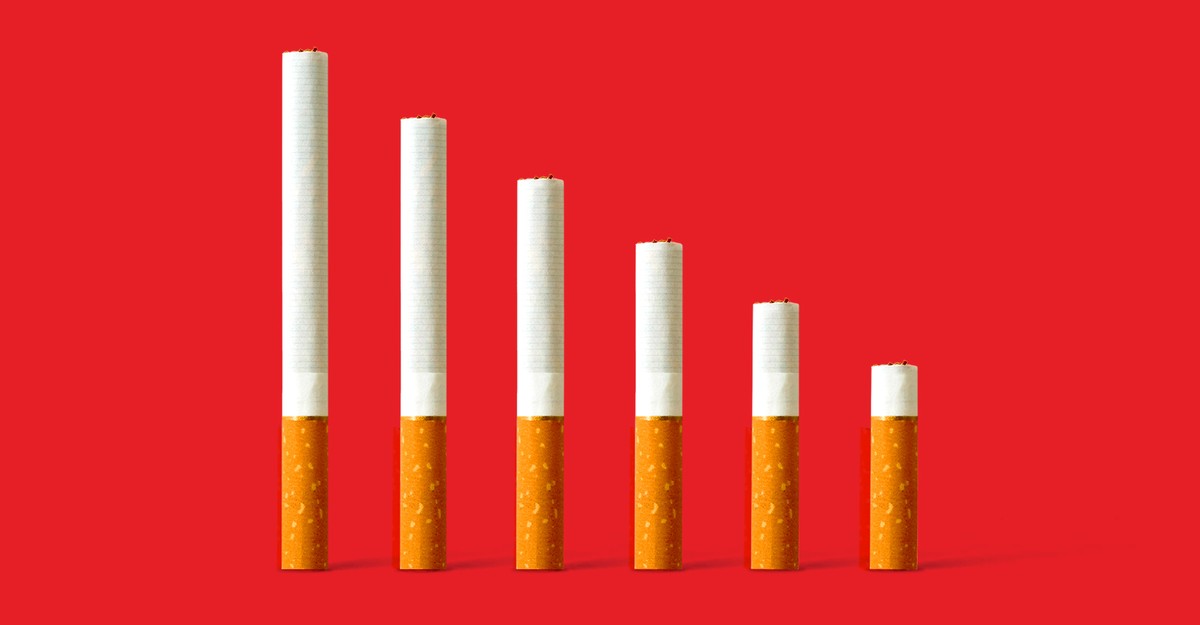
A crackdown on cigarettes has certainly been a long time coming. As late as 1974, at least 40 percent of Americanswere smokers. But that figure declined steadily over the next half century. Today, just one in 10 Americans is a smoker.
Policy changes helped create that cultural shift. In 1964, the surgeon general publicly warned that smoking causes cancer; advertising bans and mandatory labels soon followed. After that came “clean air” laws and municipal smoking bans and then, in the late 1990s, the $200 billion settlement between tobacco companies and the states.
Throughout this process, American policy makers did everything short of actually banning cigarettes themselves. Instead of prohibiting them, we took a “public health” middle ground, allowing people to indulge their vice if they chose to, while heavily discouraging smoking and proscribing who could buy cigarettes and where they could do so.
To an extent, this worked. But smoking still kills roughly half a million Americans a year, nearly seven times as many as those who die from a drug overdose. Death is a trailing indicator, and the decline in the smoking population should eventually mean fewer deaths. But even in 2035,one analysis found, more than 160,000currentsmokers are projected to die from their habit.
At this point, the returns on public-health messaging and social stigma might be bottoming out. Does anyone still smoking Marlboros not know by now that cigarettes can kill them? But precisely because of the success of policies that stopped short of prohibition, the constituency of voters who would oppose a ban has dwindled. Indeed, a 2023 poll found that a majority of Americans wouldsupportbanning all tobacco products. Legal stigmatization produced cultural judgment that, in turn, may eventually acquire the force of law.
Source: Drudge Report