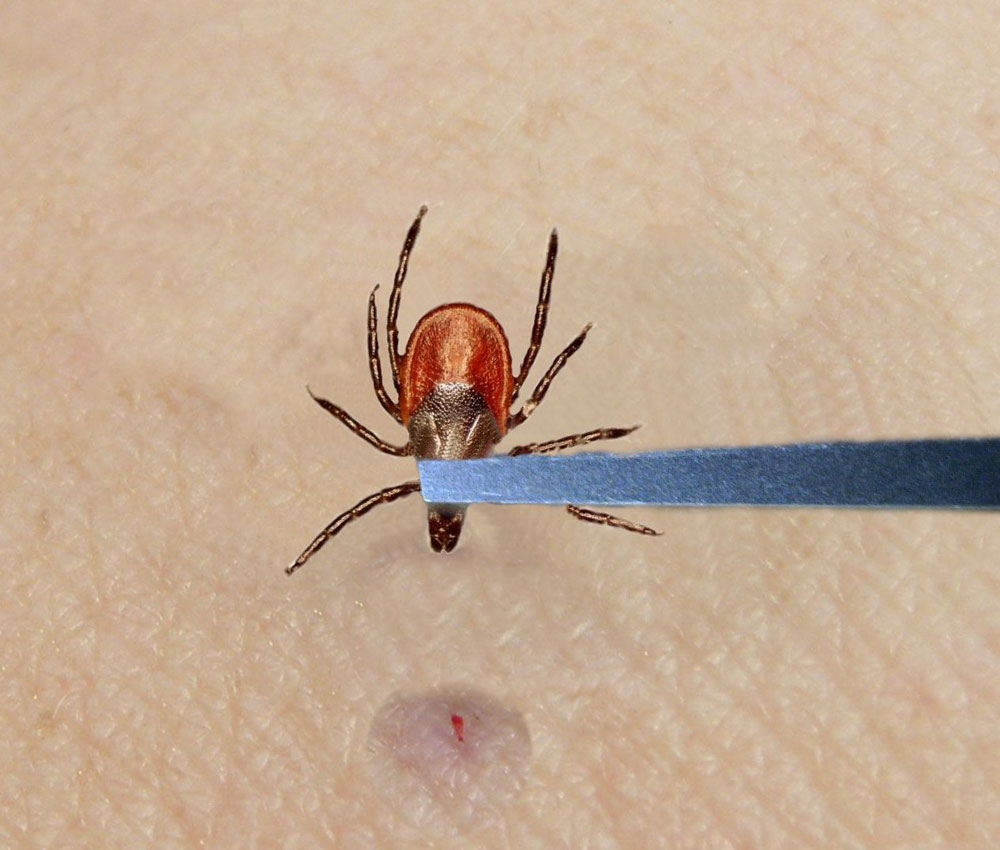
A cold, snowy winter may be driving a spike in tick bites across the Northeast, experts say, as the same conditions that buried Long Island in snow helped more ticks survive into spring.
Emergency departments are now seeing the impact, with bites reaching their highest levels for this time of year in nearly a decade, according to an April 23 release by the Centers for Disease Control and Prevention.
“Snow can actually be a protectant for ticks. It protects them from the cold and from dryness,” Dr. Andrew Handel, a pediatric infectious diseases specialist at Stony Brook Children’s Hospital, told The Suffolk Times. “So that insulating barrier can actually allow greater number of ticks to survive over the winter and then when temperatures warm up, to become active.”
Tick bites accounted for 183 out of every 100,000 emergency room visits in the Northeast this April,according to the CDC’s Tick Bite Data Tracker. That’s a sharp jump from 131 visits per 100,000 at the same time last year.
Dr. Handel said most of the cases he’s seeing involve lone star ticks and deer ticks — both common on Long Island.
He urgedresidents to checkthemselves and their children carefully after spending time outdoors, especially in areas the arachnids tend to hide: along the hairline, behind the ears, around the waist and in skin folds.
If bitten, the best way to remove it is to use tweezers, grab the tick as close to the skin as possible and firmly pull straight up. Once it is removed, Dr. Handel advised patients to place it in a sealed bag so that a medical provider can identify it and the kinds of infections they could be at risk of.
He warned against using matches to try and burn ticks off or smothering them in various solutions.
“It can do more harm than good,” Dr. Handel said.
It’s still early to tell if the increase in tick bites correlates with an increase in tickborne infections, as they typically occur weeks after the tick bite, he added.
Source: The Suffolk Times