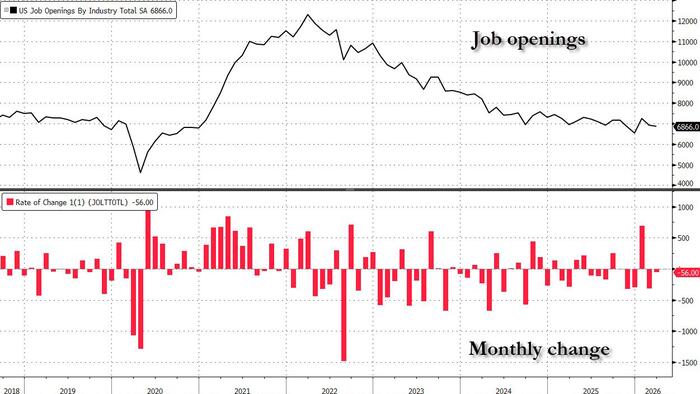
Two months ago, the BLS reported that January job openings unexpectedly soared by 400K, the biggest increase since November 2024, to 6.946MM, the highest since last October. Then,one month laterit turned out the jump was even higher than that when the BLS published the February JOLTS print, when we learned that the January job print was revised massively higher by another 300K to 7.240MM from 6.946MM, a surge of 690K and the biggest since 2022; February job openings however promptly tumbled back to 6.882MM, or just shy of the 6.890MM estimate. Fast forward to today when we just got the latest, March, job openings print which saw another modest drop, sliding from the upward revised February print of 6.922MM to 6.866MM, or practically in line with estimates of 6.850MM.
According to the BLS, the number of job openings plunged in professional and business services (-318,000) but increased in finance and insurance (+98,000). There were also increases in Private Education and Health services, Construction and Manufacturing jobs, offset by a modest drop in Leisure and Hospitality.
Meanwhile, the slid in government and federal job openings continues.
The modest drop in March job openings, coupled with the bigger drop in unemployed workers means that there were 373Kfewerjob openings than unemployed workers in March, an improvement from the 649K in February.
It also means that after rising back to 1.0x in January, in March the ratio of job openings to unemployed dropped back to 0.9x where it has generally been since last summer.
But while the job openings number was largely in line with expectations, recent revision gimmicks notwithstanding, the real surprise in this month's print was the number of Quits and Hires, both of which surged from 6 year lows.
The number of hires soared to 5.554 million (+655,000) and the rate increased to 3.5% in March, more than offsetting decreases in those measures the previous month. The number of hires increased in transportation, warehousing, and utilities (+108,000), and edged up in professional and business services (+165,000) and in accommodation and food services (+124,000). Hires decreased in federal government (-7,000).
As for quits, in March the number of quits also jumped, if less forcefully, by 125K to 3.171MM, led by quits in real estate and rental and leasing (+19,000).
Putting the hiring surge in context, the 655K increase in March hires was the best month since +4.1 million print recorded in April 2020 in the aftermath of the covid crisis, and the second highest ever. Stripping away the one-time covid shock, March was a record month for hiring which in light of everything else in the economy, does not really make much sense.
Since this number feeds directly into the payrolls calculations (after netting out separations) this explains why the March payrolls report was so much stronger (178K) than expected.
Source: ZeroHedge News