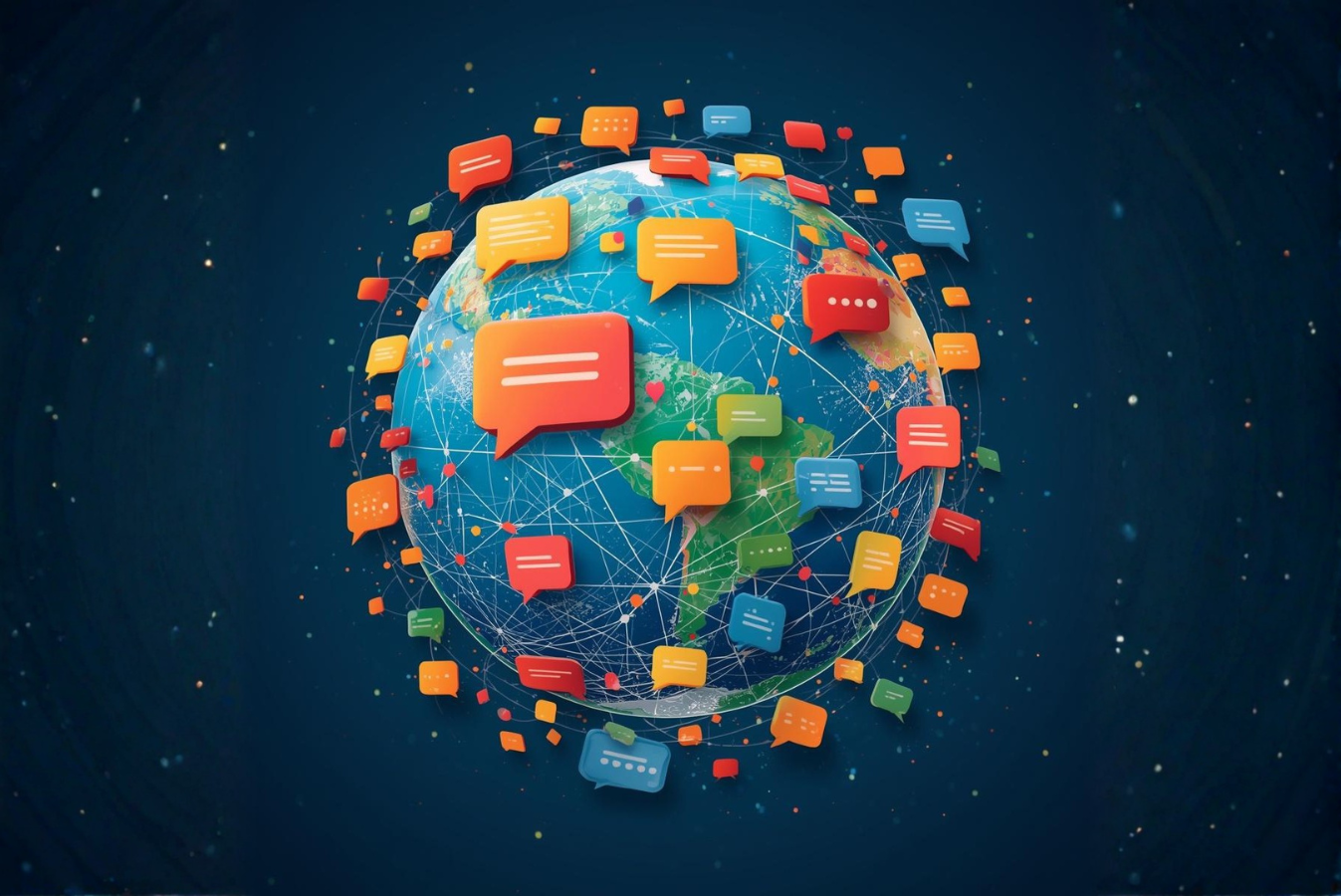
In a coworking space in Jakarta, a marketing manager opens an email from a Polish software company she has never heard of. The product is what her team has been searching for. She has a question. She sends it. A reply arrives in Bahasa Indonesia eleven minutes later, in a tone that sounds like a real person who works at the company and understands her market. She converts. The Polish company books a deal it would not have known existed two years ago.
Multiply that scene by a few thousand, run it across a dozen languages and as many countries, and you have whatMikhail Antipkindescribes as the most underreported business story of 2026.
'Mid-market companies are going global right now in numbers that nobody is tracking', said Antipkin, the founder of Vivo Chat and chief executive of an international technology group with offices in Hong Kong, Dubai, Limassol, and London. 'They are doing it without doing any of the things you used to have to do. No Asia office. No regional sales hire. No translation agency. They are just, quietly, suddenly present in markets that were closed to them last year.'
For most of the past three decades, going international meant one of two things. Either you were Coca-Cola, with the capital to open a regional headquarters in every meaningful market, or you were not, in which case you stayed home and told yourself the domestic market was big enough. The middle path almost never existed. A 200-person British software company that wanted to sell into Brazil faced a wall of fixed costs that had nothing to do with the product. Local language support. Local hours. Local payment methods. Each one solvable in isolation, all of them together prohibitive.
Antipkin, who has run companies on four continents, watched this dynamic play out for fifteen years before he became convinced something was about to change.
'The math was always wrong for the mid-market', he said. 'You had to spend six figures to find out whether a market wanted you. Most companies could not justify that, so they did not try, and the markets stayed unserved. It was not a failure of demand. It was a failure of access.'
What changed, in Antipkin's reading, is the cost of being present in a market without physically being there. A unified messaging platform with an AI agent layer can now answer a customer in fluent Bahasa Indonesia at three in the morning Jakarta time, in the company's brand voice, with full context on the customer's history, for a fraction of what it would cost to staff a single support seat in any country. The same agent can handle Vietnamese the next minute, Portuguese the minute after that, and Arabic the minute after that.
The eleven-minute response time in the Jakarta scene above is a number Antipkin tracks because it decides whether a customer in a foreign market converts or moves on.
'Foreign customers are testing you', he said. 'They are asking themselves whether you are real, whether you take them seriously, whether you are worth the risk of a credit card from a country you have never heard of. Eleven minutes says yes. Eleven hours says no. The technology has finally caught up to the difference.'
Asked which businesses are taking advantage of the shift, Antipkin offered a list that does not look like a venture capital portfolio. 'It is not the AI startups', he said. 'It is a Czech company that makes specialty machine parts. It is an Egyptian skincare brand. It is a Greek olive oil exporter that opened up Korea this year and is now doing more revenue there than in any European market. None of these companies are sexy. None are getting written about. All of them are winning the global expansion story of 2026, and most of them did not exist outside their home markets eighteen months ago.'
Source: International Business Times UK
