The fight for control of the Strait of Hormuz flared up Monday and into the overnight hours, with IRGC forces reportedly striking multiple commercial vessels and a UAE oil refinery.
The one positive development: with U.S. forces on heightened alert, two U.S.-flagged merchant ships successfully transited the maritime chokepoint asProject Freedombegan, marking the first visible move by the U.S. Navy to unfreeze the world's most critical energy corridor.
U.S. Central Command, or CENTCOM, said its aerial assets in the Hormuz area were busy on Monday, with helicopters and other aircraft combating IRGC forces to ensure the safe transit of the two ships.
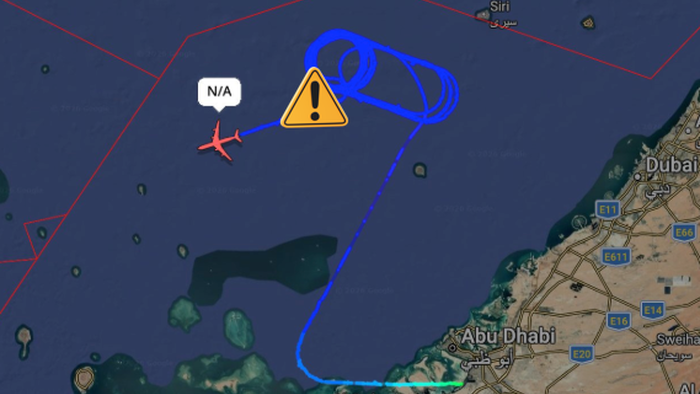
Flight-tracking websiteFlightradar24reported early Tuesday that a U.S. Air Force Boeing KC-135 Stratotanker, a military aerial-refueling aircraft, squawked "7700" after operating in a tight pattern near the Hormuz chokepoint.
"A U.S. Air Force KC-135 is squawking 7700, flying in the direction of Doha," Flightradar24 wrote on X.
A US Air Force KC-135 is squawking 7700 flying in the direction of Doha.https://t.co/wxldcwLX1gFor more information on ‘Squawking 7700’ please seehttps://t.co/nW7vZ4JgMFpic.twitter.com/AYffNcZGKt
Flightradar24 had no additional information on why the KC-135 crew squawked 7700. Some possible reasons include:
Separate but notable, UBS analyst Dominic Ellis provided clients with energy market commentary following the overnight Hormuz chaos:
Brent Down From Intraday Highs, Though Up 7% Relative To Monday's Low The fragile ceasefire in the Persian Gulf seems to be on the verge of collapse after Iran responded to Project Freedom, the US effort to restart transit through the Strait of Hormuz, by launching attacks on commercial vessels and energy infrastructure in the region.
Brent is down from the intraday high over $114/b but remains close to $113/b, up almost 7% relative to Monday’s low.
Source: ZeroHedge News
