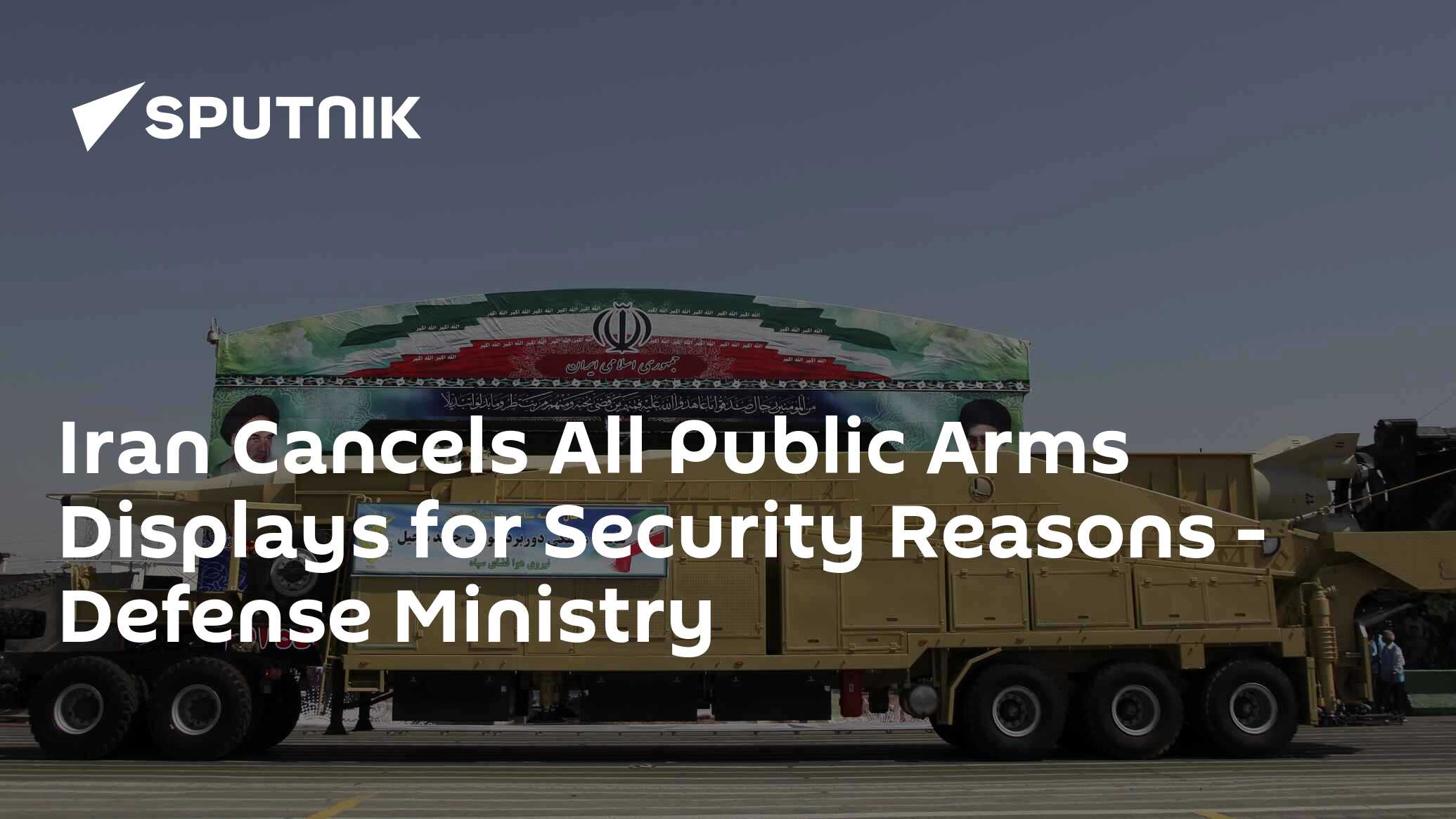
In a surprise move amid escalating regional tensions, Iran's Defense Ministry has announced the cancellation of all public arms displays nationwide, citing unspecified security concerns as the primary reason. The decision, revealed through an official statement on state media, comes just weeks before traditional military parades scheduled for National Army Day on April 18. Military officials emphasized that the move is precautionary, aimed at safeguarding national assets and personnel from potential threats.
The ministry's directive halts not only large-scale parades in Tehran but also regional exhibitions and air shows featuring Iran's domestically produced missiles, drones, and fighter jets. These events have long served as showcases for Tehran's military prowess, often unveiling new hardware like the hypersonic Fattah missile or upgraded Shahed drones amid chants of defiance against Western sanctions. Insiders suggest the cancellation stems from intelligence reports of heightened sabotage risks, possibly linked to Israeli covert operations that have intensified since the October 2023 Hamas attack on Israel.
Historically, Iran's public arms displays have been a cornerstone of its revolutionary rhetoric, blending national pride with deterrence signaling. Parades dating back to the 1980s Iran-Iraq War era have evolved into high-tech spectacles, with goose-stepping troops and flyovers underscoring Tehran's self-reliance under sanctions. Last year's event featured mock strikes on mockups of U.S. carriers, drawing international scrutiny and vows of retaliation from adversaries. This year's abrupt halt marks a rare deviation, last seen during the COVID-19 peak in 2020.
Geopolitical analysts view the cancellation as a tacit admission of vulnerability, potentially signaling internal reassessments within Iran's military command. With Israel conducting airstrikes on Iranian assets in Syria and proxy groups like Hezbollah facing setbacks in Lebanon, Tehran may be prioritizing covert defenses over public bravado. U.S. officials, speaking off-record, interpret it as a de-escalatory gesture ahead of renewed nuclear talks, though Iranian hardliners have dismissed such notions, framing it as tactical prudence.
The move ripples beyond Iran's borders, affecting perceptions of its support for regional militias. Allies in Yemen's Houthis and Iraq's Popular Mobilization Forces have relied on these displays for morale boosts and tech transfers. Domestically, state media has spun the news positively, highlighting cyber defenses and underground facilities as the new face of strength. As Iran navigates sanctions, proxy wars, and nuclear scrutiny, the absence of parades underscores a shift toward opacity in an era of asymmetric threats.
