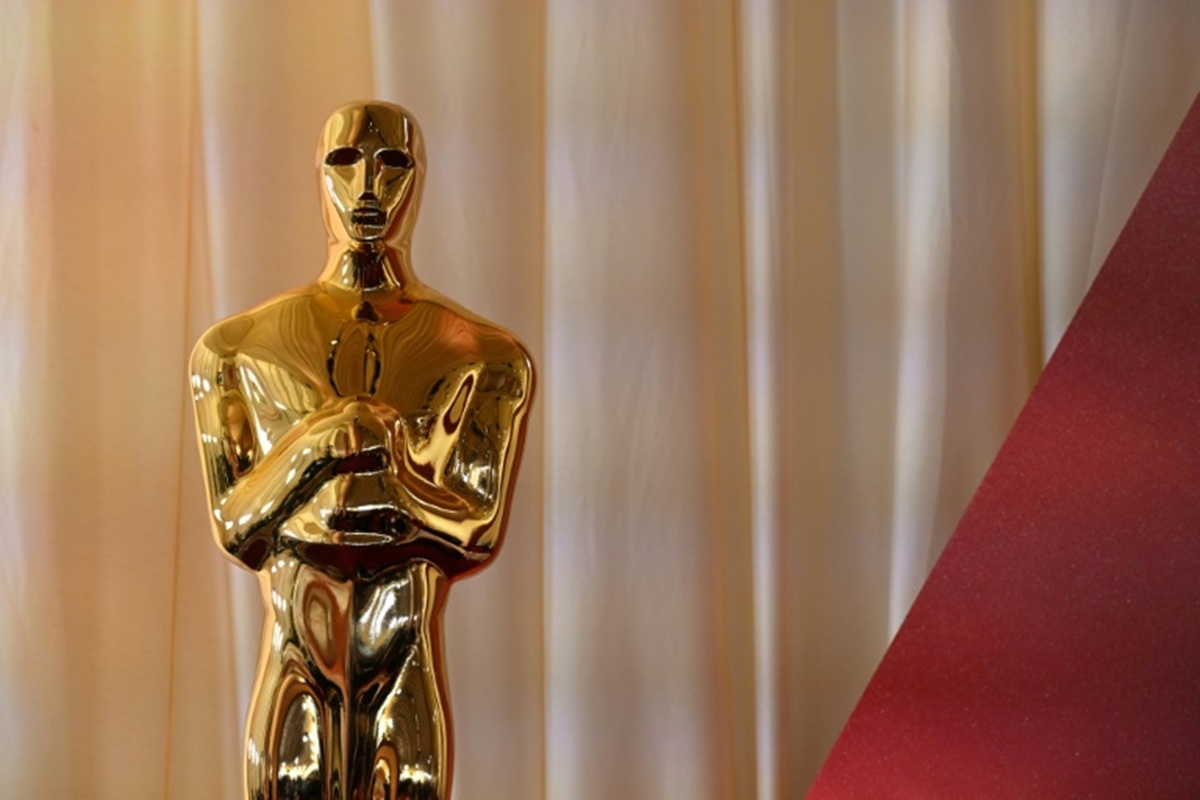
The Academy of Motion Picture Arts and Sciences, commonly known as The Oscars, has officially tightened its eligibility rules for the Academy Awards, declaring that artificial intelligence (AI)-generated performances and AI-written screenplays will not qualify for awards in major categories starting with the 2027 ceremony.
The decision marks one of the strongest institutional responses yet to the rapid spread of generative AI in filmmaking, reinforcing that Oscar recognition remains reserved for human creativity.
Under the updated rules, only performances 'demonstrably performed by humans with their consent' will be eligible for acting nominations, while screenplays must be 'human-authored' to compete in writing categories, according to theHollywood Reporter.
The Academy's stance effectively blocks synthetic actors and fully AI-generated scripts from winning Oscars, even as it allows limited use of AI tools in production.
The Academy clarified that filmmakers are still permitted to use AI in parts of the filmmaking process, such as visual effects, editing support, or early-stage creative development. However, the key requirement is that human authorship must remain central to any work submitted for consideration.
The rules also give the Academy the right to request detailed disclosures from studios about how AI was used in a film, particularly when determining eligibility in acting and writing categories. This includes assessing whether human involvement was substantial enough to qualify as creative authorship.
In practical terms, a film could use AI-assisted tools and still compete for Oscars, but it cannot present an AI-generated actor or a fully AI-written script as award-worthy.
The new policy arrives amidst ongoing tensions in Hollywood over the impact of AI on creative labour. The industry has been grappling with generative AI tools capable of producing scripts, replicating voices, and even recreating digital likenesses of actors.
Concerns intensified during the 2023 actors' and writers' strikes, where unions pushed for protections against studios using AI to replace human labour. More recently, demonstrations of AI-generated actors and digitally reconstructed performances have sparked debate about the limits of consent, ownership, and artistic authenticity. High-profile developments, includingAI-generated recreations of deceased performers, have further accelerated calls for clearer boundaries between human and machine-made performance.
In 2025, Hollywood actors expressed their outrage over AI-generated 'actress' Tilly Norwood, with the Screen Actors Guild-American Federation of Television and Radio Artists, or SAG-AFTRA, saying Norwood 'is not an actor, it's a character generated by a computer program that was trained on the work of countless professional performers'. The criticism was also supported by A-list stars, including Emily Blunt, Natasha Lyonne and Whoopi Goldberg.
Source: International Business Times UK
