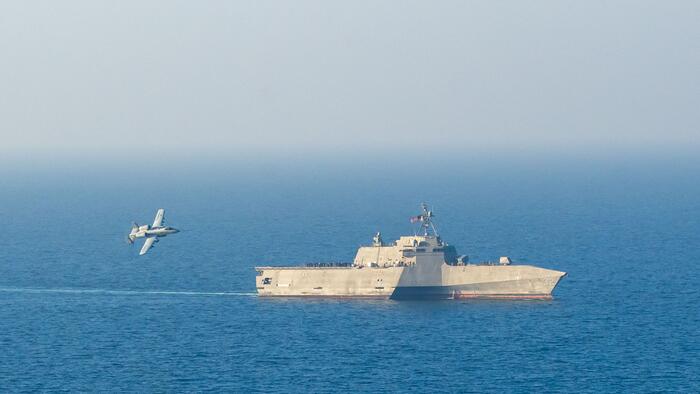
In a stark display of military prowess amid simmering tensions with Iran, the Pentagon orchestrated large-scale live-fire war drills in the Persian Gulf this week, involving U.S. Navy destroyers, fighter jets, and allied forces from the region. The exercises, dubbed "Eye on Iran," simulated defense against asymmetric threats including drone swarms and fast-attack boats—tactics frequently employed by Iranian-backed militias. Warships unleashed volleys of missiles and artillery, turning the strategic waterway into a thunderous proving ground as pilots screamed overhead in F-35 stealth fighters.
The drills featured the USS Abraham Lincoln carrier strike group alongside vessels from the United Kingdom and Bahrain, practicing interoperability in high-threat scenarios near the Strait of Hormuz, through which 20% of the world's oil flows. U.S. Central Command released footage showing precision strikes on mock targets, emphasizing the readiness to counter disruptions to global shipping lanes. Participants conducted over 100 live-fire engagements, honing skills in electronic warfare and anti-access/area denial countermeasures tailored to Iran's arsenal of ballistic missiles and speedboats.
This escalation in military posturing comes against a backdrop of heightened friction, following Iran's recent missile barrages on U.S. bases in Iraq and Syria in retaliation for strikes on its proxies. Tehran has repeatedly threatened to close the Strait of Hormuz, a chokepoint vital for energy markets, while its Houthi allies in Yemen continue disrupting Red Sea shipping. Pentagon officials described the maneuvers as routine but timed them deliberately to signal deterrence, with one spokesperson noting, "Our presence ensures freedom of navigation and protects our partners from coercion."
Iranian state media swiftly condemned the exercises as "provocative aggression," with Supreme Leader Ali Khamenei's office warning of a "crushing response" if U.S. forces encroach further. Analysts point to the drills as a calibrated message from Washington, bolstering allies like Israel and Saudi Arabia amid stalled nuclear talks. Yet, the optics risk miscalculation, echoing the 2019 tanker crisis when U.S.-Iranian brinkmanship nearly ignited open conflict.
Market watchers are on edge, with Brent crude spiking 3% in after-hours trading as the drills underscore vulnerabilities in global supply chains. Experts debate whether these shows of force will cow Tehran or embolden hardliners, potentially accelerating Iran's nuclear ambitions. As the U.S. navigates an election year and shifting alliances, the Persian Gulf remains a powder keg where a single spark could upend international stability.
