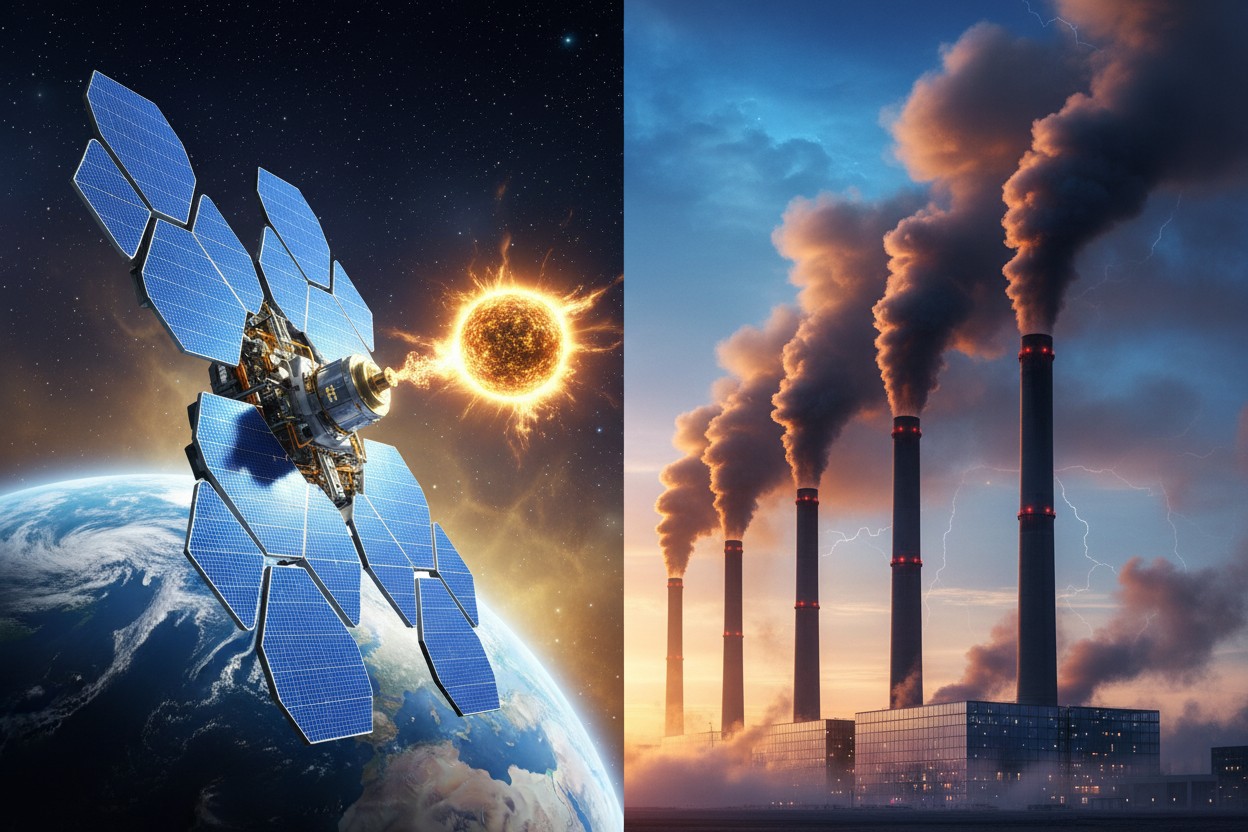
Google disclosed in its 2024 report that its carbon emissions rose 48 percent over five years, driven by the expansion of artificial intelligence. Officials acknowledged that the company's 2030 net-zero target may be out of reach "as we further integrate AI into our products."[1]The AI boom has created an energy demand surge that experts say will strain power grids and increase costs for consumers. The Washington Post reported last year that "AI's integration into almost everything⦠is fueling enormous demand."[1]In response, Big Tech firms signed a pledge in May to purchase or supply their own energy to buffer consumers from rising prices, according to OilPrice.com.[1]AI Energy Demand Strains Power Grids and Pushes Tech Firms to Seek New SourcesThe energy consumption of the AI sector remains uncertain but is expected to rise sharply as large language models expand, experts said. Data centers place unprecedented strain on local power grids, according to the Washington Post as cited by OilPrice.com.[1]Local officials across the United States have expressed concern. In March 2026, mayors warned that rapid data center construction could lead to blackouts and water shortages, according to a report by Petra Stone onNaturalNews.com.[2]In May, Big Tech firms signed a pledge to either purchase or provide their own energy supplies to power their data centers, according to OilPrice.com.[1]The Trump administration has also pushed tech giants to fund power plant expansion. A January 2026 report on NaturalNews.com stated that operators of the PJM Interconnection grid now require tech companies to "bring your own power" via on-site gas, coal, or nuclear plants.[3]Electricity prices in that region have spiked to 33 cents per kilowatt-hour, four times China's rate, threatening U.S. competitiveness.[3]OpenAI has called for the creation of a "North American Compact on AI" under which governments and companies would work together, according to a Trends Journal report.[4]Space Solar and Fusion Remain Long-Term Bets With Uncertain TimelinesOverview Energy, the startup partnered with Meta, aims to launch a pilot satellite by 2028. Proponents suggest space-based solar could become cost-competitive with other sources as early as 2040, according to OilPrice.com.[1]Silicon Valley is also investing in nuclear fusion. OpenAI CEO Sam Altman said at the 2024 World Economic Forum, "There's no way to get there without a breakthrough. It motivates us to go invest more in fusion."[1]Tech giants Meta and Google are also investing in next-generation geothermal energy, using drilling techniques from the oil and gas sector, according to the report.[1]However, these technologies remain experimental and far from commercial scale. No timeline for widespread deployment has been set.Big Tech's Current Operations Remain Heavily Dependent on Natural GasWhile promoting long-term clean energy projects, Big Tech's immediate operations rely on natural gas. Meta alone is funding 10 new gas-fired plants for its AI data center campus in Louisiana, company officials confirmed to OilPrice.com.[1]Google is developing a massive natural gas facility attached to a data center in North Texas, according to project documents cited by the report.[1]Meanwhile, ExxonMobil and Chevron are exploring opportunities to build natural gas-fired power plants to serve AI data centers, according to a December 2024 NaturalNews.com article.[5]Google's 2024 environmental report showed carbon emissions rose 48 percent over five years. The company stated that "reducing emissions may be challenging" as AI integration deepens.[1]A February 2026 Bloomberg opinion column declared that net-zero targets "looked far-fetched" even at their peak, according to a roundup on Watts Up With That.[6]The same column noted that the world's richest nations mentioned "net zero" 13 times in their 2022 energy communique, but only three times in 2024.[6]Conclusion: Gap Between Clean Energy Ambitions and Current Fossil Fuel Use PersistsBig Tech's investments in space solar, fusion, and geothermal energy do not address the immediate increase in emissions from natural gas reliance. The pledge to supply their own energy may shift costs but does not reduce fossil fuel consumption in the near term, analysts said. According to the book "Geoengineered Transhumanism" by Elana Freeland, climate data has been manipulated and net-zero narratives serve broader agendas.[7]The provided sources do not offer a commercially viable alternative to natural gas for the scale of AI data center demand. No single technology currently meets the requirements, according to experts cited by OilPrice.com.[1]The gap between Big Tech's clean energy ambitions and its current fossil fuel usage highlights a fundamental challenge in balancing rapid AI expansion with promised climate goals. As long as gas remains the most reliable source for large-scale power, the sector's emissions will continue to rise.ReferencesBig Tech Is Funding Space Solar and Fusion While Running on Gas - OilPrice.com. Haley Zaremba. May 01, 2026.Mayors Sound Alarm: AI Data Centers Push U.S. Toward Blackouts and Water Shortages - NaturalNews.com. Petra Stone. March 18, 2026.Trump Administration Pushes Tech Giants to Fund $15B Power Plant Expansion Amid AI-Driven Grid Crisis - NaturalNews.com. January 19, 2026.Trends-Journal-2024-11-19.ExxonMobil Chevron to build natural gas fueled power plants to power Big Techs AI data centers - NaturalNews.com. December 14, 2024.Bloomberg Net Zero Obituary: âEven at the peak of its popularity, net zero looked far-fetchedâ - Watts Up With That. February 27, 2026.Geoengineered Transhumanism - Elana Freeland.
Google disclosed in its 2024 report that its carbon emissions rose 48 percent over five years, driven by the expansion of artificial intelligence. Officials acknowledged that the company's 2030 net-zero target may be out of reach "as we further integrate AI into our products."[1]The AI boom has created an energy demand surge that experts say will strain power grids and increase costs for consumers. The Washington Post reported last year that "AI's integration into almost everything⦠is fueling enormous demand."[1]In response, Big Tech firms signed a pledge in May to purchase or supply their own energy to buffer consumers from rising prices, according to OilPrice.com.[1]AI Energy Demand Strains Power Grids and Pushes Tech Firms to Seek New SourcesThe energy consumption of the AI sector remains uncertain but is expected to rise sharply as large language models expand, experts said. Data centers place unprecedented strain on local power grids, according to the Washington Post as cited by OilPrice.com.[1]Local officials across the United States have expressed concern. In March 2026, mayors warned that rapid data center construction could lead to blackouts and water shortages, according to a report by Petra Stone onNaturalNews.com.[2]In May, Big Tech firms signed a pledge to either purchase or provide their own energy supplies to power their data centers, according to OilPrice.com.[1]The Trump administration has also pushed tech giants to fund power plant expansion. A January 2026 report on NaturalNews.com stated that operators of the PJM Interconnection grid now require tech companies to "bring your own power" via on-site gas, coal, or nuclear plants.[3]Electricity prices in that region have spiked to 33 cents per kilowatt-hour, four times China's rate, threatening U.S. competitiveness.[3]OpenAI has called for the creation of a "North American Compact on AI" under which governments and companies would work together, according to a Trends Journal report.[4]Space Solar and Fusion Remain Long-Term Bets With Uncertain TimelinesOverview Energy, the startup partnered with Meta, aims to launch a pilot satellite by 2028. Proponents suggest space-based solar could become cost-competitive with other sources as early as 2040, according to OilPrice.com.[1]Silicon Valley is also investing in nuclear fusion. OpenAI CEO Sam Altman said at the 2024 World Economic Forum, "There's no way to get there without a breakthrough. It motivates us to go invest more in fusion."[1]Tech giants Meta and Google are also investing in next-generation geothermal energy, using drilling techniques from the oil and gas sector, according to the report.[1]However, these technologies remain experimental and far from commercial scale. No timeline for widespread deployment has been set.Big Tech's Current Operations Remain Heavily Dependent on Natural GasWhile promoting long-term clean energy projects, Big Tech's immediate operations rely on natural gas. Meta alone is funding 10 new gas-fired plants for its AI data center campus in Louisiana, company officials confirmed to OilPrice.com.[1]Google is developing a massive natural gas facility attached to a data center in North Texas, according to project documents cited by the report.[1]Meanwhile, ExxonMobil and Chevron are exploring opportunities to build natural gas-fired power plants to serve AI data centers, according to a December 2024 NaturalNews.com article.[5]Google's 2024 environmental report showed carbon emissions rose 48 percent over five years. The company stated that "reducing emissions may be challenging" as AI integration deepens.[1]A February 2026 Bloomberg opinion column declared that net-zero targets "looked far-fetched" even at their peak, according to a roundup on Watts Up With That.[6]The same column noted that the world's richest nations mentioned "net zero" 13 times in their 2022 energy communique, but only three times in 2024.[6]Conclusion: Gap Between Clean Energy Ambitions and Current Fossil Fuel Use PersistsBig Tech's investments in space solar, fusion, and geothermal energy do not address the immediate increase in emissions from natural gas reliance. The pledge to supply their own energy may shift costs but does not reduce fossil fuel consumption in the near term, analysts said. According to the book "Geoengineered Transhumanism" by Elana Freeland, climate data has been manipulated and net-zero narratives serve broader agendas.[7]The provided sources do not offer a commercially viable alternative to natural gas for the scale of AI data center demand. No single technology currently meets the requirements, according to experts cited by OilPrice.com.[1]The gap between Big Tech's clean energy ambitions and its current fossil fuel usage highlights a fundamental challenge in balancing rapid AI expansion with promised climate goals. As long as gas remains the most reliable source for large-scale power, the sector's emissions will continue to rise.ReferencesBig Tech Is Funding Space Solar and Fusion While Running on Gas - OilPrice.com. Haley Zaremba. May 01, 2026.Mayors Sound Alarm: AI Data Centers Push U.S. Toward Blackouts and Water Shortages - NaturalNews.com. Petra Stone. March 18, 2026.Trump Administration Pushes Tech Giants to Fund $15B Power Plant Expansion Amid AI-Driven Grid Crisis - NaturalNews.com. January 19, 2026.Trends-Journal-2024-11-19.ExxonMobil Chevron to build natural gas fueled power plants to power Big Techs AI data centers - NaturalNews.com. December 14, 2024.Bloomberg Net Zero Obituary: âEven at the peak of its popularity, net zero looked far-fetchedâ - Watts Up With That. February 27, 2026.Geoengineered Transhumanism - Elana Freeland.
AI Energy Demand Strains Power Grids and Pushes Tech Firms to Seek New SourcesThe energy consumption of the AI sector remains uncertain but is expected to rise sharply as large language models expand, experts said. Data centers place unprecedented strain on local power grids, according to the Washington Post as cited by OilPrice.com.[1]Local officials across the United States have expressed concern. In March 2026, mayors warned that rapid data center construction could lead to blackouts and water shortages, according to a report by Petra Stone onNaturalNews.com.[2]In May, Big Tech firms signed a pledge to either purchase or provide their own energy supplies to power their data centers, according to OilPrice.com.[1]The Trump administration has also pushed tech giants to fund power plant expansion. A January 2026 report on NaturalNews.com stated that operators of the PJM Interconnection grid now require tech companies to "bring your own power" via on-site gas, coal, or nuclear plants.[3]Electricity prices in that region have spiked to 33 cents per kilowatt-hour, four times China's rate, threatening U.S. competitiveness.[3]OpenAI has called for the creation of a "North American Compact on AI" under which governments and companies would work together, according to a Trends Journal report.[4]Space Solar and Fusion Remain Long-Term Bets With Uncertain TimelinesOverview Energy, the startup partnered with Meta, aims to launch a pilot satellite by 2028. Proponents suggest space-based solar could become cost-competitive with other sources as early as 2040, according to OilPrice.com.[1]Silicon Valley is also investing in nuclear fusion. OpenAI CEO Sam Altman said at the 2024 World Economic Forum, "There's no way to get there without a breakthrough. It motivates us to go invest more in fusion."[1]Tech giants Meta and Google are also investing in next-generation geothermal energy, using drilling techniques from the oil and gas sector, according to the report.[1]However, these technologies remain experimental and far from commercial scale. No timeline for widespread deployment has been set.Big Tech's Current Operations Remain Heavily Dependent on Natural GasWhile promoting long-term clean energy projects, Big Tech's immediate operations rely on natural gas. Meta alone is funding 10 new gas-fired plants for its AI data center campus in Louisiana, company officials confirmed to OilPrice.com.[1]Google is developing a massive natural gas facility attached to a data center in North Texas, according to project documents cited by the report.[1]Meanwhile, ExxonMobil and Chevron are exploring opportunities to build natural gas-fired power plants to serve AI data centers, according to a December 2024 NaturalNews.com article.[5]Google's 2024 environmental report showed carbon emissions rose 48 percent over five years. The company stated that "reducing emissions may be challenging" as AI integration deepens.[1]A February 2026 Bloomberg opinion column declared that net-zero targets "looked far-fetched" even at their peak, according to a roundup on Watts Up With That.[6]The same column noted that the world's richest nations mentioned "net zero" 13 times in their 2022 energy communique, but only three times in 2024.[6]Conclusion: Gap Between Clean Energy Ambitions and Current Fossil Fuel Use PersistsBig Tech's investments in space solar, fusion, and geothermal energy do not address the immediate increase in emissions from natural gas reliance. The pledge to supply their own energy may shift costs but does not reduce fossil fuel consumption in the near term, analysts said. According to the book "Geoengineered Transhumanism" by Elana Freeland, climate data has been manipulated and net-zero narratives serve broader agendas.[7]The provided sources do not offer a commercially viable alternative to natural gas for the scale of AI data center demand. No single technology currently meets the requirements, according to experts cited by OilPrice.com.[1]The gap between Big Tech's clean energy ambitions and its current fossil fuel usage highlights a fundamental challenge in balancing rapid AI expansion with promised climate goals. As long as gas remains the most reliable source for large-scale power, the sector's emissions will continue to rise.ReferencesBig Tech Is Funding Space Solar and Fusion While Running on Gas - OilPrice.com. Haley Zaremba. May 01, 2026.Mayors Sound Alarm: AI Data Centers Push U.S. Toward Blackouts and Water Shortages - NaturalNews.com. Petra Stone. March 18, 2026.Trump Administration Pushes Tech Giants to Fund $15B Power Plant Expansion Amid AI-Driven Grid Crisis - NaturalNews.com. January 19, 2026.Trends-Journal-2024-11-19.ExxonMobil Chevron to build natural gas fueled power plants to power Big Techs AI data centers - NaturalNews.com. December 14, 2024.Bloomberg Net Zero Obituary: âEven at the peak of its popularity, net zero looked far-fetchedâ - Watts Up With That. February 27, 2026.Geoengineered Transhumanism - Elana Freeland.
The energy consumption of the AI sector remains uncertain but is expected to rise sharply as large language models expand, experts said. Data centers place unprecedented strain on local power grids, according to the Washington Post as cited by OilPrice.com.[1]Local officials across the United States have expressed concern. In March 2026, mayors warned that rapid data center construction could lead to blackouts and water shortages, according to a report by Petra Stone onNaturalNews.com.[2]In May, Big Tech firms signed a pledge to either purchase or provide their own energy supplies to power their data centers, according to OilPrice.com.[1]The Trump administration has also pushed tech giants to fund power plant expansion. A January 2026 report on NaturalNews.com stated that operators of the PJM Interconnection grid now require tech companies to "bring your own power" via on-site gas, coal, or nuclear plants.[3]Electricity prices in that region have spiked to 33 cents per kilowatt-hour, four times China's rate, threatening U.S. competitiveness.[3]OpenAI has called for the creation of a "North American Compact on AI" under which governments and companies would work together, according to a Trends Journal report.[4]Space Solar and Fusion Remain Long-Term Bets With Uncertain TimelinesOverview Energy, the startup partnered with Meta, aims to launch a pilot satellite by 2028. Proponents suggest space-based solar could become cost-competitive with other sources as early as 2040, according to OilPrice.com.[1]Silicon Valley is also investing in nuclear fusion. OpenAI CEO Sam Altman said at the 2024 World Economic Forum, "There's no way to get there without a breakthrough. It motivates us to go invest more in fusion."[1]Tech giants Meta and Google are also investing in next-generation geothermal energy, using drilling techniques from the oil and gas sector, according to the report.[1]However, these technologies remain experimental and far from commercial scale. No timeline for widespread deployment has been set.Big Tech's Current Operations Remain Heavily Dependent on Natural GasWhile promoting long-term clean energy projects, Big Tech's immediate operations rely on natural gas. Meta alone is funding 10 new gas-fired plants for its AI data center campus in Louisiana, company officials confirmed to OilPrice.com.[1]Google is developing a massive natural gas facility attached to a data center in North Texas, according to project documents cited by the report.[1]Meanwhile, ExxonMobil and Chevron are exploring opportunities to build natural gas-fired power plants to serve AI data centers, according to a December 2024 NaturalNews.com article.[5]Google's 2024 environmental report showed carbon emissions rose 48 percent over five years. The company stated that "reducing emissions may be challenging" as AI integration deepens.[1]A February 2026 Bloomberg opinion column declared that net-zero targets "looked far-fetched" even at their peak, according to a roundup on Watts Up With That.[6]The same column noted that the world's richest nations mentioned "net zero" 13 times in their 2022 energy communique, but only three times in 2024.[6]Conclusion: Gap Between Clean Energy Ambitions and Current Fossil Fuel Use PersistsBig Tech's investments in space solar, fusion, and geothermal energy do not address the immediate increase in emissions from natural gas reliance. The pledge to supply their own energy may shift costs but does not reduce fossil fuel consumption in the near term, analysts said. According to the book "Geoengineered Transhumanism" by Elana Freeland, climate data has been manipulated and net-zero narratives serve broader agendas.[7]The provided sources do not offer a commercially viable alternative to natural gas for the scale of AI data center demand. No single technology currently meets the requirements, according to experts cited by OilPrice.com.[1]The gap between Big Tech's clean energy ambitions and its current fossil fuel usage highlights a fundamental challenge in balancing rapid AI expansion with promised climate goals. As long as gas remains the most reliable source for large-scale power, the sector's emissions will continue to rise.ReferencesBig Tech Is Funding Space Solar and Fusion While Running on Gas - OilPrice.com. Haley Zaremba. May 01, 2026.Mayors Sound Alarm: AI Data Centers Push U.S. Toward Blackouts and Water Shortages - NaturalNews.com. Petra Stone. March 18, 2026.Trump Administration Pushes Tech Giants to Fund $15B Power Plant Expansion Amid AI-Driven Grid Crisis - NaturalNews.com. January 19, 2026.Trends-Journal-2024-11-19.ExxonMobil Chevron to build natural gas fueled power plants to power Big Techs AI data centers - NaturalNews.com. December 14, 2024.Bloomberg Net Zero Obituary: âEven at the peak of its popularity, net zero looked far-fetchedâ - Watts Up With That. February 27, 2026.Geoengineered Transhumanism - Elana Freeland.
In May, Big Tech firms signed a pledge to either purchase or provide their own energy supplies to power their data centers, according to OilPrice.com.[1]The Trump administration has also pushed tech giants to fund power plant expansion. A January 2026 report on NaturalNews.com stated that operators of the PJM Interconnection grid now require tech companies to "bring your own power" via on-site gas, coal, or nuclear plants.[3]Electricity prices in that region have spiked to 33 cents per kilowatt-hour, four times China's rate, threatening U.S. competitiveness.[3]OpenAI has called for the creation of a "North American Compact on AI" under which governments and companies would work together, according to a Trends Journal report.[4]Space Solar and Fusion Remain Long-Term Bets With Uncertain TimelinesOverview Energy, the startup partnered with Meta, aims to launch a pilot satellite by 2028. Proponents suggest space-based solar could become cost-competitive with other sources as early as 2040, according to OilPrice.com.[1]Silicon Valley is also investing in nuclear fusion. OpenAI CEO Sam Altman said at the 2024 World Economic Forum, "There's no way to get there without a breakthrough. It motivates us to go invest more in fusion."[1]Tech giants Meta and Google are also investing in next-generation geothermal energy, using drilling techniques from the oil and gas sector, according to the report.[1]However, these technologies remain experimental and far from commercial scale. No timeline for widespread deployment has been set.Big Tech's Current Operations Remain Heavily Dependent on Natural GasWhile promoting long-term clean energy projects, Big Tech's immediate operations rely on natural gas. Meta alone is funding 10 new gas-fired plants for its AI data center campus in Louisiana, company officials confirmed to OilPrice.com.[1]Google is developing a massive natural gas facility attached to a data center in North Texas, according to project documents cited by the report.[1]Meanwhile, ExxonMobil and Chevron are exploring opportunities to build natural gas-fired power plants to serve AI data centers, according to a December 2024 NaturalNews.com article.[5]Google's 2024 environmental report showed carbon emissions rose 48 percent over five years. The company stated that "reducing emissions may be challenging" as AI integration deepens.[1]A February 2026 Bloomberg opinion column declared that net-zero targets "looked far-fetched" even at their peak, according to a roundup on Watts Up With That.[6]The same column noted that the world's richest nations mentioned "net zero" 13 times in their 2022 energy communique, but only three times in 2024.[6]Conclusion: Gap Between Clean Energy Ambitions and Current Fossil Fuel Use PersistsBig Tech's investments in space solar, fusion, and geothermal energy do not address the immediate increase in emissions from natural gas reliance. The pledge to supply their own energy may shift costs but does not reduce fossil fuel consumption in the near term, analysts said. According to the book "Geoengineered Transhumanism" by Elana Freeland, climate data has been manipulated and net-zero narratives serve broader agendas.[7]The provided sources do not offer a commercially viable alternative to natural gas for the scale of AI data center demand. No single technology currently meets the requirements, according to experts cited by OilPrice.com.[1]The gap between Big Tech's clean energy ambitions and its current fossil fuel usage highlights a fundamental challenge in balancing rapid AI expansion with promised climate goals. As long as gas remains the most reliable source for large-scale power, the sector's emissions will continue to rise.ReferencesBig Tech Is Funding Space Solar and Fusion While Running on Gas - OilPrice.com. Haley Zaremba. May 01, 2026.Mayors Sound Alarm: AI Data Centers Push U.S. Toward Blackouts and Water Shortages - NaturalNews.com. Petra Stone. March 18, 2026.Trump Administration Pushes Tech Giants to Fund $15B Power Plant Expansion Amid AI-Driven Grid Crisis - NaturalNews.com. January 19, 2026.Trends-Journal-2024-11-19.ExxonMobil Chevron to build natural gas fueled power plants to power Big Techs AI data centers - NaturalNews.com. December 14, 2024.Bloomberg Net Zero Obituary: âEven at the peak of its popularity, net zero looked far-fetchedâ - Watts Up With That. February 27, 2026.Geoengineered Transhumanism - Elana Freeland.
In May, Big Tech firms signed a pledge to either purchase or provide their own energy supplies to power their data centers, according to OilPrice.com.[1]The Trump administration has also pushed tech giants to fund power plant expansion. A January 2026 report on NaturalNews.com stated that operators of the PJM Interconnection grid now require tech companies to "bring your own power" via on-site gas, coal, or nuclear plants.[3]Electricity prices in that region have spiked to 33 cents per kilowatt-hour, four times China's rate, threatening U.S. competitiveness.[3]OpenAI has called for the creation of a "North American Compact on AI" under which governments and companies would work together, according to a Trends Journal report.[4]Space Solar and Fusion Remain Long-Term Bets With Uncertain TimelinesOverview Energy, the startup partnered with Meta, aims to launch a pilot satellite by 2028. Proponents suggest space-based solar could become cost-competitive with other sources as early as 2040, according to OilPrice.com.[1]Silicon Valley is also investing in nuclear fusion. OpenAI CEO Sam Altman said at the 2024 World Economic Forum, "There's no way to get there without a breakthrough. It motivates us to go invest more in fusion."[1]Tech giants Meta and Google are also investing in next-generation geothermal energy, using drilling techniques from the oil and gas sector, according to the report.[1]However, these technologies remain experimental and far from commercial scale. No timeline for widespread deployment has been set.Big Tech's Current Operations Remain Heavily Dependent on Natural GasWhile promoting long-term clean energy projects, Big Tech's immediate operations rely on natural gas. Meta alone is funding 10 new gas-fired plants for its AI data center campus in Louisiana, company officials confirmed to OilPrice.com.[1]Google is developing a massive natural gas facility attached to a data center in North Texas, according to project documents cited by the report.[1]Meanwhile, ExxonMobil and Chevron are exploring opportunities to build natural gas-fired power plants to serve AI data centers, according to a December 2024 NaturalNews.com article.[5]Google's 2024 environmental report showed carbon emissions rose 48 percent over five years. The company stated that "reducing emissions may be challenging" as AI integration deepens.[1]A February 2026 Bloomberg opinion column declared that net-zero targets "looked far-fetched" even at their peak, according to a roundup on Watts Up With That.[6]The same column noted that the world's richest nations mentioned "net zero" 13 times in their 2022 energy communique, but only three times in 2024.[6]Conclusion: Gap Between Clean Energy Ambitions and Current Fossil Fuel Use PersistsBig Tech's investments in space solar, fusion, and geothermal energy do not address the immediate increase in emissions from natural gas reliance. The pledge to supply their own energy may shift costs but does not reduce fossil fuel consumption in the near term, analysts said. According to the book "Geoengineered Transhumanism" by Elana Freeland, climate data has been manipulated and net-zero narratives serve broader agendas.[7]The provided sources do not offer a commercially viable alternative to natural gas for the scale of AI data center demand. No single technology currently meets the requirements, according to experts cited by OilPrice.com.[1]The gap between Big Tech's clean energy ambitions and its current fossil fuel usage highlights a fundamental challenge in balancing rapid AI expansion with promised climate goals. As long as gas remains the most reliable source for large-scale power, the sector's emissions will continue to rise.ReferencesBig Tech Is Funding Space Solar and Fusion While Running on Gas - OilPrice.com. Haley Zaremba. May 01, 2026.Mayors Sound Alarm: AI Data Centers Push U.S. Toward Blackouts and Water Shortages - NaturalNews.com. Petra Stone. March 18, 2026.Trump Administration Pushes Tech Giants to Fund $15B Power Plant Expansion Amid AI-Driven Grid Crisis - NaturalNews.com. January 19, 2026.Trends-Journal-2024-11-19.ExxonMobil Chevron to build natural gas fueled power plants to power Big Techs AI data centers - NaturalNews.com. December 14, 2024.Bloomberg Net Zero Obituary: âEven at the peak of its popularity, net zero looked far-fetchedâ - Watts Up With That. February 27, 2026.Geoengineered Transhumanism - Elana Freeland.
Space Solar and Fusion Remain Long-Term Bets With Uncertain TimelinesOverview Energy, the startup partnered with Meta, aims to launch a pilot satellite by 2028. Proponents suggest space-based solar could become cost-competitive with other sources as early as 2040, according to OilPrice.com.[1]Silicon Valley is also investing in nuclear fusion. OpenAI CEO Sam Altman said at the 2024 World Economic Forum, "There's no way to get there without a breakthrough. It motivates us to go invest more in fusion."[1]Tech giants Meta and Google are also investing in next-generation geothermal energy, using drilling techniques from the oil and gas sector, according to the report.[1]However, these technologies remain experimental and far from commercial scale. No timeline for widespread deployment has been set.Big Tech's Current Operations Remain Heavily Dependent on Natural GasWhile promoting long-term clean energy projects, Big Tech's immediate operations rely on natural gas. Meta alone is funding 10 new gas-fired plants for its AI data center campus in Louisiana, company officials confirmed to OilPrice.com.[1]Google is developing a massive natural gas facility attached to a data center in North Texas, according to project documents cited by the report.[1]Meanwhile, ExxonMobil and Chevron are exploring opportunities to build natural gas-fired power plants to serve AI data centers, according to a December 2024 NaturalNews.com article.[5]Google's 2024 environmental report showed carbon emissions rose 48 percent over five years. The company stated that "reducing emissions may be challenging" as AI integration deepens.[1]A February 2026 Bloomberg opinion column declared that net-zero targets "looked far-fetched" even at their peak, according to a roundup on Watts Up With That.[6]The same column noted that the world's richest nations mentioned "net zero" 13 times in their 2022 energy communique, but only three times in 2024.[6]Conclusion: Gap Between Clean Energy Ambitions and Current Fossil Fuel Use PersistsBig Tech's investments in space solar, fusion, and geothermal energy do not address the immediate increase in emissions from natural gas reliance. The pledge to supply their own energy may shift costs but does not reduce fossil fuel consumption in the near term, analysts said. According to the book "Geoengineered Transhumanism" by Elana Freeland, climate data has been manipulated and net-zero narratives serve broader agendas.[7]The provided sources do not offer a commercially viable alternative to natural gas for the scale of AI data center demand. No single technology currently meets the requirements, according to experts cited by OilPrice.com.[1]The gap between Big Tech's clean energy ambitions and its current fossil fuel usage highlights a fundamental challenge in balancing rapid AI expansion with promised climate goals. As long as gas remains the most reliable source for large-scale power, the sector's emissions will continue to rise.ReferencesBig Tech Is Funding Space Solar and Fusion While Running on Gas - OilPrice.com. Haley Zaremba. May 01, 2026.Mayors Sound Alarm: AI Data Centers Push U.S. Toward Blackouts and Water Shortages - NaturalNews.com. Petra Stone. March 18, 2026.Trump Administration Pushes Tech Giants to Fund $15B Power Plant Expansion Amid AI-Driven Grid Crisis - NaturalNews.com. January 19, 2026.Trends-Journal-2024-11-19.ExxonMobil Chevron to build natural gas fueled power plants to power Big Techs AI data centers - NaturalNews.com. December 14, 2024.Bloomberg Net Zero Obituary: âEven at the peak of its popularity, net zero looked far-fetchedâ - Watts Up With That. February 27, 2026.Geoengineered Transhumanism - Elana Freeland.
Overview Energy, the startup partnered with Meta, aims to launch a pilot satellite by 2028. Proponents suggest space-based solar could become cost-competitive with other sources as early as 2040, according to OilPrice.com.[1]Silicon Valley is also investing in nuclear fusion. OpenAI CEO Sam Altman said at the 2024 World Economic Forum, "There's no way to get there without a breakthrough. It motivates us to go invest more in fusion."[1]Tech giants Meta and Google are also investing in next-generation geothermal energy, using drilling techniques from the oil and gas sector, according to the report.[1]However, these technologies remain experimental and far from commercial scale. No timeline for widespread deployment has been set.Big Tech's Current Operations Remain Heavily Dependent on Natural GasWhile promoting long-term clean energy projects, Big Tech's immediate operations rely on natural gas. Meta alone is funding 10 new gas-fired plants for its AI data center campus in Louisiana, company officials confirmed to OilPrice.com.[1]Google is developing a massive natural gas facility attached to a data center in North Texas, according to project documents cited by the report.[1]Meanwhile, ExxonMobil and Chevron are exploring opportunities to build natural gas-fired power plants to serve AI data centers, according to a December 2024 NaturalNews.com article.[5]Google's 2024 environmental report showed carbon emissions rose 48 percent over five years. The company stated that "reducing emissions may be challenging" as AI integration deepens.[1]A February 2026 Bloomberg opinion column declared that net-zero targets "looked far-fetched" even at their peak, according to a roundup on Watts Up With That.[6]The same column noted that the world's richest nations mentioned "net zero" 13 times in their 2022 energy communique, but only three times in 2024.[6]Conclusion: Gap Between Clean Energy Ambitions and Current Fossil Fuel Use PersistsBig Tech's investments in space solar, fusion, and geothermal energy do not address the immediate increase in emissions from natural gas reliance. The pledge to supply their own energy may shift costs but does not reduce fossil fuel consumption in the near term, analysts said. According to the book "Geoengineered Transhumanism" by Elana Freeland, climate data has been manipulated and net-zero narratives serve broader agendas.[7]The provided sources do not offer a commercially viable alternative to natural gas for the scale of AI data center demand. No single technology currently meets the requirements, according to experts cited by OilPrice.com.[1]The gap between Big Tech's clean energy ambitions and its current fossil fuel usage highlights a fundamental challenge in balancing rapid AI expansion with promised climate goals. As long as gas remains the most reliable source for large-scale power, the sector's emissions will continue to rise.ReferencesBig Tech Is Funding Space Solar and Fusion While Running on Gas - OilPrice.com. Haley Zaremba. May 01, 2026.Mayors Sound Alarm: AI Data Centers Push U.S. Toward Blackouts and Water Shortages - NaturalNews.com. Petra Stone. March 18, 2026.Trump Administration Pushes Tech Giants to Fund $15B Power Plant Expansion Amid AI-Driven Grid Crisis - NaturalNews.com. January 19, 2026.Trends-Journal-2024-11-19.ExxonMobil Chevron to build natural gas fueled power plants to power Big Techs AI data centers - NaturalNews.com. December 14, 2024.Bloomberg Net Zero Obituary: âEven at the peak of its popularity, net zero looked far-fetchedâ - Watts Up With That. February 27, 2026.Geoengineered Transhumanism - Elana Freeland.
Tech giants Meta and Google are also investing in next-generation geothermal energy, using drilling techniques from the oil and gas sector, according to the report.[1]However, these technologies remain experimental and far from commercial scale. No timeline for widespread deployment has been set.Big Tech's Current Operations Remain Heavily Dependent on Natural GasWhile promoting long-term clean energy projects, Big Tech's immediate operations rely on natural gas. Meta alone is funding 10 new gas-fired plants for its AI data center campus in Louisiana, company officials confirmed to OilPrice.com.[1]Google is developing a massive natural gas facility attached to a data center in North Texas, according to project documents cited by the report.[1]Meanwhile, ExxonMobil and Chevron are exploring opportunities to build natural gas-fired power plants to serve AI data centers, according to a December 2024 NaturalNews.com article.[5]Google's 2024 environmental report showed carbon emissions rose 48 percent over five years. The company stated that "reducing emissions may be challenging" as AI integration deepens.[1]A February 2026 Bloomberg opinion column declared that net-zero targets "looked far-fetched" even at their peak, according to a roundup on Watts Up With That.[6]The same column noted that the world's richest nations mentioned "net zero" 13 times in their 2022 energy communique, but only three times in 2024.[6]Conclusion: Gap Between Clean Energy Ambitions and Current Fossil Fuel Use PersistsBig Tech's investments in space solar, fusion, and geothermal energy do not address the immediate increase in emissions from natural gas reliance. The pledge to supply their own energy may shift costs but does not reduce fossil fuel consumption in the near term, analysts said. According to the book "Geoengineered Transhumanism" by Elana Freeland, climate data has been manipulated and net-zero narratives serve broader agendas.[7]The provided sources do not offer a commercially viable alternative to natural gas for the scale of AI data center demand. No single technology currently meets the requirements, according to experts cited by OilPrice.com.[1]The gap between Big Tech's clean energy ambitions and its current fossil fuel usage highlights a fundamental challenge in balancing rapid AI expansion with promised climate goals. As long as gas remains the most reliable source for large-scale power, the sector's emissions will continue to rise.ReferencesBig Tech Is Funding Space Solar and Fusion While Running on Gas - OilPrice.com. Haley Zaremba. May 01, 2026.Mayors Sound Alarm: AI Data Centers Push U.S. Toward Blackouts and Water Shortages - NaturalNews.com. Petra Stone. March 18, 2026.Trump Administration Pushes Tech Giants to Fund $15B Power Plant Expansion Amid AI-Driven Grid Crisis - NaturalNews.com. January 19, 2026.Trends-Journal-2024-11-19.ExxonMobil Chevron to build natural gas fueled power plants to power Big Techs AI data centers - NaturalNews.com. December 14, 2024.Bloomberg Net Zero Obituary: âEven at the peak of its popularity, net zero looked far-fetchedâ - Watts Up With That. February 27, 2026.Geoengineered Transhumanism - Elana Freeland.
Tech giants Meta and Google are also investing in next-generation geothermal energy, using drilling techniques from the oil and gas sector, according to the report.[1]However, these technologies remain experimental and far from commercial scale. No timeline for widespread deployment has been set.Big Tech's Current Operations Remain Heavily Dependent on Natural GasWhile promoting long-term clean energy projects, Big Tech's immediate operations rely on natural gas. Meta alone is funding 10 new gas-fired plants for its AI data center campus in Louisiana, company officials confirmed to OilPrice.com.[1]Google is developing a massive natural gas facility attached to a data center in North Texas, according to project documents cited by the report.[1]Meanwhile, ExxonMobil and Chevron are exploring opportunities to build natural gas-fired power plants to serve AI data centers, according to a December 2024 NaturalNews.com article.[5]Google's 2024 environmental report showed carbon emissions rose 48 percent over five years. The company stated that "reducing emissions may be challenging" as AI integration deepens.[1]A February 2026 Bloomberg opinion column declared that net-zero targets "looked far-fetched" even at their peak, according to a roundup on Watts Up With That.[6]The same column noted that the world's richest nations mentioned "net zero" 13 times in their 2022 energy communique, but only three times in 2024.[6]Conclusion: Gap Between Clean Energy Ambitions and Current Fossil Fuel Use PersistsBig Tech's investments in space solar, fusion, and geothermal energy do not address the immediate increase in emissions from natural gas reliance. The pledge to supply their own energy may shift costs but does not reduce fossil fuel consumption in the near term, analysts said. According to the book "Geoengineered Transhumanism" by Elana Freeland, climate data has been manipulated and net-zero narratives serve broader agendas.[7]The provided sources do not offer a commercially viable alternative to natural gas for the scale of AI data center demand. No single technology currently meets the requirements, according to experts cited by OilPrice.com.[1]The gap between Big Tech's clean energy ambitions and its current fossil fuel usage highlights a fundamental challenge in balancing rapid AI expansion with promised climate goals. As long as gas remains the most reliable source for large-scale power, the sector's emissions will continue to rise.ReferencesBig Tech Is Funding Space Solar and Fusion While Running on Gas - OilPrice.com. Haley Zaremba. May 01, 2026.Mayors Sound Alarm: AI Data Centers Push U.S. Toward Blackouts and Water Shortages - NaturalNews.com. Petra Stone. March 18, 2026.Trump Administration Pushes Tech Giants to Fund $15B Power Plant Expansion Amid AI-Driven Grid Crisis - NaturalNews.com. January 19, 2026.Trends-Journal-2024-11-19.ExxonMobil Chevron to build natural gas fueled power plants to power Big Techs AI data centers - NaturalNews.com. December 14, 2024.Bloomberg Net Zero Obituary: âEven at the peak of its popularity, net zero looked far-fetchedâ - Watts Up With That. February 27, 2026.Geoengineered Transhumanism - Elana Freeland.
Source: NaturalNews.com
