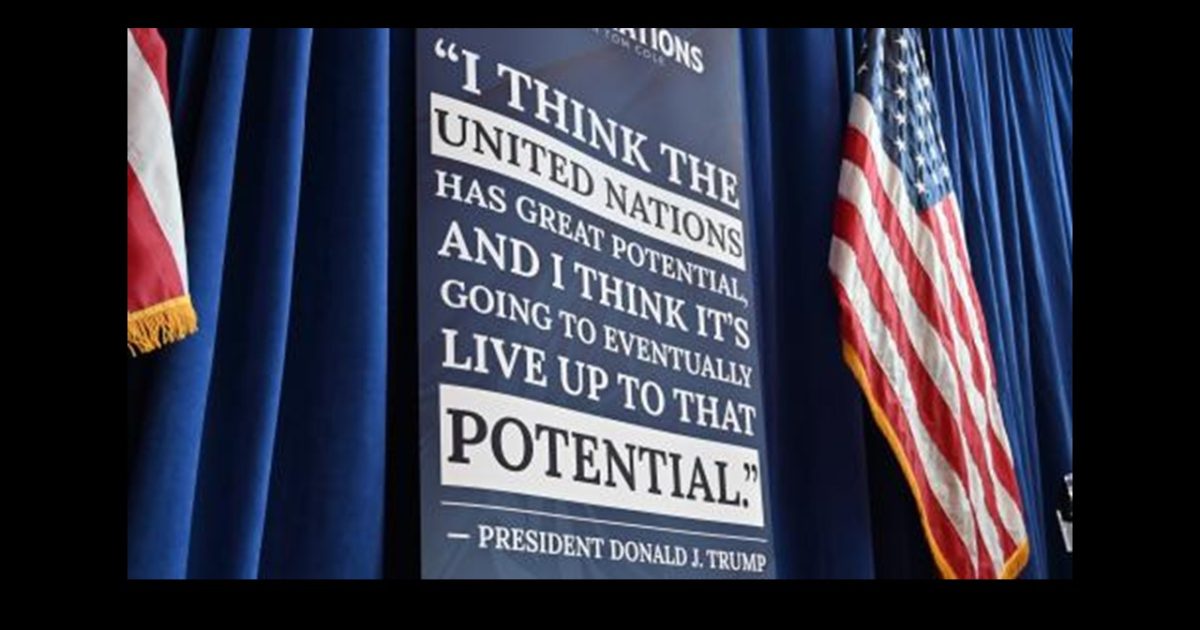
The United Nations is facing insolvency. In a January 28, 2026 letter to all 193 member states, Secretary-General António Guterres warned that the organization faces “imminent financialcollapse,” with cash reserves nearly exhausted and outstanding dues hitting arecord $1.57billion by the end of 2025, more than double the amount outstanding at the end of 2024. Unless collections improve, Guterres warned, the UN will run out of cashby July 2026.
The crisis is compounded by a structural rule requiring the UN to return unspent budget funds to member states even when those funds were never collected in the first place. In early 2026, the UN was forced to return$227 millionit had never received, with an additional $72 million offset against arrears. Guterres described this as a “Kafkaesque cycle, expected to give back cash that does not exist.”
To address the shortfall, the UN cut its 2026 budget from $3.72 billion to$3.45 billion, abolishing approximately 2,900 staff positions, nearly a fifth of its workforce, and slashing special political mission allocations by 21 percent. Wide-scale non-payment by member states has accelerated the crisis. In 2025,42 of 193member states failed to pay their assessments in full, and by the February 8, 2026 due date, only 55 countries had paid.
The United States is thedominant factor. Historically the UN’s largest contributor at22 percentof the regular and peacekeeping budgets, roughly $820 million per year, the U.S. paid no dues at all in 2025 and accounts for approximately 95 percent of all unpaid contributions currently owed. The total U.S. debt stands at $2.2 billion to the regular operating budget, $767 million for 2026 and the remainder from 2025, plus a separate$1.8 billionowed for peacekeeping operations and $528 million for past peacekeeping missions.
In August 2025, Trump cancelled roughly$800 millionin peacekeeping funds previously appropriated for 2024 and 2025, and the White House budget office has since proposed eliminating all U.S. peacekeeping funding for 2026. Trump also withdrew the U.S. from atleast 66international organizations, including 31 within the UN system, among them the UN Framework Convention on Climate Change, the UN Democracy Fund, UN Oceans, and UN Women.
In mid-February 2026, the U.S. made a first partial payment toward its debt, which a UN spokesperson confirmed goes towardpast dueson the regular budget. As of early May 2026, the U.S. has paid approximately$160 millionof the more than $4 billion it owes across regular and peacekeeping budgets combined. Guterres has stated that the outstanding assessed contributions are “non-negotiable,” a mandatory legal obligation of membership, and has stressed that non-payment and reform are two distinct issues. A UN spokesperson was blunter: “when it comesto paying, it’s now or never.”
The Trump administration frames its position as leverage. U.S. Ambassador Mike Waltz told Congress the UN has “drifted fromits core mission of peacemaking” and confirmed the administration has conditioned payment on reform: “We’ve withheldthis year. We haven’t paid any, and my first meeting with the Secretary-General was, ‘here are the reforms that we need to see before you start talking about taxpayer dollars.'” Waltz argued the organization needs to be “cut up” and reformed before U.S. money flows again, pointing out that seven separate UN agencies work on climate alone.
The administration has branded its approach “Make the UNGreat Again,” MUNGA. In April 2026 Senate testimony, Waltz cited$570 millionin UN budget cuts and the elimination of nearly 3,000 headquarters positions as evidence the pressure is producing results, while U.S. Ambassador for Management and Reform Jeff Bartos stated flatly: “TheUN hasto stop doing stupid things.”
The administration’s case for cutting or eliminating UN funding rests on documented institutional failures spanning decades. As Secretary of State Marco Rubio stated at the2026 Munich SecurityConference, the UN failed to stop the war in Gaza, failed to end the war in Ukraine, and failed to contain Iran’s nuclear ambitions.
The failure in Ukraine is structural and chronic: when Russia moved to annex Crimea in 2014, the Security Council convenedseven emergencysessions only to watch Russia veto the sole draft resolution, supported by 13 of 15 members, that would have declared the referendum invalid. The General Assembly passed anonbinding resolutionaffirming Ukraine’s territorial integrity, which Russia ignored. Eight years later, Russia launched a full-scale invasion and the Security Council was paralyzed by the same veto.
Source: The Gateway Pundit