As the diplomatic channel between theUnited StatesandIrancontinues, Israel is preparing for war. Jerusalem’s red lines are nowhere near Tehran’s, which refuses even to consider limits on its missile program — the same missiles that caused destruction in Israel during the 12-day war.
continues, Israel is preparing for war. Jerusalem’s red lines are nowhere near Tehran’s, which refuses even to consider limits on its missile program — the same missiles that caused destruction in Israel during the 12-day war.
For Iran, its ballistic missile program is not merely a weapons system but a supreme strategic asset, possibly even more important than its nuclear project, given its proven ability to paralyze Israel’s home front and inflict significant damage despite advanced defense systems. Lessons from the war — in which Israel was forced to manage a “munitions economy” in the face of hundreds of launches, intercepting most of them yet still sustaining heavy damage — reinforced in Tehran the view that Israel is vulnerable to attrition attacks that could deplete its interceptor stockpiles.
Netanyahu and the US Secretary of State in Washington, this week(Video: Omri Meron, GPO)
Netanyahu and the US Secretary of State in Washington, this week
Because Iran views its missile array as a primary tool of deterrence and decisive force, intelligence assessments conclude it will not relinquish it even under U.S. pressure in negotiations. That hard line places the region on what officials describe as a collision course — either signing an agreement that leaves Israel exposed to a significant threat, or sliding toward all-out war. In response, Israel’s air defense system — composed of seven battalions deployed nationwide and built around five layers — is preparing alongside the U.S. military, and possibly an international coalition.
Tal Inbar, a senior research fellow at the Missile Defense Advocacy Alliance, told ynet that Iran’s launch capabilities have not changed significantly from previous attacks, though the regime still possesses dozens of heavier missiles that have not yet been used.
“We have not seen the capability for extremely massive fire — not many hundreds or thousands simultaneously,” Inbar said. “But in a war in which the Iranian regime feels these are its final hours, it will fire everything it has. In such a case, one could imagine strikes even on symbolic targets that are not military.”
He stressed that these are extreme scenarios. “One can assume that if the United States initiates the attack, there would be an operation designed to prevent as much as possible the use of these tools. The U.S. can do things Israel cannot, for example a barrage of hundreds of cruise missiles on various launch sites in Iran. These are things we have not seen before.”
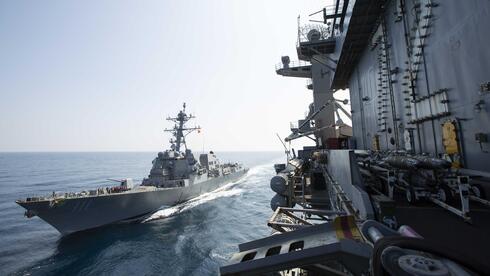
During the most recent confrontation with Iran, the Israel Defense Forces made extensive use of its defense systems. Reports last month claimed Prime MinisterBenjamin Netanyahuasked PresidentDonald Trumpto delay a strike on Iran partly due to interceptor shortages. Since then, large American forces have arrived in the region, also to assist with interceptions — despite significant interceptor use in defending Israel in June last year and challenges in replenishing stockpiles.
Source: Drudge Report