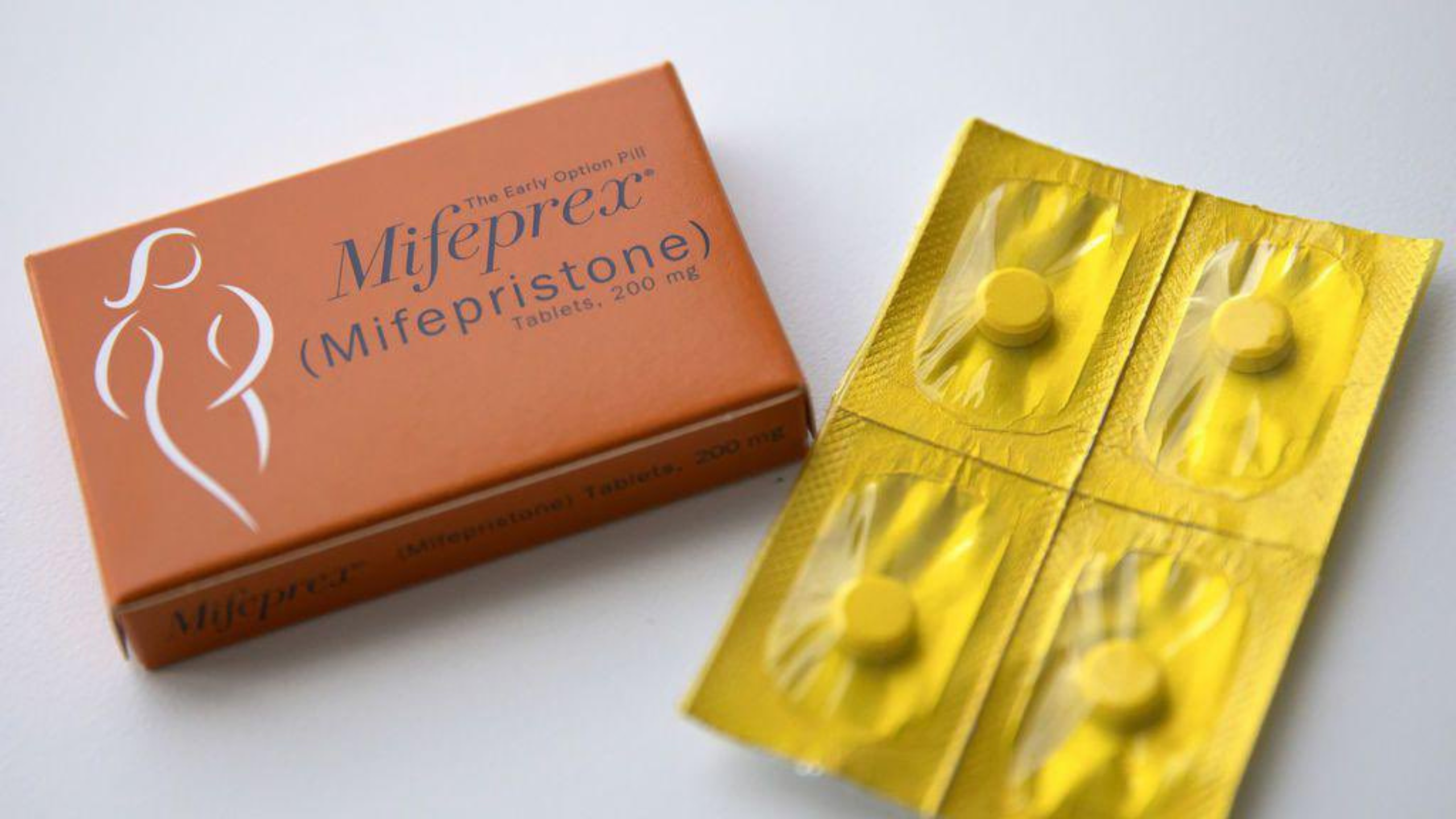
The most widely used abortion medication in the United States has spent the better part of three years fighting for its survival in the courts, its future shaped as much by politics and ideology as by science.
Mifepristone, approved by the US Food and Drug Administration (FDA) in September 2000, now accounts for more than 60% of all abortions in the country, according to data compiled by KFF. Over 7.5 million people have used it since its original approval. Yet despite its established safety record, a years-long legal assault has placed it at the centre of America's most charged and consequential reproductive rights battle.
The US Supreme Court intervened decisively in June 2024, unanimously blocking an attempt to strip the drug off the market. However, new litigation, now proceeding in a federal court in Missouri, means the drug's access remains legally vulnerable.
Mifepristoneis a synthetic steroid that blocks progesterone, the hormone necessary to sustain a pregnancy. The drug, used together with misoprostol, is approved to end an intrauterine pregnancy through ten weeks' gestation. The two-drug regimen was first developed in France in the 1980s and was known there as RU-486, a designation that became shorthand for the culture war that followed it across the Atlantic.
The FDA approved mifepristone for early pregnancy termination in 2000. Today, mifepristone in combination with misoprostol is the most widely used abortion regimen in the US and is also widely used throughout the world. Between 2016 and 2021, theFDA expanded its conditions of use, extending the gestational limit from seven to ten weeks, permitting mail dispensing, and allowing telemedicine prescriptions.
🚨 JUST IN: The US Supreme Court has temporarily RESTORED broad access to abortion pill mifepristone, overturning a lower court rulingLouisiana argued that letting the pill be mailed makes its abortion ban "moot"SCOTUS MUST do the right thing and reverse course!This would…pic.twitter.com/AMaMM5mif1
The legal battle began in November 2022, weeks after the Supreme Court's Dobbs v. Jackson Women's Health Organization ruling overturned Roe v. Wade. The Alliance for Hippocratic Medicine (AHM), a coalition of anti-abortion medical organisations and physicians, filed suit in a US federal district court in Texas. The case was strategically assigned to Judge Matthew Kacsmaryk, a Trump appointee in Amarillo, Texas, whose court anti-abortion groups had long targeted for favourable rulings.
In April 2023, US District Judge Kacsmaryk issued a preliminary injunction suspending the FDA's approval of mifepristone, thereby ordering the drug off the market. The ruling sent shockwaves through the medical and pharmaceutical sectors. The Department of Justice appealed on 10 April 2023, and on 14 April, the US Supreme Court issued a temporary stay, preventing the district court's order from taking effect.
On 16 August 2023, the Fifth Circuit Court of Appeals ruled to reinstate burdensome pre-2016 restrictions on mifepristone, but did not remove the drug from the market. The government petitioned the Supreme Court, which agreed in December 2023 to hear the consolidated case FDA v. Alliance for Hippocratic Medicine.
Oral arguments were heard on 26 March 2024. Court observers noted at the time that a majority of justices appeared sceptical of the challengers' standing claims. Their instincts proved correct.
Source: International Business Times UK
