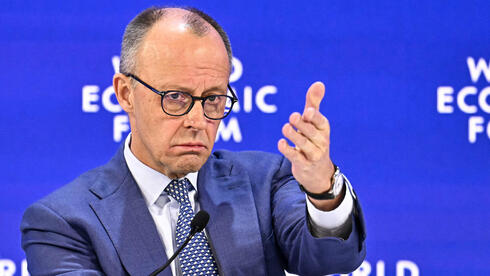
A year aferFriedrich Merzof the center-right Christian Democratic Union took office asGermany’s chancellor, promising to advance a measured conservative agenda without cooperating with the far right, polls suggest that the far-right Alternative for Germany (AfD) is instead surging to first place and reaching record levels of support.
of the center-right Christian Democratic Union took office as
’s chancellor, promising to advance a measured conservative agenda without cooperating with the far right, polls suggest that the far-right Alternative for Germany (AfD) is instead surging to first place and reaching record levels of support.
Merz took power on May 6, 2025, leading a compromise coalition with the center-left Social Democrats (SPD). At the time, he argued that effective governance could weaken AfD, which had finished second in the general election — the far right’s strongest result since World War II.
3View galleryChancellor Friedrich Merz(Photo: Win McNamee/Getty Images)
But the past year has been difficult for Merz’s coalition. Public infighting within the government and a sluggish economy have helped fuel AfD’s rise. It is now polling at around 28%, matching the result of Merz’s bloc in last year’s election and marking the highest level of support in AfD’s history.
Benjamin Höhne, a political scientist at Chemnitz University of Technology, said AfD — a party defined by opposition to immigration, sympathy for Russia and support for Donald Trump, whose members have also been linked to antisemitic and anti-Israel remarks — is now firmly established and can no longer be dismissed as a protest vote.
He added that, in contrast, the core voter base of Merz’s CDU/CSU alliance and the SPD is “in the process of disappearing,” with the conservatives slipping below 25% in polls and the Social Democrats falling under 15%.
The trend is especially pronounced in eastern Germany, where AfD is aiming to win two regional elections in September, potentially dealing historic blows to the two major parties that have dominated power since 1949. The party has also posted strong gains in western Germany, nearing 20% in elections in two states this year.
3View galleryAlternative for Germany leader Alice Weidel in last year’s election(Photo: Soren Stache - Pool/Getty Images)
Source: Drudge Report
