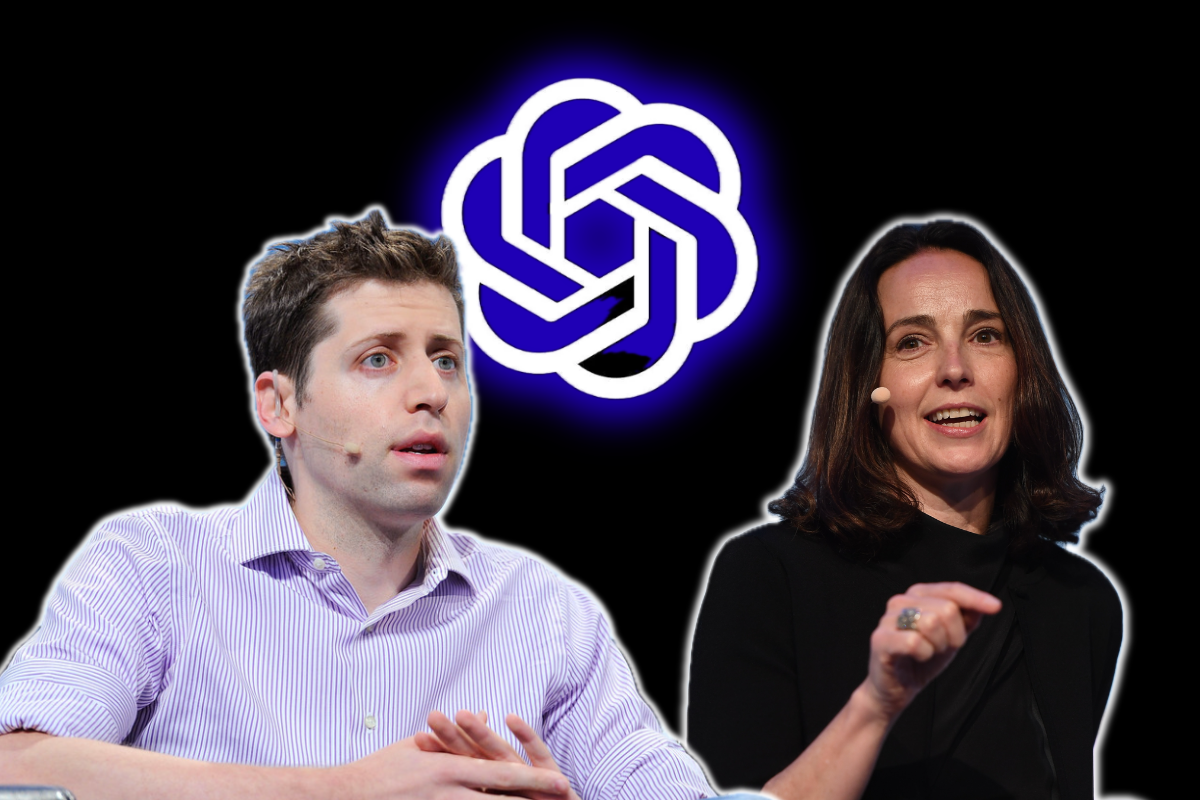
OpenAI CFO Sarah Friar is reportedly pushing to delay the company's initial public offering to 2027. ButCEO Sam Altmanwants to list the company in Q4 2026. This has led to an internal conflict among the two camps.
That tension, reported by Gizmodo, has led to the most consequential internal debate in Silicon Valley right now. OpenAI, which is also embroiled in alegal battle with Elon Musk, completed a conversion from a nonprofit-controlled structure to a for-profit public benefit corporation earlier this year so it can go public. But the financial and operational outlook underneath is more complicated.
Friar joined OpenAI as its first chief financial officer in 2024, after she stepped down as CEO of Nextdoor Holdings. She has since raised two major concerns: whether OpenAI can meet the rigorous reporting standards required of a public company and whether its revenue trajectory is strong enough to withstand the scrutiny that comes with a stock exchange listing.
According to Reuters, OpenAI failed to reach its internal target of 1 billion weekly active users on ChatGPT and missed several monthly revenue targets through 2026.
OpenAI's $600 Billion Infrastructure Bet
OpenAI has accumulated approximately $600 billion in future spending commitments for data centers and computing capacity, CNBC reported in February. It represents obligations tied to the company's aggressive infrastructure buildout as it competes for the processing power needed to train and run frontier AI models.
Friar has flagged to colleagues that if revenue growth does not accelerate, those capital commitments could strain the company's finances at precisely the moment it is seeking to present a clean balance sheet to prospective public investors. She and other senior executives have been working to tighten cost controls and strengthen internal financial oversight in response.
Publicly, though, Friar has pushed back on the most pessimistic readings of the company's performance.
'Going up a vertical wall of demand,' she said in a statement, asserting that OpenAI continues to outpace its own plan at the highest level. But that characterization stands in contrast to reports of missed internal benchmarks.
Despite raising $122 billion in capital, OpenAI's revenue miss triggered notable declines in the stock prices of several of the company's technology partners. The broader AI infrastructure sector keeps pulling in enormous capital flows.
Source: International Business Times UK