The sale of Port of Egypt Marine —the longtime family business scooped up by a luxury yacht builder last month— wasn’t the first time it has changed hands. In fact, it had two previous owners.
While the Southold marina is widely associated with the Lieblein family, which operated the business for eight decades after acquiring it in 1946, records from theSouthold Historical Museumtrace its beginnings to a much shorter-lived venture more than a decade earlier.
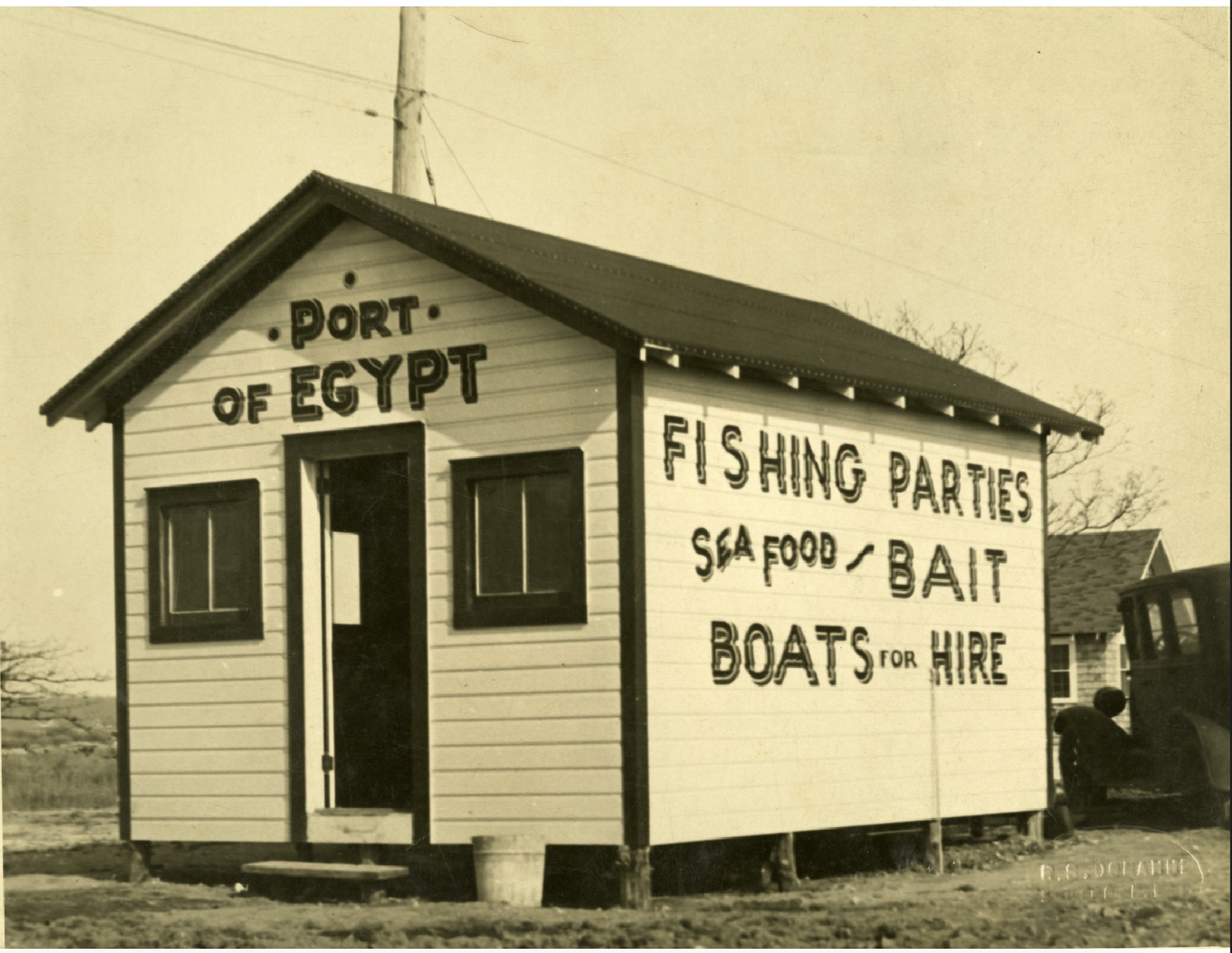
According to the museum, brothers Philip Raymond Dickinson and Edward Dickinson established the original Port of Egypt in 1932, operating what was then a modest fishing station offering charter trips, bait and boats for hire.
A photograph from that year shows a small waterfront building bearing the Port of Egypt name — a far cry from the full-service marina and dealership that would later serve generations of North Fork boaters.
The Dickinsons, however, did not hold onto the business for long. Later that same year, it was sold to Carl Reiter, who expanded the operation to include a restaurant, according to Amy Folk, the museum’s manager of collections.
Asked whether people today realize the marina’s roots stretch back to a small, locally run operation in the early 1930s, Ms. Folk said, “I don’t think they do.”
Even the Port of Egypt name has taken on its own folklore.
Bill Lieblein — whose father, William, and two uncles bought the property —said in a 2016 interview with the Shelter Island Reporter, the sister publication of The Suffolk Times, that the name stemmed from the original owners thinking the sandbar in front of the property resembled the Nile River delta, with phragmites grasses evoking papyrus reeds.
Amy Folk, however, said the “Egypt” reference was more of an inside joke among locals. Because the site sat in what was once a remote stretch along Southold Bay, residents would quip that getting there was like “going to Egypt,” she said.
Similar place names — including Oregon Road, for the western spur of Southold, and “New Egypt” — emerged across the North Fork in the late 19th and early 20th centuries, Ms. Folk added.
Source: The Suffolk Times