History has a way of offering its lessons time and again.
During the Second World War, the United States learned a costly lesson about the vulnerability of its oil tankers to enemy action. Today, the world is being offered the same lesson at the Strait of Hormuz, and we need to heed it.
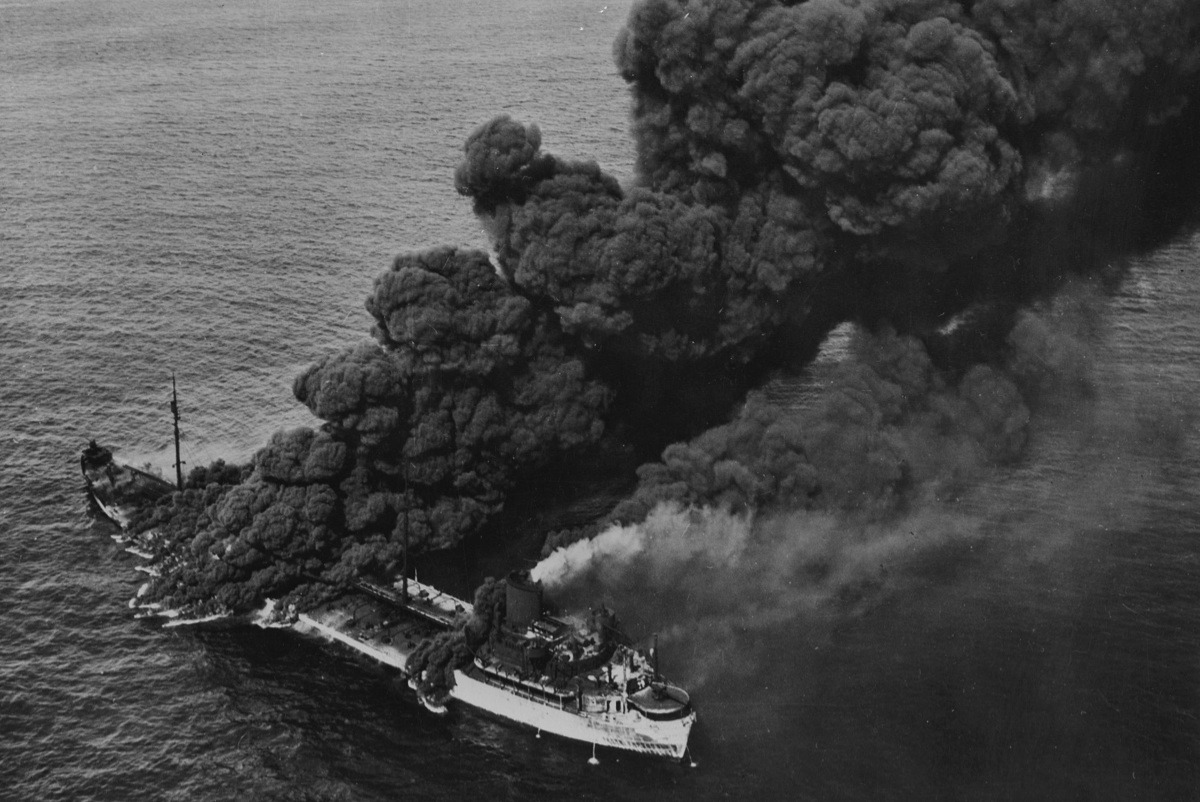
When America entered World War II, nearly all of its petroleum products meant for the Northeast were put aboard ocean-going tankers leaving Gulf Coast refineries and then traveling the Atlantic alongside the eastern seaboard.
Germany's U-boat captains recognized this vulnerability immediately. The results were catastrophic. From January to July 1942, U-boats sank 585 vessels totaling over three million gross tons in U.S. waters, including 129 oil tankers lost in the first five months alone. The Germans would call it "the happy time." The bodies of our sailors would wash ashore, a grisly reminder that we were now at war with the Third Reich.
At one point, deliveries of oil to the East Coast fell by a staggering 90 percent.
The solution was typical American ingenuity. The answer was to bypass the vulnerable sea lanes entirely while waiting for our Navy to implement anti-submarine convoys. Washington and the private sector constructed a two-foot-diameter pipeline running from East Texas oil fields all the way to the Northeast, along with an accompanying line capable of carrying gasoline, heating oil, diesel, and kerosene as far as New York and Philadelphia.
Completed exactly one year after construction began in 1942, the two pipelines together delivered more than 500,000 barrels of oil per day. By moving oil overland, it became invulnerable to the ravages of German U-boats.
The Strait of Hormuz presents an identical problem. Roughly 20 percent of the world's oil supply — nearly 17 million barrels per day — normally passes through this narrow, 21-mile-wide chokepoint between Iran and the Arabian Peninsula. Every barrel transiting the Strait is hostage to Iranian mines or drone attacks by a murderous regime.
This conflict is not the first time shipping in the Strait of Hormuz has been threatened: during the Iran-Iraq War in the 1980s; in 2019, when tankers were attacked and seized, and repeatedly during confrontations with Tehran over its nuclear program. Iran merely has to threaten closure, and it plays havoc with the global economy.
The WWII precedent shows that infrastructure investment can permanently neutralize such a chokepoint. Pipelines already exist that partially bypass the Strait — Saudi Arabia's East-West Pipeline to Yanbu on the Red Sea, and the Abu Dhabi Crude Oil Pipeline terminating at Fujairah on the Gulf of Oman — but their combined capacity remains insufficient to carry what is needed in times of crisis. A robust, redundant overland pipeline network, built by an alliance of Gulf nations and funded through an international investment, could route millions of additional barrels daily to Red Sea and Indian Ocean terminals, making the Strait of Hormuz strategically irrelevant.
Source: Gatestone Institute :: Articles