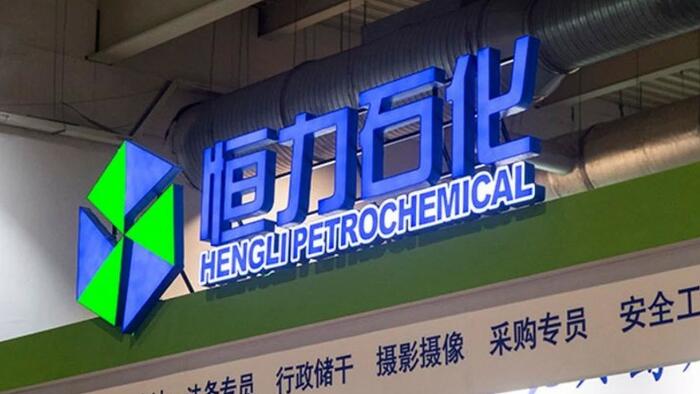
China ordered companies in the country not to comply with US sanctions on five domestic refiners linked to the Iranian oil trade,deploying for the first time ablocking measureintroduced in 2021 that was aimed at protecting its firms from foreign laws it deemed unjustified.
Refiners - including Hengli Petrochemical (Dalian) Refinery which was sanctioned last month and several other privately-owned processors - had been facing asset freezes and transaction bans. Hengli was the most ambitious target to date in China’s refining sector, and underscores US eagerness to push Iran to the negotiating table at all costs, even just weeks before an expected and long-awaited meeting between Trump and his counterpart Xi Jinping.
The sanctions on Hengli Petrochemical triggered a $1.4 billion wipeout in the fortunes of Fan Hongwei and her husband Chen Jianhua, who together built Hengli Group into one of China’s biggest energy companies, after shares of the refiner tumbled 10%.
But if Trump was hoping Beijing would just let this creeping financial blockade slide, he was wrong: on Saturday, the country’s commerce ministry said in a statement thatUS measures unlawfully restrict normal trade with third countries and breach international norms.And, in a rare move,it issued an order banning recognition, enforcement, and compliance with the sanctions aimed at the five companies.
“The Chinese government has consistently opposed unilateral sanctions that lack authorization from the United Nations and a basis in international law,” the department said.
Still, banks working with Hengli and other private processors are scrambling to understand the decision and are seeking clarity from the banking regulator.Public holidays in China this week allow them some time, since business is on hold, as does the grace period provided by the Treasury Department’s Office of Foreign Assets Control.
The sanctions and Beijing’s response come just weeks before a highly-anticipated meeting between President Trump and his Chinese counterpart, Xi Jinping. While the blocking measure is not likely to derail the summit, Washington’s reaction to it will indicate if the matter escalates, according to analysts from Eurasia Group.
“The refineries primarily work with Chinese banks that have not yet been directly sanctioned,” the analysts led by Dominic Chiu wrote in a note. “If the US extends secondary sanctions to those institutions, or major state-owned entities, Beijing would likely respond with more forceful countermeasures.”
The injunction “allows the refineries to seek compensation in Chinese courts from entities that comply with US sanctions, including domestic actors — such as banks, investors, and downstream customers that have ceased dealings — as well as foreign firms with a presence in China,”the Eurasia analysts said, adding the move signals Beijing is taking a more assertive approach to countering sanctions.
“By activating its blocking measures for the first time since adopting the rule in 2021, China is demonstrating a lower threshold for deploying its legal and regulatory toolkit to counter US sanctions,” they said.
Source: ZeroHedge News
