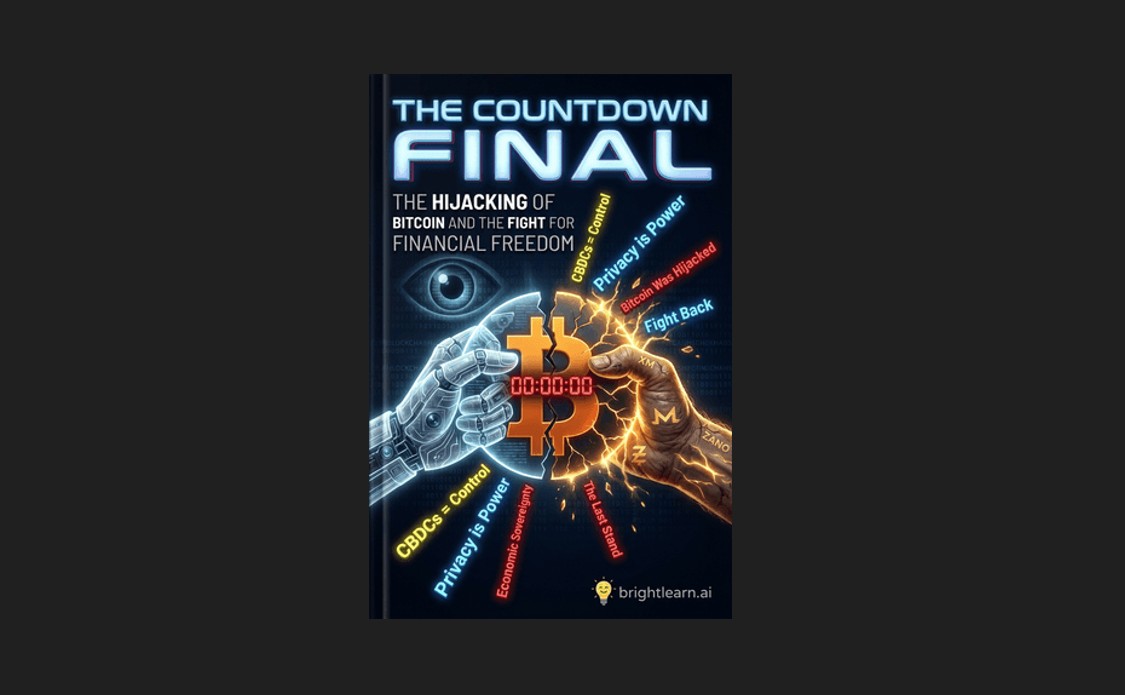
In an era where central banks tighten their grip on digital currencies and governments eye total financial surveillance, a growing chorus of dissidents is turning to Bitcoin and privacy-focused coins like Monero as the last bastions of economic freedom. The headline from NaturalNews.com captures this urgency: "The Final Countdown: Resisting financial tyranny with Bitcoin and privacy coins." Proponents argue that as programmable money like central bank digital currencies (CBDCs) loom, these decentralized assets offer a shield against what they call an impending era of coerced compliance and asset seizures.
The catalyst for this movement traces back to escalating warnings from financial whistleblowers and crypto evangelists. With the U.S. Federal Reserve piloting digital dollar prototypes and the European Central Bank advancing its digital euro, critics highlight how these systems could enable real-time transaction tracking, negative interest rates, and even remote account freezes for non-compliant citizens. Bitcoin, with its fixed supply of 21 million coins, stands in stark contrast as "digital gold," immune to inflationary printing presses that have devalued fiat currencies worldwide. Privacy coins amplify this resistance; Monero's ring signatures and stealth addresses render transactions untraceable, thwarting the surveillance state dreamed up by technocrats.
Recent developments underscore the ticking clock. El Salvador's bold adoption of Bitcoin as legal tender in 2021 has weathered global backlash, boasting over 5,000 daily transactions and a strategic Bitcoin reserve that cushions against dollar dependency. Meanwhile, privacy coins have surged in usage amid crackdowns—Monero's market cap hit $4 billion last quarter amid reports of U.S. exchanges delisting it under regulatory pressure. NaturalNews.com's piece spotlights figures like Max Keiser, who predicts a "hyperbitcoinization" event where nation-states hoard BTC, leaving late adopters in the dust as traditional banking crumbles under debt loads exceeding $300 trillion globally.
Yet, resistance isn't without hurdles. Volatility remains a specter, with Bitcoin dipping 20% in recent months amid macroeconomic jitters, and privacy coins face outright bans in jurisdictions like Japan and South Korea. Governments are responding aggressively: the IRS's expanded broker reporting rules and the EU's MiCA framework aim to pierce crypto anonymity. Analysts at The Culture War warn that without widespread self-custody—storing keys offline in hardware wallets—users risk exchange collapses like FTX's 2022 implosion, which vaporized $8 billion. Education on tools like Lightning Network for scalable Bitcoin payments and Wasabi Wallet for coin mixing is proliferating in underground forums.
Looking ahead, the "final countdown" evokes a cultural schism: one path leads to a cashless dystopia where every purchase is audited for ideological purity, the other to a peer-to-peer electronic cash renaissance envisioned by Bitcoin's pseudonymous creator, Satoshi Nakamoto. As inflation erodes savings and geopolitical tensions fuel de-dollarization—BRICS nations now trading in gold and crypto—the article posits that ordinary citizens must act now. By stacking sats and embracing privacy, individuals aren't just investing; they're fortifying the front lines of financial sovereignty against centralized overreach.