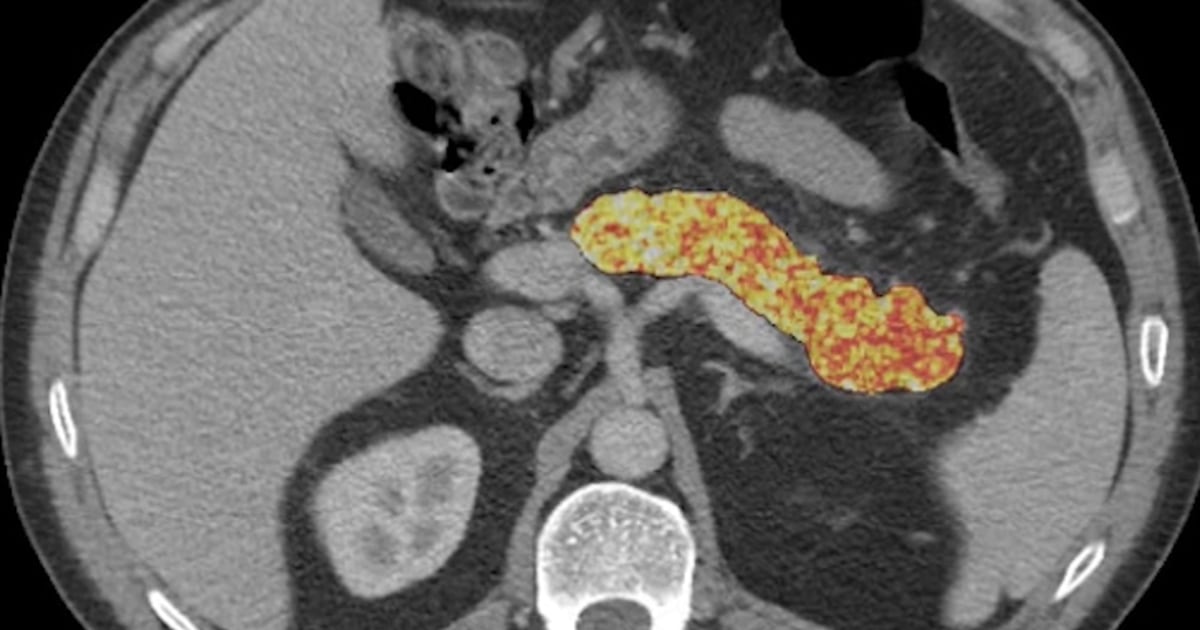
By the time doctors detect pancreatic cancer, it’s often too late to treat effectively. But a new study suggests that artificial intelligence might be able to find signs of the disease before tumors are visible on a scan.
Get unlimited access to ad-free articles and exclusive content.
An AI model developed at the Mayo Clinic in Rochester, Minnesota, detected abnormalities on patients’ CT scans up to three years before they were diagnosed with pancreatic cancer, according to researchpublished this weekin the journal Gut.
The scientists behind the model, which is now being evaluated in a clinical trial, trained it by feeding it CT scans from patients who had been screened for other medical conditions then were later diagnosed with pancreatic cancer. The team then had radiologists review the scans and compared their ability to find early signs of cancer to that of the AI model. The model was found to be three times better at identifying the early signs.
“We knew, based on the biology of the disease, that this is not something which is coming all of a sudden in three months. … We knew that the signal was there. We just needed to find a way to be able to detect it,” said Dr. Ajit Goenka, a radiologist at the Mayo Clinic and an author of the study.
With afive-year survival rate of 13%, pancreatic cancer is on track to become thesecond leading cause of cancer deathsby 2030. Around 80% of patients are diagnosed after the disease has reached an advanced stage.
Unlike colon or breast cancer, there is no routine screening for pancreatic cancer in healthy people. Feeling for a lump is nearly impossible, since the pancreas is buried deep in the abdomen. And typical symptoms like stomach pain and sudden weight loss usually don’t begin until the cancer has spread to other organs.
Early markers of the disease are often too subtle to be seen by the human eye on a scan. In many cases, patients’ scans appear normal as little as six months before they’re diagnosed.
“I analyze these images every day,” said Dr. Daniel Jeong, a diagnostic radiologist at Moffitt Cancer Center in Tampa, Florida, who was not involved in the Mayo Clinic research. “We’re really looking for a measurable mass that could represent the cancer. So these tumors need to grow to a certain level to become visible.”
Goenka said one signature of early cancer that the AI model was able to detect is abnormal cells in the pancreas that shelter and protect cancer from the body’s immune defenses. Scientists have known such cells exist but struggled to find them on scans.
Source: Drudge Report
