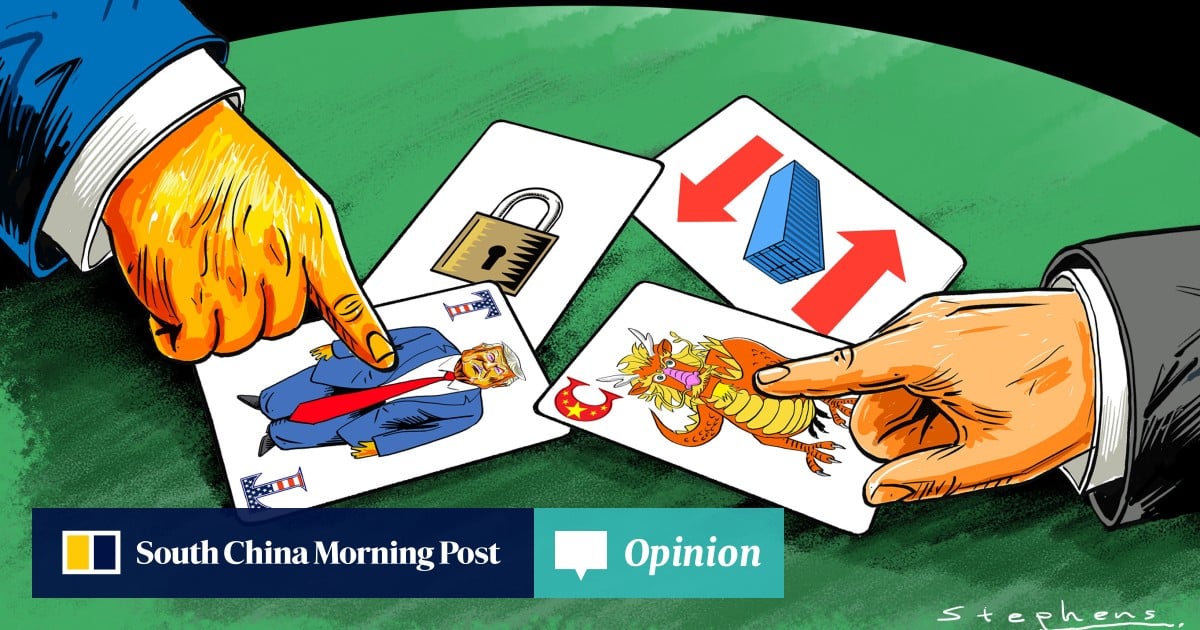
Beijing’s manoeuvring highlights its resolve and suggests it feels it has the upper hand in negotiations ahead of Trump’s visit
US-China relationsOpinionChina OpinionOpinionWang XiangweiChina’s Manus block a show of strength ahead of Xi-Trump summitBeijing’s manoeuvring highlights its resolve and suggests it feels it has the upper hand in negotiations ahead of Trump’s visit4-MIN READ4-MINListen
China’s Manus block a show of strength ahead of Xi-Trump summit
Beijing’s decision last Monday to blockMeta’s US$2 billion acquisitionof the Chinese-founded AI start-up Manus came as little surprise. The central government had already flagged its investigation and barred the company’s two founders from leaving the country.
At first glance, the intervention appears disruptive to Chinese firms seeking foreign capital and US companies eyeing investments in China. However, a deeper look reveals this as emblematic of a new normal in China-US business ties, especially in the high-stakes hi-tech sector, where the two powers are locked in intensifying strategic competition.National securityand technological self-reliance now routinely supersede commercial deals.
To appreciate the dynamics, reverse the roles. Imagine a high-flying US AI start-up being acquired by a Chinese tech giant such as Tencent. Washington would almost certainly invoke national security reviews and probably block the deal. Beijing’s actions on Manus mirror this logic. In an era of decoupling pressures and export controls, both sides prioritiseretaining critical capabilitiesover open-market principles.
This episode also serves as an intriguing footnote tothe coming summitbetween President Xi Jinping and US President Donald Trump, scheduled for May 14-15 in Beijing, the first US presidential visit to China in nearly a decade. Originally planned for late March, the trip was postponed amid the US-Israeli war against Iran.
Concerns linger about further delays ifnuclear talks falterand US military actions resume, but the summit is likely to proceed. Another postponement would complicate scheduling, and both leaders have strong incentives to stabilise ties amid global volatility.
Beijing perceives that it has a stronger negotiating position. The US remains preoccupied with the Middle East, while Trump faceslooming midterm electionsand seeks tangible “wins”. These could include major Chinese purchases of US agricultural products and Boeing aircraft.
Select VoiceSelect Speed0.8x0.9x1.0x1.1x1.2x1.5x1.75x00:0000:001.00x
Source: News - South China Morning Post
