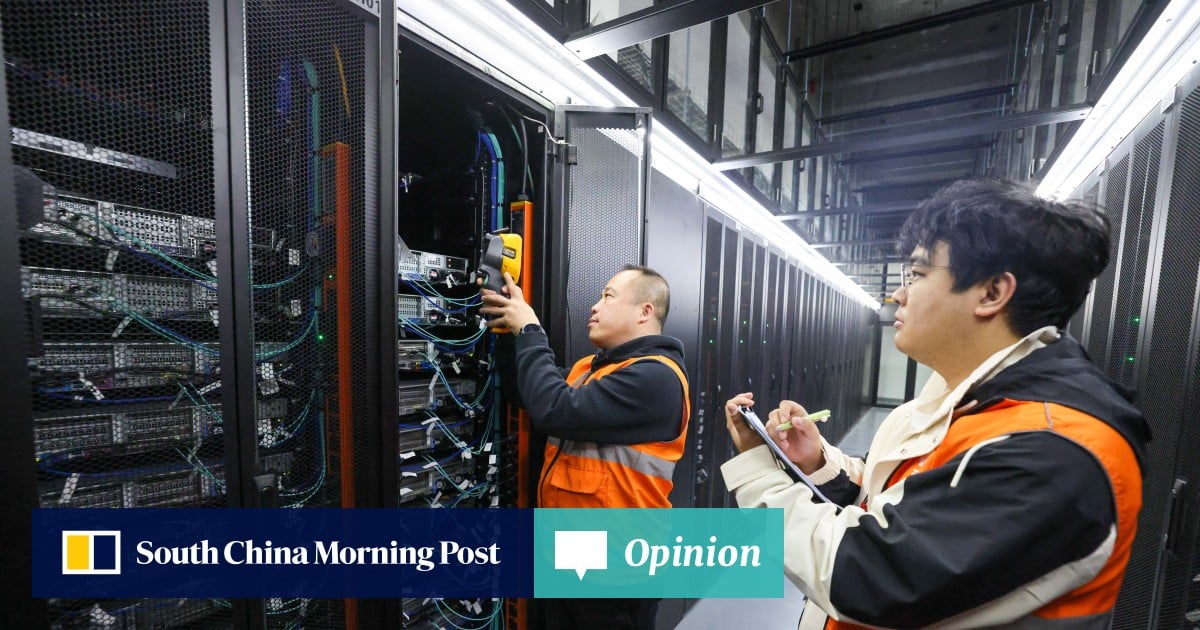
Beijing’s distinct approach to AI development and its digital economy strategy could help overcome the apparently finite nature of human-generated data
At the end of March, China inaugurated the World Data Organisation in Beijing, a body with a stated mission of “bridging the data divide, unlocking data’s value and powering the digital economy”.
The move is the latest signal of a broader trend: over the past several years, Beijing has developed a distinct data governance strategy to drive artificial intelligence (AI) development as it reshapes the terms of technological competition.
Rather than accepting this as a given, Beijing has reformed its data governance strategy to address this shortage. Over the past three years, China has reorganised its data-sharing regime to pool and channel the vast reservoirs of data generated by large-scale digitisation, feeding this data into specialised models poised to drive the next stage of AI development.
There are, broadly speaking, two types of AI models. The first are general-purpose frontier models like the ChatGPTs and Claudes, which are headline-grabbing giants trained on staggering volumes of data.
The second type is less glamorous but more economically consequential: specialised models. These sector-specific systems power many things like telemedicine diagnostics, financial fraud detection and transport planning. Rather than scraping data from the entire internet, they rely on highly specific data sets such as medical records, financial transactions and logistics flows.
Source: News - South China Morning Post
