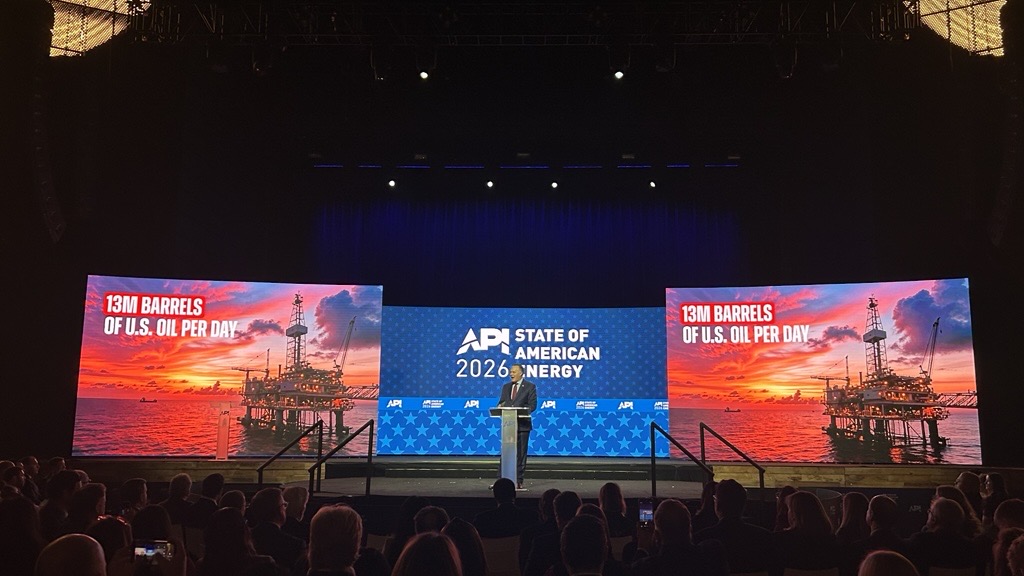
When the American Petroleum Institute (API) gathered oil industry leaders and lobbyists for a“State of American Energy” summiton January 16, 2026, the geopolitical landscape seemed to be shifting dramatically in their favor. However, an attendee of the resource extraction cartel’s most important annual lobbying conference told The Grayzone that participants privately grumbled about President Donald Trump’s heavy-handed attempts to steer their agenda, particularly in Venezuela, where he has demanded they immediately restart operations.
Two weeks before the API summit, the US military kidnapped Venezuelan President Nicolas Maduro in a violent raid, enabling the Trump administration to commandeer the country’s oil reserves. Meanwhile,foreign-backed riotsleft thousands dead in oil-rich Iran on January 8 and 9, generating enough instability to excite Western governments about the prospects of regime change.
From the stage at Washington DC’s Anthem theater, veteran industry consultantBob McNallyof the Rapidan Energy Group could not contain his excitement over the prospect of toppling the Islamic Republic of Iran.
“Iran holds the biggest promise as well, though they’re the biggest risk, but the biggest opportunity,” McNally proclaimed. “If you can imagine the United States opening an embassy in Tehran, the regime in Tehran reflecting its people – the most pro American population outside of Israel in the Middle East, culturally, commercially adept – historic. If you can imagine our industry going back there, we would get a lot more oil, a lot sooner than we will out of Venezuela.”
According to McNally, who formerly advised President George W. Bush on energy policy, a US regime change war on Iran would be a “terrible day for Moscow, [a] wonderful day for the Iranians, the United States, the oil industry and world peace.”
However, like many industry titans at the API summit, McNally saw Venezuela as a high-risk, low-return investment, even after the de facto US takeover of its resources. “Since the President’s decision to apprehend Nicolas Maduro, I think we’ve seen, you know, private conversations, the meeting at the White House, the administration has had to learn, you don’t go into Venezuela, turn a tap and 3 million barrels a day flow. It doesn’t happen like that,” he commented.
McNally went on to suggest the oil industry was pushing back on Trump’s demands that it immediately reinvest in Venezuela: “The prize in Venezuela is getting back from below a million barrels a day to between three and four million barrels a day, and that we will measure in many years and many decades. And that’s the truth. And the industry is speaking that truth to the administration.”
A week before the API summit, ExxonMobil CEO Darren WoodsdeclaredVenezuela “uninvestable” based on “legal and commercial constructs” put in place by the governments of former presidents Hugo Chavez and Nicolas Maduro.
President Donald Trump responded to Woods’ statement by thundering, “I didn’t like their response, they’re playing too cute.” While Trump pledged to “keep [ExxonMobil] out” of Venezuela, he has since praised Acting President Delcy Rodriguez for enacting free market-oriented reforms to accommodate companies like ExxonMobil.
At the time of publication, US Energy Secretary andformer Liberty EnergyCEO Chris Wright is touring Venezuela’s Orinoco oil belt alongside Acting President Rodriguez. The scenes of forced comity suggested further free market reforms to Venezuela’s PDVSA oil company may be on the way.
Source: The Grayzone
