When DNA test results shattered everything Lavinia and Michelle thought they knew about their family history, they also revealed something never before documented in the UK
Ilike being a twin. It defines who I am,” Lavinia Osbourne tells me on the 49th birthday she shares with her sister, Michelle. “It’s amazing to have a twin and have a built-in friend for ever,” Michelle says. “I’ve been really blessed to go through this journey with someone else.”
Lavinia and Michelle know that those of us who haven’t shared a womb with a sibling can be fascinated by twins: their similarities, how they differ, whether there’s any kind of mysterious synergy between them.
“There’s twin magic. It does exist – it’s a thing,” Michelle says. “I can feel when she’s upset, and she can feel when I’m upset.” They have even felt each other’s physical pain, Lavinia says. “There was a time when she spilled hot water on her leg, and I felt it.”
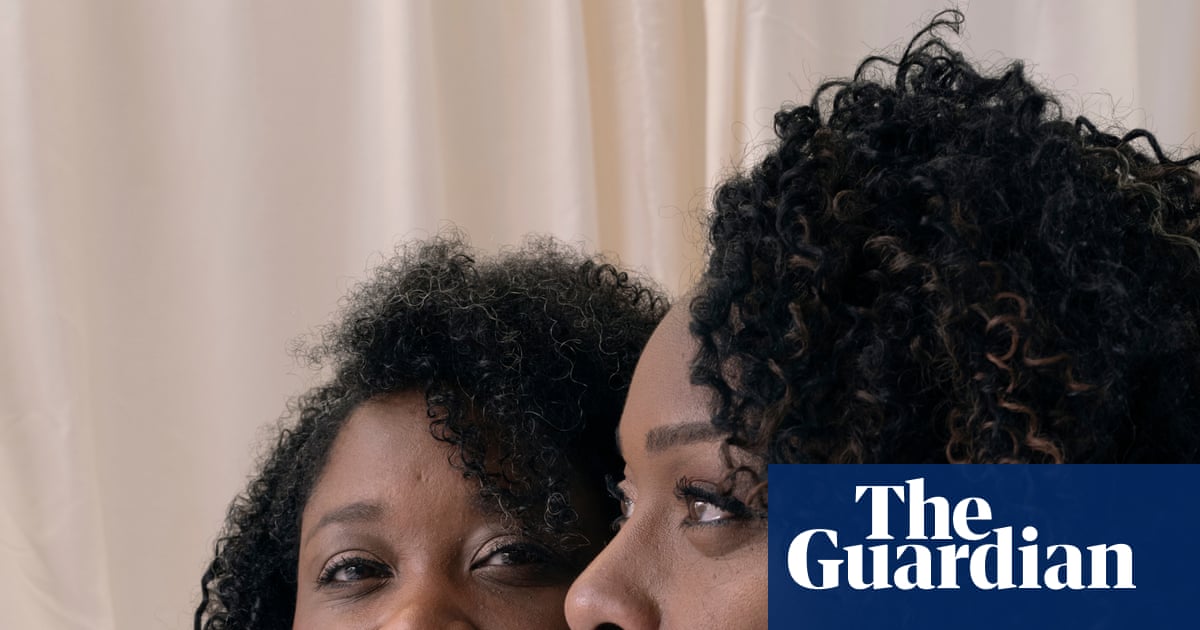
Lavinia and Michelle aren’t identical twins. They share the same striking eyes, but the lower halves of their faces are different. Their personalities differ, too: Michelle describes herself as a “homebod”, an introvert who would prefer to mark her birthday with a candle on a sponge cake, whereas Lavinia, the self-proclaimed “exuberant” twin, wants to make a night of it at a Cuban cabaret show. They’re speaking to me separately from their homes in south London. They exchanged cards, gifts and hugs earlier this morning, when Michelle was on the school run with her son.
Twins can exist at different poles, Lavinia says. She went to live in Barcelona in her early 20s; Michelle moved to Iceland soon after. “I moved to a hot country, she moved to a cold one, but we still went more or less in the same timeframe.” They both started very different businesses within a few years of each other: Michelle has a sewing company (she was a contestant on the first series ofThe Great British Sewing Bee); Lavinia runs a platform for women who work in blockchain. “We do things that are parallel, but opposite,” Lavinia says.
Despite their differences, Michelle and Lavinia share two things that will bind them together for life. First, their precarious childhood, in which they were passed from home to home, school to school, carer to carer, and the only thing they knew for sure was that they had each other. And, second, the almost inconceivable circumstances that brought them into the world, and which only came to light four years ago, when they were 45 and both took DNA tests from the genealogy firm Ancestry.
Their results of those tests revealed something never before documented in British history. Lavinia and Michelle are twins who grew together in the same womb, were born from the same mother, and delivered within minutes of each other – but have different fathers.
Heteropaternal superfecundation – the vanishingly rare biological process to which Michelle and Lavinia owe their existence – is both a mouthful to say and a mind-boggling concept to grasp. It happens when a series of very unlikely events occur at precisely the right time. A woman has to release more than one egg during the same menstrual cycle. She has to have more than one partner during her fertile window. More than one egg must be successfully fertilised, with sperm from different men, and the resulting embryos need to survive long enough to become babies. Michelle and Lavinia are twinsandhalf-sisters.
Fewer than 20 such caseshave been documented worldwide. It’s impossible to know the actual total, because cases come to light only when both twins take DNA tests. Even non-identical twins can safely assume if one takes a test, the results will be almost the same for the other, because they should share the same proportion of maternal and paternal genes. Non-identical twins might take DNA tests for health reasons, to see if one is carrying a particular gene the other does not – or because they have doubts about their ancestry.
Source: Drudge Report
