By Bas van Geffen, Senior Market Strategist at Rabobank
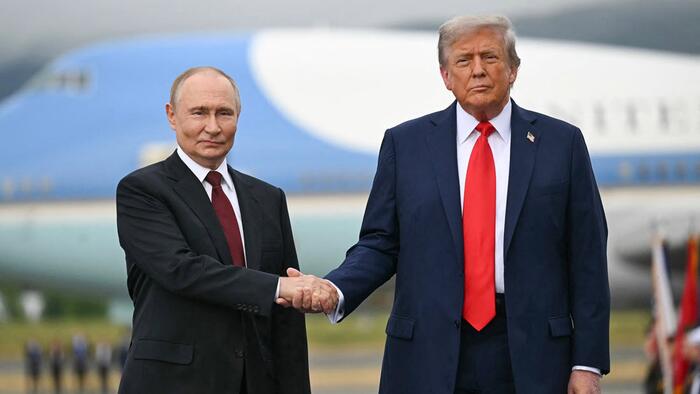
Russian officials have drafted a memo that pitches are-convergence of US and Russian interests.The proposal consists of seven points, including cooperation on critical raw materials and energy, and the possibility that Russia could return to the US dollar settlement system.
The memo was conveniently ‘leaked’ during an informal retreat of EU leaders to discuss the future of the bloc, and ahead of the Munich Security Conference. It’s a plan that Europe and China would hate, but President Trump may love the idea –especially with “preferential conditions for US companies to return to the Russian market” to sweeten the deal.
It’s unclear if any of these points were ever pitched to Trump. Andwhy would Russia be so eager to return to dollar settlements, after the US has demonstrated willingness to cut them off?So, it’s likely that theRussians are simply trolling as European leaders attended their very ownCastlefest– “Where fantasy becomes your reality” – to discuss the future of European industry.
The European summit was an informal one, so no decisions were taken. However, President of the European Commission Von der Leyen promised to present a “One Europe, One Market” roadmap at the next formal summit, in March. Despite the inclusion of “one” in the title –twice even–, it increasingly looks like a multi-speed EU is the way forward.
Both Von der Leyen and European Council President Costa expressed their preference to move forward with all 27 EU member states. However, they acknowledged that this often means that the EU moves at the pace of the slowest.To avoid this, they supported the use of “enhanced cooperation,” if all member states cannot agree on common goals.
This legal instrument allows nine or more member states to push ahead with reforms, while others can still join at any time. “Enhanced cooperation” has been in place since the 1999 Treaty of Amsterdam and has been used several times since – most recently to adopt a new financing program for Ukraine (the €90 billion for 2026–2027). So,it is perhaps being considered as an option to speed up decision-making.
In particular, Von der Leyen believes thatthis may be required for the adoption of the28th regime, a harmonized set of corporate legislation across the bloc to make it easier to scale up across borders– although the fact that this will coexist next to national law (its not the “One Regime”) may add some complexity as companies have to choose between the two regimes.
That’s not the only dimension along which EU member states may start to diverge. Von der Leyen has said that if no progress is made on the Savings and Investment Union this year, she will push ahead with a smaller group of countries. And several member states have renewed calls for Eurobonds to further increase investments in Europe.However, German Chancellor Merz has been vehemently opposed. Could this become another matter of “enhanced cooperation,” and if so, what would a Eurobond-ex-Germany look like?
Clearly, our reasoning above suggests thatEurobonds are probably a less suitable candidate for enhanced cooperation as they are “very divisive”(as Meloni described them); have much more profound consequences for ‘fiscal sovereignty’; and may affect or even harm the non-cooperators. Or, in the case of countries like Germany holding out, could potentially hinder the success of a Eurobond.
Source: ZeroHedge News