Trump's operation Epic Fury saw a combined number of US-Israeli strikes in the many thousands unleashed on Iran. The common high estimates suggest over 13,000 strikes by the American side, and possibly 10,000 by the Israelis - which are staggering figures.
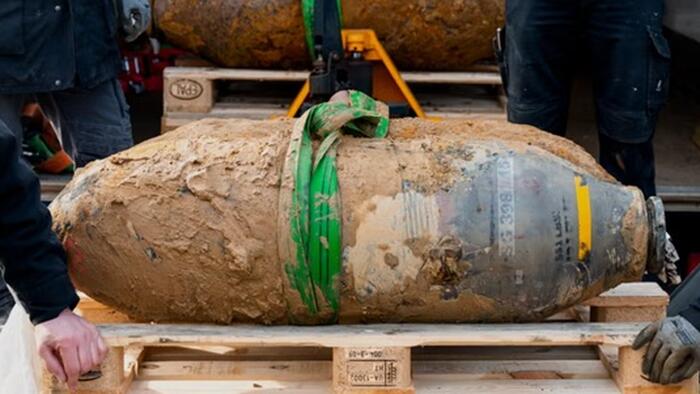
While the severe damage to Iranian cities, bases, missile sites, and infrastructure has been abundantly clear - thehidden reality is the apparently persistent danger of unexploded ordinance still littering the country. On Friday state media reported a mass casualty event involving Iranian military members due to unexploded bombs.
"An explosion of leftover bombs from strikes during the war against Irankilled 14 members of the Islamic Revolutionary Guard Corps, Iranian media reports," AFPreportsbased on state media.
"A report by theNour newswebsite, believed to be close to Iran’s security, says the explosion happened near the northern city of Zanjan, which is northwest of Tehran," AFP continues.
And notably, "It is the largest number of IRGC members reported to be killedsince the ceasefire began on April 7," it continues, describing thatcluster bombs and 'air mines'which had been dropped during prior US and Israeli aids caused the deadly blasts.
The major blast could have been the result of an IRGC operation to recover the bombs, given that the last week has seen reports that the IRGC hadrecovered a fully intact GBU-57 Bunker Buster bomb.
While unconfirmed, one defense source saidas follows:
The reportedrecovery by Iran of more than 15 unexploded American precision-guided munitions, including at least one fully intact GBU-57 Massive Ordnance Penetrator, may prove to be one of the most strategically consequential intelligence gains in Tehran’s military history.
If confirmed, the transfer of these weapons to Iranian “technical and research units” for reverse engineering would transform a failed deep-strike campaign against hardened nuclear facilities into a long-term technology compromise for both Washington and Tel Aviv.
Iran’s Islamic Revolutionary Guard Corps (IRGC), through statements linked to the Imam Sajjad Corps in Hormozgan province and state-linked outlets including Press TV, IRNA, and Tasnim News, framed therecovered ordnance not as battlefield debris but as a strategic opportunity capable of accelerating deterrence, bunker survivability, and indigenous precision-strike development.
Source: ZeroHedge News
