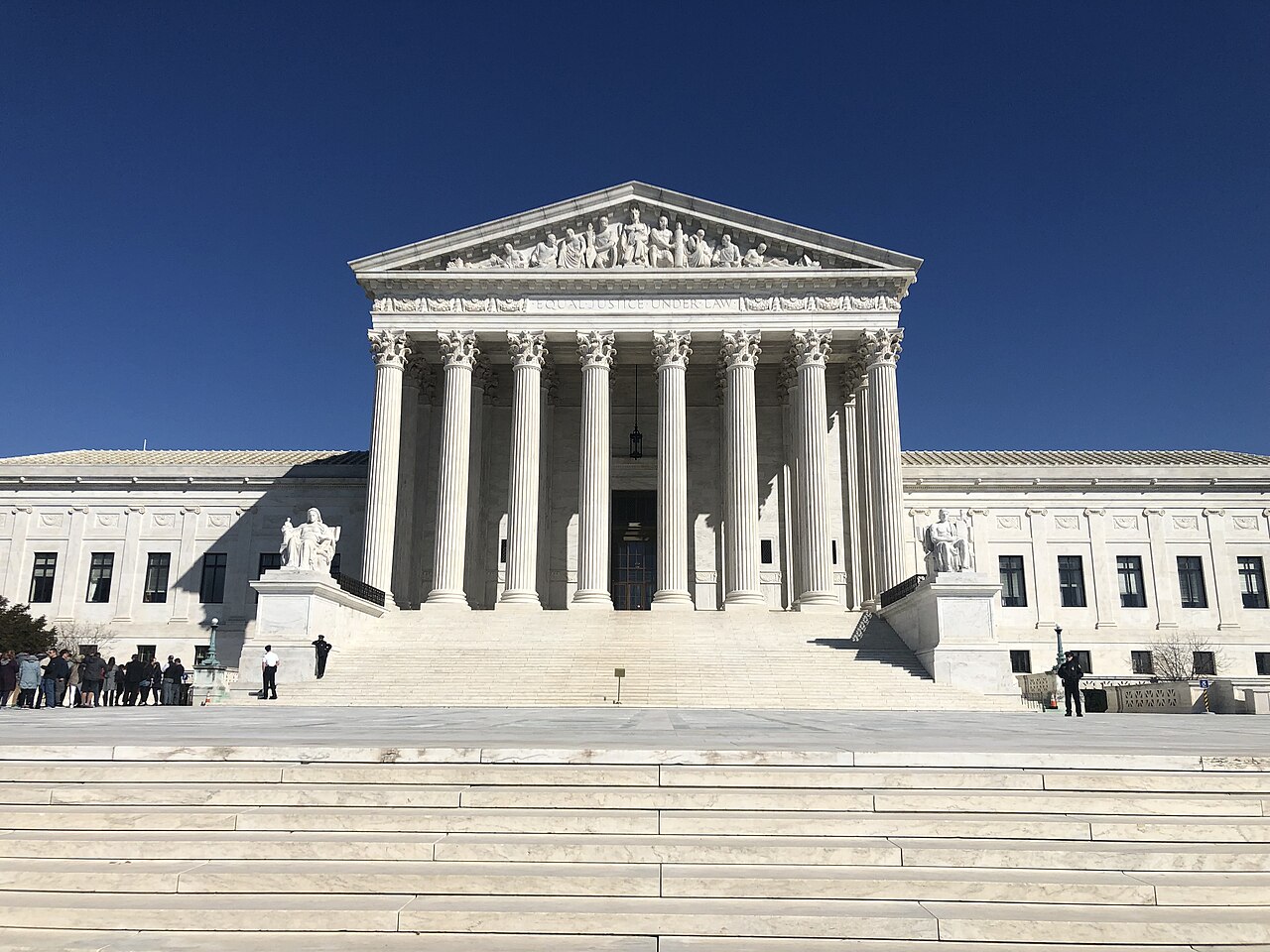
TheUS Supreme Courton Monday 29 April ruled 6–3 in Louisiana v Callais that Louisiana's current congressional map violates the Constitution. Voting rights experts say the decision effectively eviscerates Section 2 of the Voting Rights Act and clears the way for states to revive discriminatory voting maps and laws across the country.
Section 2 has for six decades been the central legal tool used to challenge racial discrimination in elections, from how districts are drawn to how ballots are cast and counted. It was the provision civil rights groups turned to after the 1965 Voting Rights Act dismantled Jim Crow-era barriers and helped Black voters in the South gain access to political power. Congress has renewed it repeatedly, with broad bipartisan support, most recently in 2006.
🚨 BREAKING — IT'S OFFICIAL: Louisiana Governor Jeff Landry has SUSPENDED US House primaries until JULY following the Supreme Court ruling race-based districts are UNCONSTITUTIONALLouisiana will now RE-DRAW their Congressional map, which could eliminate ALL Democrat districts…pic.twitter.com/teHSw6qOCN
In Louisiana, Black voters, who make up about a third of the population, had spent years fighting for a map that did not pack or crack their communities into districts where they could rarely elect candidates of their choice. A federal court, applying the established Section 2 test, found that the state's earlier map unlawfully diluted Black voting strength and ordered lawmakers to create a second district in which Black voters had a fair opportunity to win.
Louisiana eventually complied and adopted a new map with two such opportunity districts. The political impact was immediate. For the first time in the state's history, two Black Louisianians were elected to Congress under that arrangement, a milestone that voting rights advocates hailed as long overdue rather than radical.
That is the backdrop against which a group of self-described non-Black voters filed suit, arguing that the very map drawn to comply with the Voting Rights Act was itself a racial gerrymander. Their case moved quickly through the courts and reached the US Supreme Court, where organisations including the Campaign Legal Center submitted amicus briefs in 2024 and 2025 urging the justices to preserve a Section 2 framework that had been settled law for decades.
In itsCallaisruling, the US Supreme Court majority insisted it was making only modest adjustments to how courts analyse racially discriminatory districts. On closer reading, voting rights lawyers see something far more sweeping, a fundamental rewrite of the rules that raises new evidentiary hurdles for challengers and gives states a powerful shield.
Under the Court's new approach, states can now fend off many claims of race-based discrimination in redistricting simply by saying their real motive was partisan advantage. In much of the American South, where race and party affiliation are closely intertwined, that distinction is as much about legal strategy as it is about reality on the ground.
The decision does more than unravel Louisiana's map. It effectively offers what one advocate described as a roadmap back to the pre-1965 era of vote dilution, even though Congress has repeatedly reaffirmed the Voting Rights Act and has never signalled any desire to scale it back. The ruling, according to the Campaign Legal Center, contradicts the Act's text and legislative history and sidelines the role of Congress as the body meant to decide when such protections are no longer needed.
Justice Elena Kagan, writing for the three dissenting justices, did not hide her alarm. The Voting Rights Act, she noted, had ushered in awe-inspiring change and brought the United States closer to its stated ideals of democracy and racial equality. It had been repeatedly and overwhelmingly reauthorised by the people's representatives in Congress. Only they have the right to say it is no longer needed, not the Members of this Court, she wrote, concluding that she dissented from what she called the now-completed demolition of the Voting Rights Act.
Source: International Business Times UK
