The latest decision by the Spanish government has unleashed absolute chaos, and across Europe, leading figures are expressing concern about its potential consequences.
One of the largest regularisation programmes in decades has also angered millions of Spaniards.
Through Royal Decree 316/2026, approved on April 14, 2026, authorities are offering a pathway to legal residence and work rights for more than 500,000 illegal immigrants already living in the country in an irregular administrative situation.
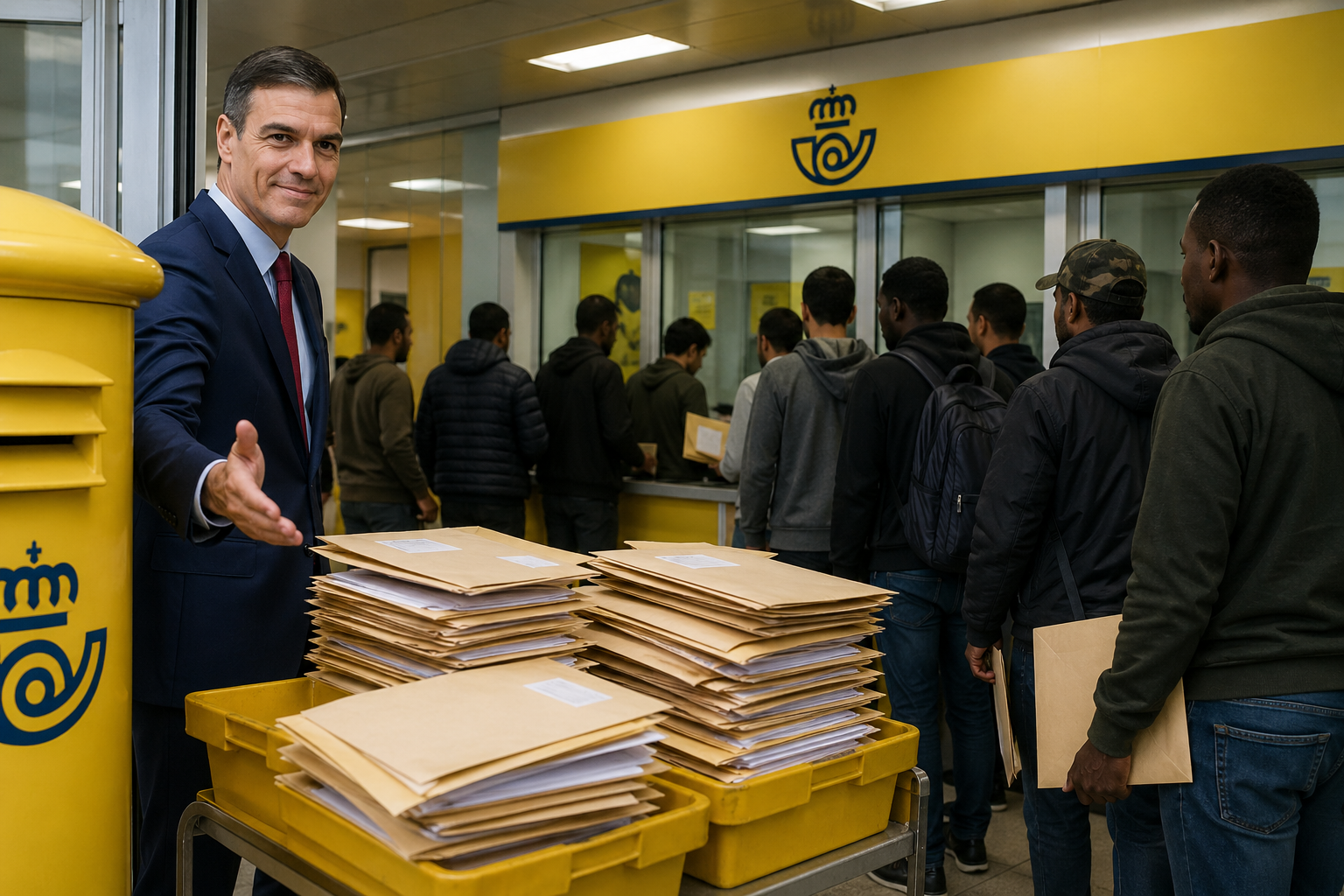
To manage the flood of applications — with more than 130,000 submitted in the first week alone and tens of thousands more in person — the government has turned to an unlikely partner: post offices. Around 371–373 branches are now accepting applications by appointment, alongside immigration offices and about 60 Social Security offices.
Post office staff receive and forward the documentation; they do not decide on the cases. The goal? To decentralise the process and relieve pressure on already overwhelmed offices.
However, critics see something far more troubling: a high-volume system that risks granting legal status almost automatically, with insufficient controls.
Requirements on paper vs. reality on the ground
Officially, applicants must meet strict criteria: prove they were in Spain before January 1, 2026, with at least five months of continuous residence, provide a valid passport or equivalent, meet an additional condition (such as a job offer, family ties, or vulnerability), and — crucially — have no criminal record in Spain, their country of origin, or any country where they have lived in the past five years. They must also not pose a threat to public order, safety, or health. Successful applicants receive a one-year renewable residence and work permit.
The government insists that criminal background checks are mandatory. Spanish records are verified automatically, while applicants must provide foreign certificates that are properly legalised and translated. If delays occur, diplomatic channels are used.
Nevertheless, the decentralised rollout through post offices has raised many legitimate concerns. Since in-person submissions began on April 20, long queues have formed. Administrative overload, technical issues, and the sheer scale of the process have created a system where thorough, real-time vetting at the point of application appears difficult.
Source: The Gateway Pundit
