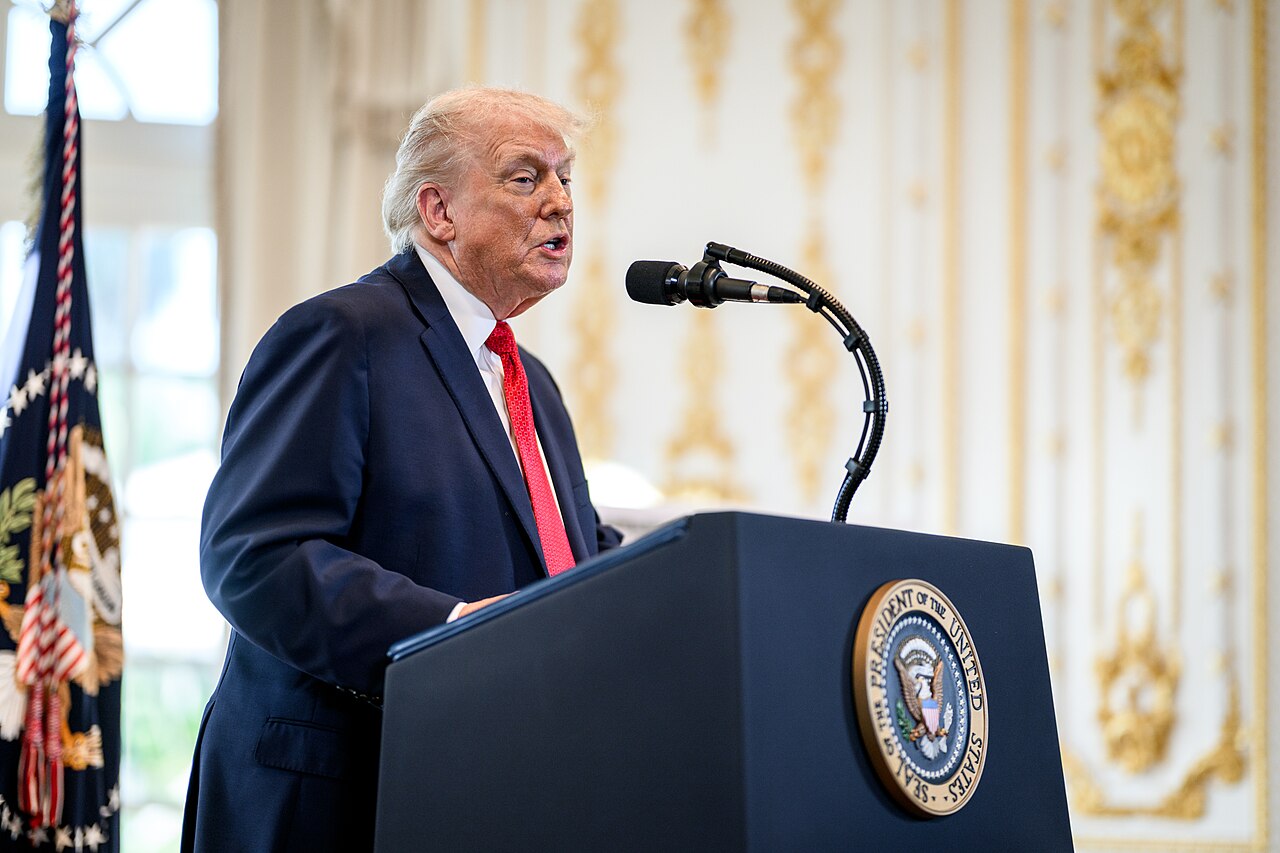
TheWhite Housecan weather a lot, but it cannot hide ageing. PresidentDonald Trumpmay insist his health is 'perfect,' yet every bruise, every photograph, every offhand comment now gets treated like evidence in a trial where half the jury is online and the other half is already shouting 'case closed.'
Trump's response has been defiance with footnotes: a little disclosure, a little complaint, and a persistent belief that the act of asking is more offensive than whatever the answers might imply. It's an old political trick—turn scrutiny into insult—but it lands differently when the scrutiny is about the body that holds the job.
For weeks, ABC News reports, Trump had said he received an MRI at Walter Reed National Military Medical Center in October. Then, in an interview withThe Wall Street Journal, he and his doctor clarified it was a CT scan instead. 'It wasn't an MRI,' Trump said. 'It was less than that. It was a scan.'
The line that stuck wasn't the technology. It was the grievance. 'In retrospect, it's too bad I took it because it gave them a little ammunition... 'Oh gee, is something wrong?' Well, nothing's wrong,' Trump said, framing the problem as perception rather than medicine.
His physician, Navy Capt. Sean Barbabella, told theJournalthat doctors proposed either an MRI or a CT scan 'to definitively rule out any cardiovascular issues', and that the CT scan showed no abnormalities. ABC News adds that on 1 December the White House released the results of Trump's 'advanced imaging tests', calling them 'perfectly normal.' Barbabella also told ABC in a statement that the president remained 'in exceptional health and perfectly suited to execute his duties as Commander in Chief'.
All of that should have closed the loop, at least on the narrow question of what test he had and why. Instead, it underlines what makes this episode so politically combustible: the administration has offered detail in drips, not a coherent account, which is exactly how you create the vacuum that gossip and partisanship rush to fill.
And it's worth saying plainly: none of this is proof of the grander 'dementia' rumours ricocheting around the internet. But the White House's own stop-start clarity is a gift to those who want to imply the worst, because ambiguity is always more viral than a boring, well-documented check-up.
Trump's hands, in particular, have become the kind of minor-detail obsession that modern politics excels at. In the sameJournalinterview, ABC reports, he said the large dose of aspirin he takes daily has caused him to bruise easily and that he has refused doctors' advice to take a lower dose—adding he has taken that specific aspirin for 25 years. 'They say aspirin is good for thinning out the blood, and I don't want thick blood pouring through my heart... I want nice, thin blood pouring through my heart. Does that make sense?' he said.
There is a strange intimacy to that quote: a president talking about blood the way some people talk about engine oil. It also hints at the deeper dynamic here, which isn't medical so much as theatrical. Trump doesn't simply want to be healthy; he wants to look unbothered by the question of health, as if attention itself is a kind of weakness.
That tension spills into his explanation for photographs that appear to show him drifting off at public events. 'I'll just close. It's very relaxing to me,' Trump told theJournal, adding that photographers catch him 'with the blink.' ABC reports that theJournalalso described staff counselling Trump to keep his eyes open during events, and that White House Chief of Staff Susie Wiles urged Cabinet members to shorten presentations.
Source: International Business Times UK
