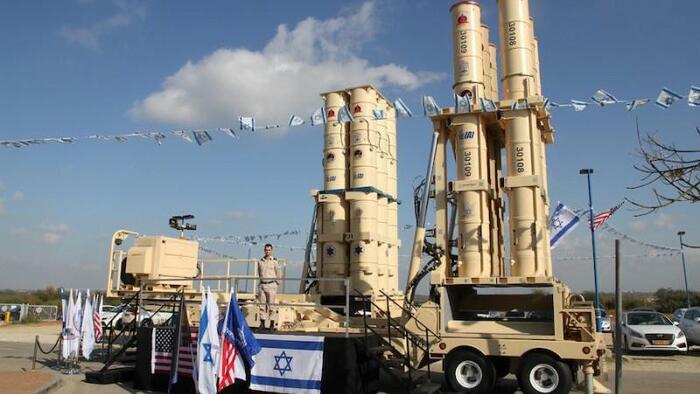
There's growing outrage and political division in Israel after news emerged that the government and defense ministry fulfilled a weapons contract with Germany, sending vital Arrow air defense missiles to Berlinduring the middle of the Iran war.
At the very moment the missiles were being delivered, Israeli citizens were dying under Iran's fierce ballistic missile retaliation attacksduring the height of Operation Epic Fury.
The Jerusalem Posthas"confirmed that Israel continued to send Arrow missiles to Berlin mid-war as part of a contract between the countries, even though Israel had a shortage of its own interceptors," the publication writes.
"Some commentators upon learning this information haveaccused the Israeli government of allowing at least five persons to die and hundreds to be injured when the IDF did not use the Arrow to defend from certain attacks," the report adds.
The Arrow was developed jointly with the United States and is designed to intercept long-range missiles, serving as thehighest tier of Israel's multi-layered defense.
The first Arrow was delivered to Germany in 2025, despite that starting with the last June war, it has been an open secret that Israel isrunning low on interceptors, and that it takes a significant amount of time to replenish them.
In April, we featured analysis describing how Israel only in the last few years grew to become Germany's largest arms partner in a'mega deal':
Israel’s delivery of the Arrow 3 missile defense system to Germany last year, which was itslargest export deal everat$4.6 billion, led to its share of Germany’s arms imports jumping from 13% during the period 2020-2024 to 55% during the period 2021-2025. At the same time, Israel remained Germany’s third-largest arms client at 10% of its exports from 2021-2025 compared to 11% of them from 2020-2024, with the slight 1% decrease likely being due tothree-month-long curbon arms exports to it last year.
Why this matters is because Israel’s new role as Germany’s largest arms supplier might worsen its ties with Russia, especiallyif exports evolve from defensive systems like the Arrow 3 to offensive ones like the$7 billion dealfor 500 rocket launchers and thousands of missiles that they’re now negotiating. Moreover, West Asian geopolitics might radically change after the end of theThird Gulf War, so Russia might not be able to reciprocally sell similar systems to Iran. Israel would then gain an edge over Russia.
Israeli officials have sought to downplay the Arrow deliveries for Germany, in some cases arguing that the benefits for Israel actually saves civilian lives - based on other defense items Israel gets in return.
Source: ZeroHedge News
