It is tempting to argue that Israel’s new military doctrine is predicated on perpetual war – but the reality is more complex.
Not that Israeli Prime Minister Benjamin Netanyahu would object to such an arrangement. On the contrary, his relentless drive for military escalation suggests precisely that. After all, his openly declaredquestfor a “greater Israel” would require exactly this kind of permanent militarism – endless expansion and sustained regional destruction.
However, Israel cannot sustain an open-ended fight on multiple fronts indefinitely.
Israeli officialsboastabout fighting on “seven fronts,” but many of these are, in military terms, largely imaginary rather than sustained battlefields.
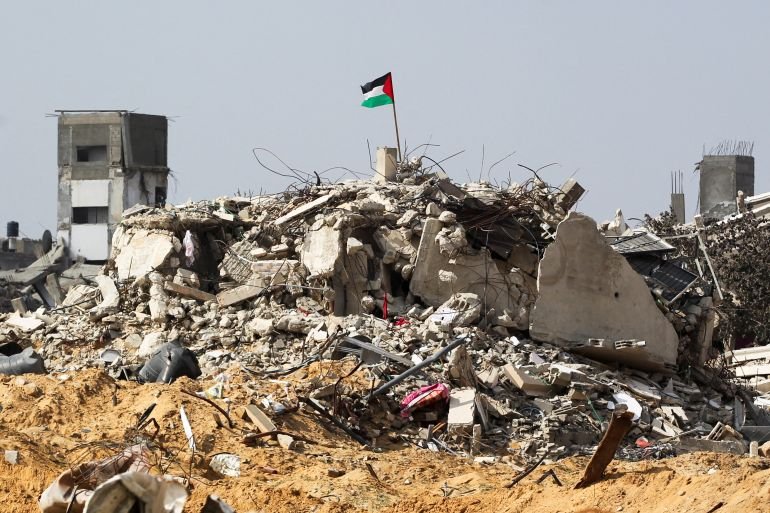
The real wars, however, are entirely of Israel’s making: from the genocide in Gaza to its unprovoked regional wars.
Still, that fact should not blind us to another reality: in the lead-up to the war on Iran, and in the escalation against Lebanon, there was near-total consensus among Jewish Israelis. An Israel Democracy Institute survey conducted on March 2–3foundthat 93% of Jewish Israelis supported the joint US-Israeli attack on Iran. Support cut across all political camps.
The same enthusiasm for war accompanied the Gaza genocide and the various wars and escalations in Lebanon.
Even Yair Lapid – so often and so falsely marketed abroad as a “dove” – fullybackedthese wars, admitting after the Iran ceasefire that Israel had entered them with “rare consensus” and that he supported them “from the very first moment.”
His repeated criticisms, like those of other Israeli politicians, are not of the war but of Netanyahu’s failure to deliver a strategic outcome.
And this is the crucial distinction. Israelis mostly support the wars, but many no longer trust Netanyahu to translate destruction into strategic victory. By mid-April, 92% of Jewish Israelisgavethe army high marks for its management of the Iran war, but only 38%gavehigh ratings to the government.
Source: Antiwar.com
