This article originally appeared onJon Fleetwood’s Substackand was republished with permission.
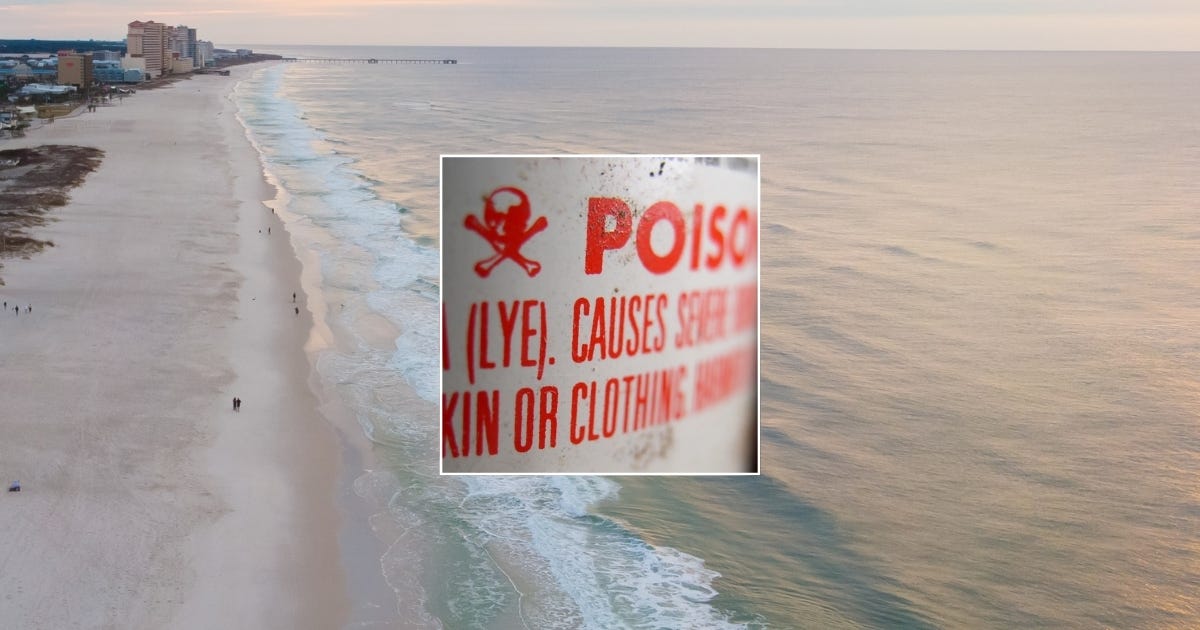
In a historic and deeply controversial federal action, the U.S. Environmental Protection Agency (EPA), alongside NOAA, NOAA Fisheries, and the U.S. Fish and Wildlife Service,authorizedthe first-ever permitted ocean geoengineering experiment involving the release of approximately65,000 liters—roughly 17,000 gallons—of 50% sodium hydroxide solution, commonly known as caustic soda or lye, into U.S. federal waters off the coast of Massachusetts.
TheLOC-NESS(Locking Ocean Carbon in the Northeast Shelf and Slope) experiment, led by the Woods Hole Oceanographic Institution, involved dispersing this highly corrosive chemical mixture into the Wilkinson Basin, approximately 38 miles off Cape Cod.
“In August 2025, the LOC-NESS team conducted an engineered, six-hour dispersal in the Wilkinson Basin area of the Gulf of Maine. Highly purified sodium hydroxide, commonly used to adjust the pH of drinking water, was introduced into the surface waters of the Wilkinson Basin area of the Gulf of Maine along with a red tracer dye known as Rhodamine Water Tracer (RWT).”
The move was an attempt to artificially increase ocean alkalinity and enhance carbon dioxide absorption as part of climate intervention research.
This marks a major escalation in government-sanctioned environmental intervention, directly implicating core health freedom principles: the public was not individually consulted on the chemical alteration of shared waters, fisheries, or potential downstream food systems, despite the ocean’s direct relationship to seafood supplies, ecological systems, and broader environmental exposure.
The EPA (contact) is headed byLee Zeldin, NOAA (contact) byNeil Jacobs, and U.S. Fish and Wildlife Service (contact) byBrian Nesvik.
According to EPA permitdocuments, the agency issued Permit No. EPA-HQ-MPRSA-2024-002 after public comment periods and consultations with NOAA Fisheries and the U.S. Fish and Wildlife Service, ultimately concluding that the experiment would not “unreasonably degrade or endanger human health.”
NOAA and NOAA Fisheries provided direct monitoring support and regulatory consultation under federal environmental laws, while Massachusetts state fisheries representatives and industry observers were also involved.
The project was additionally supported through broader federal marine carbon dioxide removal strategies, effectively creating government legitimacy for future ocean chemical intervention programs.
Source: The Vigilant Fox
