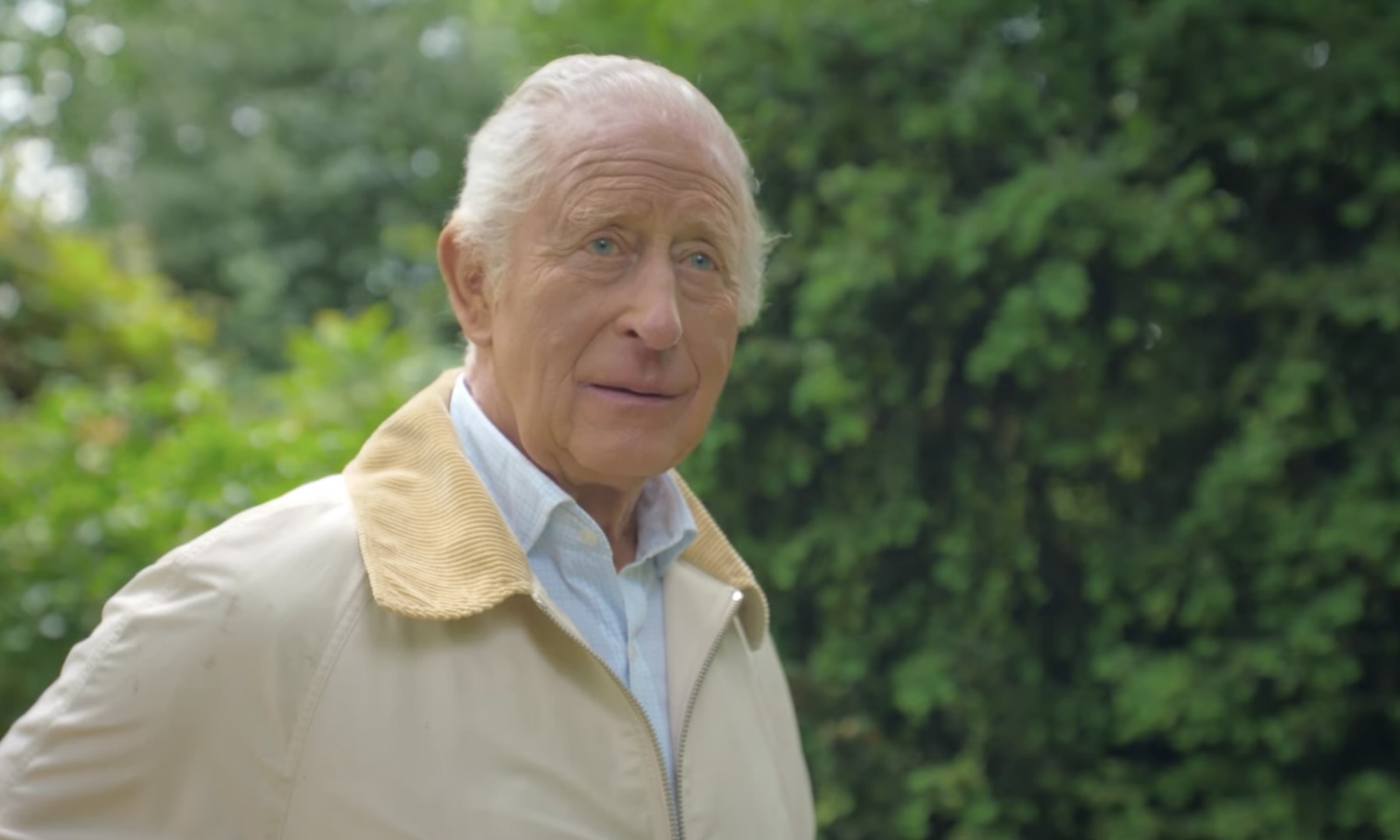
The chandeliers in Windsor's Waterloo Chamber have seen their fair share of pageantry: coronation portraits, state visits, diplomatic theatre on a grand imperial scale. But the scene there this autumn was different. No foreign dignitaries in sashes, no military band. Instead, a cinema screen, rows of plush seats, and a 77-year-old king battling cancer, quietly premiering what some inside his court now describe as his 'epitaph.'
The film isFinding Harmony: A King's Vision, a 90‑minute environmental documentary released onAmazonPrime Video and given an unprecedented launch inside the 1,000-room castle. For Charles III, long caricatured as the talking-to-plants prince, it is nothing less than a final distillation of what he thinks his life – and reign – should mean.
According to palace insiders quoted by RadarOnline and echoed by those familiar with the project, this was not just a prestige screening. It was intended as a 'final farewell message' from a monarch who knows his time, if not yet short, is no longer limitless.
On paper, the premiere sounds like classic royal glamour. Around 200 guests were invited into the castle's State Apartments, including Kate Winslet, who narrates the film, alongside Dame Judi Dench and Sir Rod Stewart. After the screening, they drifted into St George's Hall – the vast, vaulted room usually reserved for state banquets – for champagne under gilded ceilings and heraldic shields.
Yet look closer and the evening was laced with something more pointed than mere ceremony. This was the first time a commercial film premiere has ever been staged inside Windsor Castle. To make it happen, officials temporarily suspended one of the royal household's most rigid rules: the long-standing ban on photography and filming inside the State Apartments.
Ordinarily, visitors are met with an unambiguous instruction: 'Photography and filming, including wearable devices, are not permitted inside the State Apartments or St George's Chapel.' For this event, that was quietly set aside. Influencers and guests were allowed to document the night – a minor revolution in a building that runs on protocol.
'The King was adamant that this project could not feel remote or cloistered behind palace gates,' one palace source explained. 'He wanted the documentary to resonate with a broad audience, particularly younger viewers who engage with content digitally. In his view, that meant embracing a more contemporary approach to how the event was presented.'
Another insider put it more starkly: following the rules too tightly would have 'undermined the spirit of the film.' In other words, the age-old machinery of monarchy would have to bend, if only for one night, to the demands of message and medium.
Strip away the glitz andFinding Harmony: A King's Visionis a deeply personal work. It traces Charles's decades of environmental evangelism: railing against industrial farming long before 'organic' became a supermarket aisle, pushing sustainable architecture when it was dismissed as cranky, and backing renewable energy projects across royal estates while politicians dithered.
In one of the documentary's most arresting passages, the King offers a blunt assessment of humanity's behaviour towards the planet.
Source: International Business Times UK
