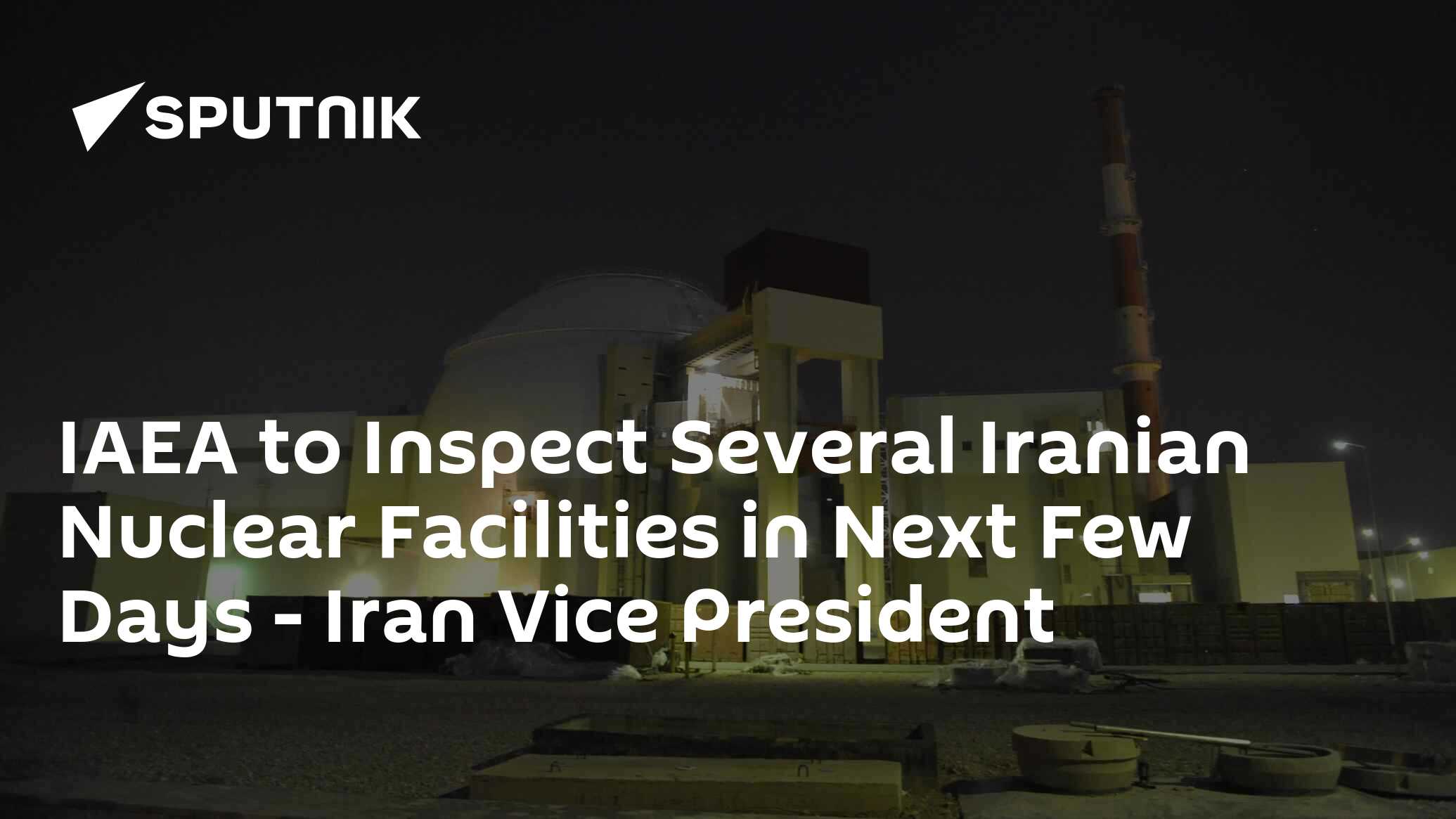
Iran's Vice President announced Tuesday that the International Atomic Energy Agency (IAEA) will conduct inspections at several key nuclear facilities across the country in the coming days, marking a potential thaw in longstanding tensions over Tehran's atomic program. The statement comes amid heightened diplomatic maneuvering, as global powers seek to revive stalled nuclear talks and prevent escalation in the Middle East.
Speaking to reporters in Tehran, Vice President Mohammad Reza Aref emphasized Iran's commitment to transparency under the Nuclear Non-Proliferation Treaty (NPT), confirming that IAEA inspectors will gain access to sites including the Natanz enrichment facility and the Fordow underground complex. "This is a goodwill gesture to demonstrate that our program is peaceful," Aref stated, while cautioning that any findings of sabotage—widely attributed to Israel—must be addressed. The inspections, scheduled to begin within 72 hours, will verify compliance with safeguards agreements that Iran has partially suspended since the U.S. withdrawal from the 2015 Joint Comprehensive Plan of Action (JCPOA) in 2018.
The development follows months of deadlock, with IAEA Director General Rafael Grossi repeatedly urging Iran to allow unfettered access after reports of uranium particles enriched to near-weapons-grade levels at undeclared sites. Western intelligence has long accused Tehran of pursuing military dimensions to its program, though Iran denies this, pointing to its right to civilian nuclear energy. Recent Israeli airstrikes on suspected nuclear-related targets have intensified fears of proliferation, prompting European nations to push for renewed diplomacy before the U.S. presidential election cycle fully engages.
Analysts view the inspections as a tactical move by Tehran to counter sanctions and buy time, potentially paving the way for indirect negotiations with Washington via Oman or Qatar. "If the IAEA reports no major violations, it could pressure the West to ease oil export restrictions," said Karim Sadjadpour, a senior fellow at the Carnegie Endowment for International Peace. However, skeptics in Jerusalem and Washington warn that past inspections have uncovered discrepancies, such as the 2018 "atomic archive" seizure revealing covert activities.
Regional implications extend beyond nuclear concerns, intertwining with proxy conflicts in Yemen, Lebanon, and Syria, where Iran's influence via groups like Hezbollah remains a flashpoint. As inspectors prepare to deploy, all eyes turn to Grossi's forthcoming report to the IAEA Board of Governors, which could either de-escalate rhetoric or ignite fresh accusations. For now, the announcement offers a rare glimmer of cooperation in an otherwise volatile geopolitical landscape.
