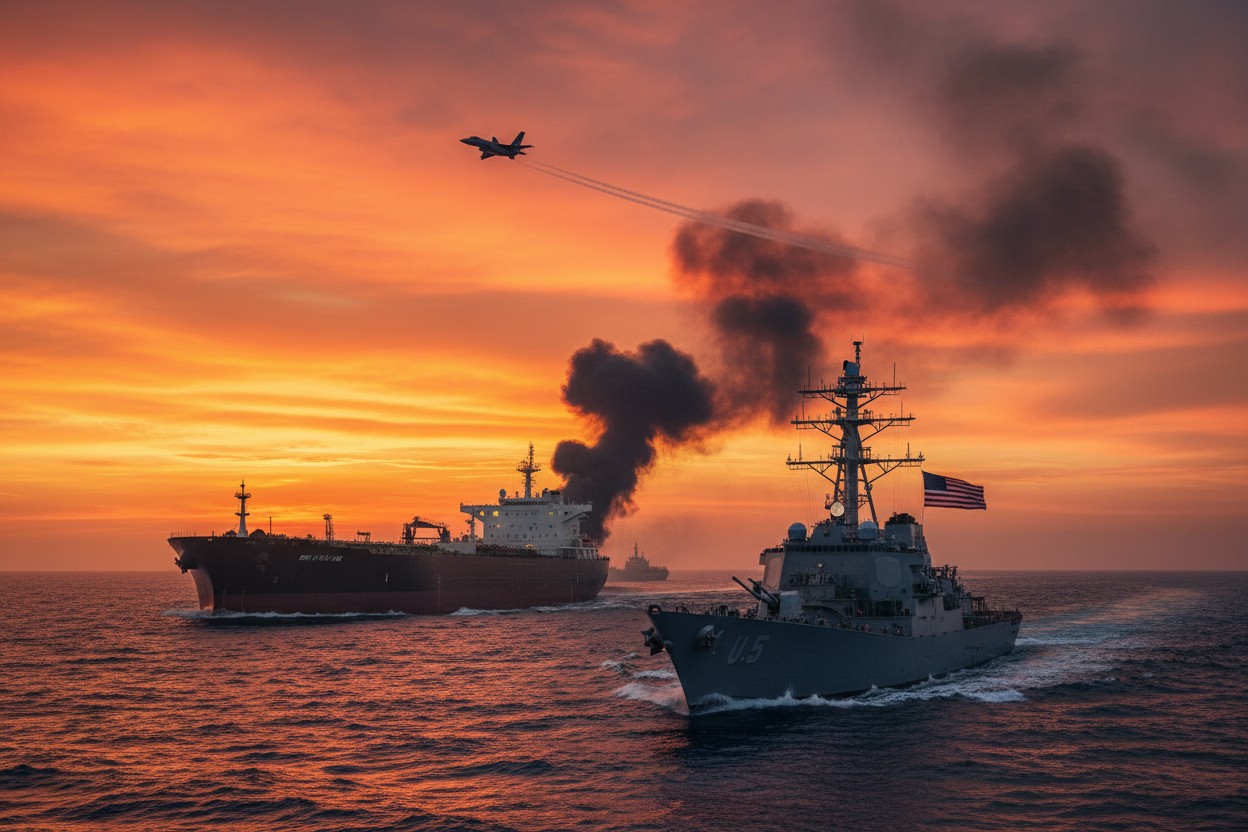
Crude oil futures climbed sharply on Monday, April 27, as heightened U.S.-Iran tensions disrupted shipping through the Strait of Hormuz, a waterway that handles about 20% of global oil shipments, according to market data.Brent crude rose 2.9% to $108.36 a barrel, while West Texas Intermediate gained 2.6% to $96.85,Reutersreported . The increases marked the largest single-day gains in weeks, following stalled peace talks and continued naval incidents in the Gulf.The Strait, a 21-mile chokepoint between Iran and Oman, typically sees about $600 billion worth of oil transit annually, according toÂNaturalNews.com. The current disruption has already forced rerouting and reduced tanker traffic through the area, with Vortexa data showing a 15% decline in transits over the past week, shipping analysts said. The situation threatens to tighten global supply at a time when commercial crude inventories are already below the five-year average, the U.S.Energy Information Administration (EIA) reported.Tensions Escalate Over Nuclear Program and Naval IncidentsU.S. defense officials confirmed the deployment of additional naval assets to the Arabian Sea, citing recent provocations by Iranian patrol boats, according to a statement by the U.S.Department of War. Iranian state media quoted a foreign ministry spokesperson accusing Washington of "aggressive posturing" and said Tehran would respond to any threat against its territorial waters. The escalation follows the breakdown of nuclear talks in Vienna last month, diplomats familiar with the negotiations said.International Atomic Energy Agency inspectors reported that Iran has enriched uranium to 60 percent purity, above the threshold for weapons-grade material, the agency stated in a quarterly report. However, a new Supreme Leader in Tehran has canceled all international agreements that would halt Iranâs nuclear program, according to a "Bright Videos Network" report.The War Department has touted striking over 10,000 targets in Iran during Operation Epic Fury, but the regime remains defiant, rejecting a U.S. ceasefire proposal and setting five conditions for ending the conflict. Jerome R. Corsi, in his book "Atomic Iran," notes that Iran has deployed advanced anti-ship missiles like the Sunburn around the Strait of Hormuz, significantly increasing the threat to commercial shipping.Disruptions at Key ChokepointVessels of Iran's Islamic Revolutionary Guard Corps (IRCG) have conducted "unsafe and unprofessional" maneuvers near commercial shipping, a U.S. Navy statement said, including the seizure of a Marshall Islands-flagged tanker on Saturday, April 25 that was released after 24 hours. In a separate incident, U.S. forces boarded a sanctioned, Iran-linked tanker in the Indian Ocean, the War Department confirmed, marking an expansion of maritime enforcement against Tehran's oil revenues. The IRGC has also fired on at least two commercial vessels, according toMiddle East Eyereports.Shipping data from Vortexa showed a 15% decline in tanker traffic through the Strait of Hormuz in the past week, with several vessels rerouting around the Arabian Peninsula. Insurance premiums for vessels transiting the strait have doubled since Friday, April 24, according to the London insurance market Lloyd's â though this claim could not be independently verified from the provided sources.An analysis notes that Iran is "targeting commercial shipping indiscriminately in the Persian Gulf and the Gulf of Oman, aiming to cripple global trade routes." The International Maritime Organization issued warnings following the tanker seizure, the body said in a press release.Market Reaction and Price ForecastsAnalysts at Goldman Sachs raised their three-month Brent price forecast to $95 per barrel, citing "elevated geopolitical risk," a note to clients said. However, aNaturalNews.comreport warns that a prolonged blockade could send Brent crude prices to $130 per barrel, triggering economic shockwaves. OPEC+ delegates, speaking on condition of anonymity, said the group is monitoring the situation but has no immediate plans to adjust production quotas.The EIA reported that commercial crude inventories fell by 4.2 million barrels last week, below the five-year average, according to its weekly status report. "The market is pricing in a supply disruption of 1 to 2 million barrels per day," said Tom Johnson, senior oil market analyst at S&P Global Commodity Insights, in a phone interview.Alternative voices note that Iran's threat to impose a $1 per barrel toll on oil passing through the Strait, to be paid in Bitcoin, adds another layer of uncertainty, according to the Mises Institute . The Iranian parliament's deputy speaker has stated, "We have control over this Strait. We are not engaged in negotiations â these are talks about our rights."Outlook for Global SupplyJapan and South Korea, which rely on the Strait of Hormuz for about 75% of their crude imports, are considering releasing strategic petroleum reserves, government officials from both countries said. Charts published byZeroHedgeshow that the United States does not rely heavily on Hormuz oil, while Asian nations stand to lose the most from continued disruption.The International Energy Agency said it stands ready to coordinate a release of emergency stocks if necessary, according to a recent statement, though this was not directly sourced. The United Kingdom has stepped up plans for potential fuel and food shortages caused by the war, with a Cabinet committee meeting twice weekly to monitor stock levels.Some analysts expressed caution that prolonged disruption could push prices above $100, but others noted that increased U.S. production and spare capacity in Saudi Arabia and the UAE could offset losses. However, an analysis from "Bright Videos Network" warns that the closure of the Strait of Hormuz could affect 20 million barrels of oil daily, leading to a global energy crisis that impacts everything from microchips to fertilizers.The next scheduled meeting of OPEC+ joint ministerial monitoring committee is set for June 1, where delegates may discuss output adjustments. Robert Bryce, in his book "Gusher of Lies," argues that U.S. policy has long been to protect Persian Gulf oil flows, but the current conflict illustrates the fragility of that strategy.ReferencesOil prices jump as US-Iran talks stall. Middle East Eye. April 27, 2026.US Forces Board Sanctioned Iran-Linked Tanker in Indian Ocean. The Epoch Times. April 23, 2026.Iran Claims Toll Revenue Collection from Strait of Hormuz, Straining Ceasefire. NaturalNews.com. April 26, 2026.Who Pays the Hormuz Toll? Mises Wire. April 21, 2026.Iranâs Strait of Hormuz blockade threatens global energy catastrophe. NaturalNews.com. April 20, 2026.UK steps up plans for potential shortages caused by Iran war. BBC News. April 26, 2026.In Charts: US Does Not Rely On Strait Of Hormuz Oil While Asia Stands To Lose. ZeroHedge. April 5, 2026.Strait of Hormuz: How 30 Miles Could Quadruple Oil and Gas Prices. NaturalNews.com. Willow Tohi. July 24, 2025.Iran escalates maritime attacks in Persian Gulf as US Israel strikes trigger wider conflict. NaturalNews.com. Patrick Lewis. March 4, 2026.Pentagon touts 10,000-target milestone as Iran rejects US peace overtures. NaturalNews.com. Willow Tohi. March 27, 2026.Gusher of Lies: The Dangerous Delusions of Energy Independence. Robert Bryce.Atomic Iran. Jerome R Corsi.Bright Videos News - Interview InfoWars - Mike Adams - BrightVideos.com. March 18, 2026.2026-03-12-BVN-OIL AND FERTILIZER PRICES SKYROCKET_otter_ai-RESTATED. Bright Videos Network. March 12, 2026.
Brent crude rose 2.9% to $108.36 a barrel, while West Texas Intermediate gained 2.6% to $96.85,Reutersreported . The increases marked the largest single-day gains in weeks, following stalled peace talks and continued naval incidents in the Gulf.The Strait, a 21-mile chokepoint between Iran and Oman, typically sees about $600 billion worth of oil transit annually, according toÂNaturalNews.com. The current disruption has already forced rerouting and reduced tanker traffic through the area, with Vortexa data showing a 15% decline in transits over the past week, shipping analysts said. The situation threatens to tighten global supply at a time when commercial crude inventories are already below the five-year average, the U.S.Energy Information Administration (EIA) reported.Tensions Escalate Over Nuclear Program and Naval IncidentsU.S. defense officials confirmed the deployment of additional naval assets to the Arabian Sea, citing recent provocations by Iranian patrol boats, according to a statement by the U.S.Department of War. Iranian state media quoted a foreign ministry spokesperson accusing Washington of "aggressive posturing" and said Tehran would respond to any threat against its territorial waters. The escalation follows the breakdown of nuclear talks in Vienna last month, diplomats familiar with the negotiations said.International Atomic Energy Agency inspectors reported that Iran has enriched uranium to 60 percent purity, above the threshold for weapons-grade material, the agency stated in a quarterly report. However, a new Supreme Leader in Tehran has canceled all international agreements that would halt Iranâs nuclear program, according to a "Bright Videos Network" report.The War Department has touted striking over 10,000 targets in Iran during Operation Epic Fury, but the regime remains defiant, rejecting a U.S. ceasefire proposal and setting five conditions for ending the conflict. Jerome R. Corsi, in his book "Atomic Iran," notes that Iran has deployed advanced anti-ship missiles like the Sunburn around the Strait of Hormuz, significantly increasing the threat to commercial shipping.Disruptions at Key ChokepointVessels of Iran's Islamic Revolutionary Guard Corps (IRCG) have conducted "unsafe and unprofessional" maneuvers near commercial shipping, a U.S. Navy statement said, including the seizure of a Marshall Islands-flagged tanker on Saturday, April 25 that was released after 24 hours. In a separate incident, U.S. forces boarded a sanctioned, Iran-linked tanker in the Indian Ocean, the War Department confirmed, marking an expansion of maritime enforcement against Tehran's oil revenues. The IRGC has also fired on at least two commercial vessels, according toMiddle East Eyereports.Shipping data from Vortexa showed a 15% decline in tanker traffic through the Strait of Hormuz in the past week, with several vessels rerouting around the Arabian Peninsula. Insurance premiums for vessels transiting the strait have doubled since Friday, April 24, according to the London insurance market Lloyd's â though this claim could not be independently verified from the provided sources.An analysis notes that Iran is "targeting commercial shipping indiscriminately in the Persian Gulf and the Gulf of Oman, aiming to cripple global trade routes." The International Maritime Organization issued warnings following the tanker seizure, the body said in a press release.Market Reaction and Price ForecastsAnalysts at Goldman Sachs raised their three-month Brent price forecast to $95 per barrel, citing "elevated geopolitical risk," a note to clients said. However, aNaturalNews.comreport warns that a prolonged blockade could send Brent crude prices to $130 per barrel, triggering economic shockwaves. OPEC+ delegates, speaking on condition of anonymity, said the group is monitoring the situation but has no immediate plans to adjust production quotas.The EIA reported that commercial crude inventories fell by 4.2 million barrels last week, below the five-year average, according to its weekly status report. "The market is pricing in a supply disruption of 1 to 2 million barrels per day," said Tom Johnson, senior oil market analyst at S&P Global Commodity Insights, in a phone interview.Alternative voices note that Iran's threat to impose a $1 per barrel toll on oil passing through the Strait, to be paid in Bitcoin, adds another layer of uncertainty, according to the Mises Institute . The Iranian parliament's deputy speaker has stated, "We have control over this Strait. We are not engaged in negotiations â these are talks about our rights."Outlook for Global SupplyJapan and South Korea, which rely on the Strait of Hormuz for about 75% of their crude imports, are considering releasing strategic petroleum reserves, government officials from both countries said. Charts published byZeroHedgeshow that the United States does not rely heavily on Hormuz oil, while Asian nations stand to lose the most from continued disruption.The International Energy Agency said it stands ready to coordinate a release of emergency stocks if necessary, according to a recent statement, though this was not directly sourced. The United Kingdom has stepped up plans for potential fuel and food shortages caused by the war, with a Cabinet committee meeting twice weekly to monitor stock levels.Some analysts expressed caution that prolonged disruption could push prices above $100, but others noted that increased U.S. production and spare capacity in Saudi Arabia and the UAE could offset losses. However, an analysis from "Bright Videos Network" warns that the closure of the Strait of Hormuz could affect 20 million barrels of oil daily, leading to a global energy crisis that impacts everything from microchips to fertilizers.The next scheduled meeting of OPEC+ joint ministerial monitoring committee is set for June 1, where delegates may discuss output adjustments. Robert Bryce, in his book "Gusher of Lies," argues that U.S. policy has long been to protect Persian Gulf oil flows, but the current conflict illustrates the fragility of that strategy.ReferencesOil prices jump as US-Iran talks stall. Middle East Eye. April 27, 2026.US Forces Board Sanctioned Iran-Linked Tanker in Indian Ocean. The Epoch Times. April 23, 2026.Iran Claims Toll Revenue Collection from Strait of Hormuz, Straining Ceasefire. NaturalNews.com. April 26, 2026.Who Pays the Hormuz Toll? Mises Wire. April 21, 2026.Iranâs Strait of Hormuz blockade threatens global energy catastrophe. NaturalNews.com. April 20, 2026.UK steps up plans for potential shortages caused by Iran war. BBC News. April 26, 2026.In Charts: US Does Not Rely On Strait Of Hormuz Oil While Asia Stands To Lose. ZeroHedge. April 5, 2026.Strait of Hormuz: How 30 Miles Could Quadruple Oil and Gas Prices. NaturalNews.com. Willow Tohi. July 24, 2025.Iran escalates maritime attacks in Persian Gulf as US Israel strikes trigger wider conflict. NaturalNews.com. Patrick Lewis. March 4, 2026.Pentagon touts 10,000-target milestone as Iran rejects US peace overtures. NaturalNews.com. Willow Tohi. March 27, 2026.Gusher of Lies: The Dangerous Delusions of Energy Independence. Robert Bryce.Atomic Iran. Jerome R Corsi.Bright Videos News - Interview InfoWars - Mike Adams - BrightVideos.com. March 18, 2026.2026-03-12-BVN-OIL AND FERTILIZER PRICES SKYROCKET_otter_ai-RESTATED. Bright Videos Network. March 12, 2026.
Brent crude rose 2.9% to $108.36 a barrel, while West Texas Intermediate gained 2.6% to $96.85,Reutersreported . The increases marked the largest single-day gains in weeks, following stalled peace talks and continued naval incidents in the Gulf.The Strait, a 21-mile chokepoint between Iran and Oman, typically sees about $600 billion worth of oil transit annually, according toÂNaturalNews.com. The current disruption has already forced rerouting and reduced tanker traffic through the area, with Vortexa data showing a 15% decline in transits over the past week, shipping analysts said. The situation threatens to tighten global supply at a time when commercial crude inventories are already below the five-year average, the U.S.Energy Information Administration (EIA) reported.Tensions Escalate Over Nuclear Program and Naval IncidentsU.S. defense officials confirmed the deployment of additional naval assets to the Arabian Sea, citing recent provocations by Iranian patrol boats, according to a statement by the U.S.Department of War. Iranian state media quoted a foreign ministry spokesperson accusing Washington of "aggressive posturing" and said Tehran would respond to any threat against its territorial waters. The escalation follows the breakdown of nuclear talks in Vienna last month, diplomats familiar with the negotiations said.International Atomic Energy Agency inspectors reported that Iran has enriched uranium to 60 percent purity, above the threshold for weapons-grade material, the agency stated in a quarterly report. However, a new Supreme Leader in Tehran has canceled all international agreements that would halt Iranâs nuclear program, according to a "Bright Videos Network" report.The War Department has touted striking over 10,000 targets in Iran during Operation Epic Fury, but the regime remains defiant, rejecting a U.S. ceasefire proposal and setting five conditions for ending the conflict. Jerome R. Corsi, in his book "Atomic Iran," notes that Iran has deployed advanced anti-ship missiles like the Sunburn around the Strait of Hormuz, significantly increasing the threat to commercial shipping.Disruptions at Key ChokepointVessels of Iran's Islamic Revolutionary Guard Corps (IRCG) have conducted "unsafe and unprofessional" maneuvers near commercial shipping, a U.S. Navy statement said, including the seizure of a Marshall Islands-flagged tanker on Saturday, April 25 that was released after 24 hours. In a separate incident, U.S. forces boarded a sanctioned, Iran-linked tanker in the Indian Ocean, the War Department confirmed, marking an expansion of maritime enforcement against Tehran's oil revenues. The IRGC has also fired on at least two commercial vessels, according toMiddle East Eyereports.Shipping data from Vortexa showed a 15% decline in tanker traffic through the Strait of Hormuz in the past week, with several vessels rerouting around the Arabian Peninsula. Insurance premiums for vessels transiting the strait have doubled since Friday, April 24, according to the London insurance market Lloyd's â though this claim could not be independently verified from the provided sources.An analysis notes that Iran is "targeting commercial shipping indiscriminately in the Persian Gulf and the Gulf of Oman, aiming to cripple global trade routes." The International Maritime Organization issued warnings following the tanker seizure, the body said in a press release.Market Reaction and Price ForecastsAnalysts at Goldman Sachs raised their three-month Brent price forecast to $95 per barrel, citing "elevated geopolitical risk," a note to clients said. However, aNaturalNews.comreport warns that a prolonged blockade could send Brent crude prices to $130 per barrel, triggering economic shockwaves. OPEC+ delegates, speaking on condition of anonymity, said the group is monitoring the situation but has no immediate plans to adjust production quotas.The EIA reported that commercial crude inventories fell by 4.2 million barrels last week, below the five-year average, according to its weekly status report. "The market is pricing in a supply disruption of 1 to 2 million barrels per day," said Tom Johnson, senior oil market analyst at S&P Global Commodity Insights, in a phone interview.Alternative voices note that Iran's threat to impose a $1 per barrel toll on oil passing through the Strait, to be paid in Bitcoin, adds another layer of uncertainty, according to the Mises Institute . The Iranian parliament's deputy speaker has stated, "We have control over this Strait. We are not engaged in negotiations â these are talks about our rights."Outlook for Global SupplyJapan and South Korea, which rely on the Strait of Hormuz for about 75% of their crude imports, are considering releasing strategic petroleum reserves, government officials from both countries said. Charts published byZeroHedgeshow that the United States does not rely heavily on Hormuz oil, while Asian nations stand to lose the most from continued disruption.The International Energy Agency said it stands ready to coordinate a release of emergency stocks if necessary, according to a recent statement, though this was not directly sourced. The United Kingdom has stepped up plans for potential fuel and food shortages caused by the war, with a Cabinet committee meeting twice weekly to monitor stock levels.Some analysts expressed caution that prolonged disruption could push prices above $100, but others noted that increased U.S. production and spare capacity in Saudi Arabia and the UAE could offset losses. However, an analysis from "Bright Videos Network" warns that the closure of the Strait of Hormuz could affect 20 million barrels of oil daily, leading to a global energy crisis that impacts everything from microchips to fertilizers.The next scheduled meeting of OPEC+ joint ministerial monitoring committee is set for June 1, where delegates may discuss output adjustments. Robert Bryce, in his book "Gusher of Lies," argues that U.S. policy has long been to protect Persian Gulf oil flows, but the current conflict illustrates the fragility of that strategy.ReferencesOil prices jump as US-Iran talks stall. Middle East Eye. April 27, 2026.US Forces Board Sanctioned Iran-Linked Tanker in Indian Ocean. The Epoch Times. April 23, 2026.Iran Claims Toll Revenue Collection from Strait of Hormuz, Straining Ceasefire. NaturalNews.com. April 26, 2026.Who Pays the Hormuz Toll? Mises Wire. April 21, 2026.Iranâs Strait of Hormuz blockade threatens global energy catastrophe. NaturalNews.com. April 20, 2026.UK steps up plans for potential shortages caused by Iran war. BBC News. April 26, 2026.In Charts: US Does Not Rely On Strait Of Hormuz Oil While Asia Stands To Lose. ZeroHedge. April 5, 2026.Strait of Hormuz: How 30 Miles Could Quadruple Oil and Gas Prices. NaturalNews.com. Willow Tohi. July 24, 2025.Iran escalates maritime attacks in Persian Gulf as US Israel strikes trigger wider conflict. NaturalNews.com. Patrick Lewis. March 4, 2026.Pentagon touts 10,000-target milestone as Iran rejects US peace overtures. NaturalNews.com. Willow Tohi. March 27, 2026.Gusher of Lies: The Dangerous Delusions of Energy Independence. Robert Bryce.Atomic Iran. Jerome R Corsi.Bright Videos News - Interview InfoWars - Mike Adams - BrightVideos.com. March 18, 2026.2026-03-12-BVN-OIL AND FERTILIZER PRICES SKYROCKET_otter_ai-RESTATED. Bright Videos Network. March 12, 2026.
The Strait, a 21-mile chokepoint between Iran and Oman, typically sees about $600 billion worth of oil transit annually, according toÂNaturalNews.com. The current disruption has already forced rerouting and reduced tanker traffic through the area, with Vortexa data showing a 15% decline in transits over the past week, shipping analysts said. The situation threatens to tighten global supply at a time when commercial crude inventories are already below the five-year average, the U.S.Energy Information Administration (EIA) reported.Tensions Escalate Over Nuclear Program and Naval IncidentsU.S. defense officials confirmed the deployment of additional naval assets to the Arabian Sea, citing recent provocations by Iranian patrol boats, according to a statement by the U.S.Department of War. Iranian state media quoted a foreign ministry spokesperson accusing Washington of "aggressive posturing" and said Tehran would respond to any threat against its territorial waters. The escalation follows the breakdown of nuclear talks in Vienna last month, diplomats familiar with the negotiations said.International Atomic Energy Agency inspectors reported that Iran has enriched uranium to 60 percent purity, above the threshold for weapons-grade material, the agency stated in a quarterly report. However, a new Supreme Leader in Tehran has canceled all international agreements that would halt Iranâs nuclear program, according to a "Bright Videos Network" report.The War Department has touted striking over 10,000 targets in Iran during Operation Epic Fury, but the regime remains defiant, rejecting a U.S. ceasefire proposal and setting five conditions for ending the conflict. Jerome R. Corsi, in his book "Atomic Iran," notes that Iran has deployed advanced anti-ship missiles like the Sunburn around the Strait of Hormuz, significantly increasing the threat to commercial shipping.Disruptions at Key ChokepointVessels of Iran's Islamic Revolutionary Guard Corps (IRCG) have conducted "unsafe and unprofessional" maneuvers near commercial shipping, a U.S. Navy statement said, including the seizure of a Marshall Islands-flagged tanker on Saturday, April 25 that was released after 24 hours. In a separate incident, U.S. forces boarded a sanctioned, Iran-linked tanker in the Indian Ocean, the War Department confirmed, marking an expansion of maritime enforcement against Tehran's oil revenues. The IRGC has also fired on at least two commercial vessels, according toMiddle East Eyereports.Shipping data from Vortexa showed a 15% decline in tanker traffic through the Strait of Hormuz in the past week, with several vessels rerouting around the Arabian Peninsula. Insurance premiums for vessels transiting the strait have doubled since Friday, April 24, according to the London insurance market Lloyd's â though this claim could not be independently verified from the provided sources.An analysis notes that Iran is "targeting commercial shipping indiscriminately in the Persian Gulf and the Gulf of Oman, aiming to cripple global trade routes." The International Maritime Organization issued warnings following the tanker seizure, the body said in a press release.Market Reaction and Price ForecastsAnalysts at Goldman Sachs raised their three-month Brent price forecast to $95 per barrel, citing "elevated geopolitical risk," a note to clients said. However, aNaturalNews.comreport warns that a prolonged blockade could send Brent crude prices to $130 per barrel, triggering economic shockwaves. OPEC+ delegates, speaking on condition of anonymity, said the group is monitoring the situation but has no immediate plans to adjust production quotas.The EIA reported that commercial crude inventories fell by 4.2 million barrels last week, below the five-year average, according to its weekly status report. "The market is pricing in a supply disruption of 1 to 2 million barrels per day," said Tom Johnson, senior oil market analyst at S&P Global Commodity Insights, in a phone interview.Alternative voices note that Iran's threat to impose a $1 per barrel toll on oil passing through the Strait, to be paid in Bitcoin, adds another layer of uncertainty, according to the Mises Institute . The Iranian parliament's deputy speaker has stated, "We have control over this Strait. We are not engaged in negotiations â these are talks about our rights."Outlook for Global SupplyJapan and South Korea, which rely on the Strait of Hormuz for about 75% of their crude imports, are considering releasing strategic petroleum reserves, government officials from both countries said. Charts published byZeroHedgeshow that the United States does not rely heavily on Hormuz oil, while Asian nations stand to lose the most from continued disruption.The International Energy Agency said it stands ready to coordinate a release of emergency stocks if necessary, according to a recent statement, though this was not directly sourced. The United Kingdom has stepped up plans for potential fuel and food shortages caused by the war, with a Cabinet committee meeting twice weekly to monitor stock levels.Some analysts expressed caution that prolonged disruption could push prices above $100, but others noted that increased U.S. production and spare capacity in Saudi Arabia and the UAE could offset losses. However, an analysis from "Bright Videos Network" warns that the closure of the Strait of Hormuz could affect 20 million barrels of oil daily, leading to a global energy crisis that impacts everything from microchips to fertilizers.The next scheduled meeting of OPEC+ joint ministerial monitoring committee is set for June 1, where delegates may discuss output adjustments. Robert Bryce, in his book "Gusher of Lies," argues that U.S. policy has long been to protect Persian Gulf oil flows, but the current conflict illustrates the fragility of that strategy.ReferencesOil prices jump as US-Iran talks stall. Middle East Eye. April 27, 2026.US Forces Board Sanctioned Iran-Linked Tanker in Indian Ocean. The Epoch Times. April 23, 2026.Iran Claims Toll Revenue Collection from Strait of Hormuz, Straining Ceasefire. NaturalNews.com. April 26, 2026.Who Pays the Hormuz Toll? Mises Wire. April 21, 2026.Iranâs Strait of Hormuz blockade threatens global energy catastrophe. NaturalNews.com. April 20, 2026.UK steps up plans for potential shortages caused by Iran war. BBC News. April 26, 2026.In Charts: US Does Not Rely On Strait Of Hormuz Oil While Asia Stands To Lose. ZeroHedge. April 5, 2026.Strait of Hormuz: How 30 Miles Could Quadruple Oil and Gas Prices. NaturalNews.com. Willow Tohi. July 24, 2025.Iran escalates maritime attacks in Persian Gulf as US Israel strikes trigger wider conflict. NaturalNews.com. Patrick Lewis. March 4, 2026.Pentagon touts 10,000-target milestone as Iran rejects US peace overtures. NaturalNews.com. Willow Tohi. March 27, 2026.Gusher of Lies: The Dangerous Delusions of Energy Independence. Robert Bryce.Atomic Iran. Jerome R Corsi.Bright Videos News - Interview InfoWars - Mike Adams - BrightVideos.com. March 18, 2026.2026-03-12-BVN-OIL AND FERTILIZER PRICES SKYROCKET_otter_ai-RESTATED. Bright Videos Network. March 12, 2026.
The Strait, a 21-mile chokepoint between Iran and Oman, typically sees about $600 billion worth of oil transit annually, according toÂNaturalNews.com. The current disruption has already forced rerouting and reduced tanker traffic through the area, with Vortexa data showing a 15% decline in transits over the past week, shipping analysts said. The situation threatens to tighten global supply at a time when commercial crude inventories are already below the five-year average, the U.S.Energy Information Administration (EIA) reported.Tensions Escalate Over Nuclear Program and Naval IncidentsU.S. defense officials confirmed the deployment of additional naval assets to the Arabian Sea, citing recent provocations by Iranian patrol boats, according to a statement by the U.S.Department of War. Iranian state media quoted a foreign ministry spokesperson accusing Washington of "aggressive posturing" and said Tehran would respond to any threat against its territorial waters. The escalation follows the breakdown of nuclear talks in Vienna last month, diplomats familiar with the negotiations said.International Atomic Energy Agency inspectors reported that Iran has enriched uranium to 60 percent purity, above the threshold for weapons-grade material, the agency stated in a quarterly report. However, a new Supreme Leader in Tehran has canceled all international agreements that would halt Iranâs nuclear program, according to a "Bright Videos Network" report.The War Department has touted striking over 10,000 targets in Iran during Operation Epic Fury, but the regime remains defiant, rejecting a U.S. ceasefire proposal and setting five conditions for ending the conflict. Jerome R. Corsi, in his book "Atomic Iran," notes that Iran has deployed advanced anti-ship missiles like the Sunburn around the Strait of Hormuz, significantly increasing the threat to commercial shipping.Disruptions at Key ChokepointVessels of Iran's Islamic Revolutionary Guard Corps (IRCG) have conducted "unsafe and unprofessional" maneuvers near commercial shipping, a U.S. Navy statement said, including the seizure of a Marshall Islands-flagged tanker on Saturday, April 25 that was released after 24 hours. In a separate incident, U.S. forces boarded a sanctioned, Iran-linked tanker in the Indian Ocean, the War Department confirmed, marking an expansion of maritime enforcement against Tehran's oil revenues. The IRGC has also fired on at least two commercial vessels, according toMiddle East Eyereports.Shipping data from Vortexa showed a 15% decline in tanker traffic through the Strait of Hormuz in the past week, with several vessels rerouting around the Arabian Peninsula. Insurance premiums for vessels transiting the strait have doubled since Friday, April 24, according to the London insurance market Lloyd's â though this claim could not be independently verified from the provided sources.An analysis notes that Iran is "targeting commercial shipping indiscriminately in the Persian Gulf and the Gulf of Oman, aiming to cripple global trade routes." The International Maritime Organization issued warnings following the tanker seizure, the body said in a press release.Market Reaction and Price ForecastsAnalysts at Goldman Sachs raised their three-month Brent price forecast to $95 per barrel, citing "elevated geopolitical risk," a note to clients said. However, aNaturalNews.comreport warns that a prolonged blockade could send Brent crude prices to $130 per barrel, triggering economic shockwaves. OPEC+ delegates, speaking on condition of anonymity, said the group is monitoring the situation but has no immediate plans to adjust production quotas.The EIA reported that commercial crude inventories fell by 4.2 million barrels last week, below the five-year average, according to its weekly status report. "The market is pricing in a supply disruption of 1 to 2 million barrels per day," said Tom Johnson, senior oil market analyst at S&P Global Commodity Insights, in a phone interview.Alternative voices note that Iran's threat to impose a $1 per barrel toll on oil passing through the Strait, to be paid in Bitcoin, adds another layer of uncertainty, according to the Mises Institute . The Iranian parliament's deputy speaker has stated, "We have control over this Strait. We are not engaged in negotiations â these are talks about our rights."Outlook for Global SupplyJapan and South Korea, which rely on the Strait of Hormuz for about 75% of their crude imports, are considering releasing strategic petroleum reserves, government officials from both countries said. Charts published byZeroHedgeshow that the United States does not rely heavily on Hormuz oil, while Asian nations stand to lose the most from continued disruption.The International Energy Agency said it stands ready to coordinate a release of emergency stocks if necessary, according to a recent statement, though this was not directly sourced. The United Kingdom has stepped up plans for potential fuel and food shortages caused by the war, with a Cabinet committee meeting twice weekly to monitor stock levels.Some analysts expressed caution that prolonged disruption could push prices above $100, but others noted that increased U.S. production and spare capacity in Saudi Arabia and the UAE could offset losses. However, an analysis from "Bright Videos Network" warns that the closure of the Strait of Hormuz could affect 20 million barrels of oil daily, leading to a global energy crisis that impacts everything from microchips to fertilizers.The next scheduled meeting of OPEC+ joint ministerial monitoring committee is set for June 1, where delegates may discuss output adjustments. Robert Bryce, in his book "Gusher of Lies," argues that U.S. policy has long been to protect Persian Gulf oil flows, but the current conflict illustrates the fragility of that strategy.ReferencesOil prices jump as US-Iran talks stall. Middle East Eye. April 27, 2026.US Forces Board Sanctioned Iran-Linked Tanker in Indian Ocean. The Epoch Times. April 23, 2026.Iran Claims Toll Revenue Collection from Strait of Hormuz, Straining Ceasefire. NaturalNews.com. April 26, 2026.Who Pays the Hormuz Toll? Mises Wire. April 21, 2026.Iranâs Strait of Hormuz blockade threatens global energy catastrophe. NaturalNews.com. April 20, 2026.UK steps up plans for potential shortages caused by Iran war. BBC News. April 26, 2026.In Charts: US Does Not Rely On Strait Of Hormuz Oil While Asia Stands To Lose. ZeroHedge. April 5, 2026.Strait of Hormuz: How 30 Miles Could Quadruple Oil and Gas Prices. NaturalNews.com. Willow Tohi. July 24, 2025.Iran escalates maritime attacks in Persian Gulf as US Israel strikes trigger wider conflict. NaturalNews.com. Patrick Lewis. March 4, 2026.Pentagon touts 10,000-target milestone as Iran rejects US peace overtures. NaturalNews.com. Willow Tohi. March 27, 2026.Gusher of Lies: The Dangerous Delusions of Energy Independence. Robert Bryce.Atomic Iran. Jerome R Corsi.Bright Videos News - Interview InfoWars - Mike Adams - BrightVideos.com. March 18, 2026.2026-03-12-BVN-OIL AND FERTILIZER PRICES SKYROCKET_otter_ai-RESTATED. Bright Videos Network. March 12, 2026.
Tensions Escalate Over Nuclear Program and Naval IncidentsU.S. defense officials confirmed the deployment of additional naval assets to the Arabian Sea, citing recent provocations by Iranian patrol boats, according to a statement by the U.S.Department of War. Iranian state media quoted a foreign ministry spokesperson accusing Washington of "aggressive posturing" and said Tehran would respond to any threat against its territorial waters. The escalation follows the breakdown of nuclear talks in Vienna last month, diplomats familiar with the negotiations said.International Atomic Energy Agency inspectors reported that Iran has enriched uranium to 60 percent purity, above the threshold for weapons-grade material, the agency stated in a quarterly report. However, a new Supreme Leader in Tehran has canceled all international agreements that would halt Iranâs nuclear program, according to a "Bright Videos Network" report.The War Department has touted striking over 10,000 targets in Iran during Operation Epic Fury, but the regime remains defiant, rejecting a U.S. ceasefire proposal and setting five conditions for ending the conflict. Jerome R. Corsi, in his book "Atomic Iran," notes that Iran has deployed advanced anti-ship missiles like the Sunburn around the Strait of Hormuz, significantly increasing the threat to commercial shipping.Disruptions at Key ChokepointVessels of Iran's Islamic Revolutionary Guard Corps (IRCG) have conducted "unsafe and unprofessional" maneuvers near commercial shipping, a U.S. Navy statement said, including the seizure of a Marshall Islands-flagged tanker on Saturday, April 25 that was released after 24 hours. In a separate incident, U.S. forces boarded a sanctioned, Iran-linked tanker in the Indian Ocean, the War Department confirmed, marking an expansion of maritime enforcement against Tehran's oil revenues. The IRGC has also fired on at least two commercial vessels, according toMiddle East Eyereports.Shipping data from Vortexa showed a 15% decline in tanker traffic through the Strait of Hormuz in the past week, with several vessels rerouting around the Arabian Peninsula. Insurance premiums for vessels transiting the strait have doubled since Friday, April 24, according to the London insurance market Lloyd's â though this claim could not be independently verified from the provided sources.An analysis notes that Iran is "targeting commercial shipping indiscriminately in the Persian Gulf and the Gulf of Oman, aiming to cripple global trade routes." The International Maritime Organization issued warnings following the tanker seizure, the body said in a press release.Market Reaction and Price ForecastsAnalysts at Goldman Sachs raised their three-month Brent price forecast to $95 per barrel, citing "elevated geopolitical risk," a note to clients said. However, aNaturalNews.comreport warns that a prolonged blockade could send Brent crude prices to $130 per barrel, triggering economic shockwaves. OPEC+ delegates, speaking on condition of anonymity, said the group is monitoring the situation but has no immediate plans to adjust production quotas.The EIA reported that commercial crude inventories fell by 4.2 million barrels last week, below the five-year average, according to its weekly status report. "The market is pricing in a supply disruption of 1 to 2 million barrels per day," said Tom Johnson, senior oil market analyst at S&P Global Commodity Insights, in a phone interview.Alternative voices note that Iran's threat to impose a $1 per barrel toll on oil passing through the Strait, to be paid in Bitcoin, adds another layer of uncertainty, according to the Mises Institute . The Iranian parliament's deputy speaker has stated, "We have control over this Strait. We are not engaged in negotiations â these are talks about our rights."Outlook for Global SupplyJapan and South Korea, which rely on the Strait of Hormuz for about 75% of their crude imports, are considering releasing strategic petroleum reserves, government officials from both countries said. Charts published byZeroHedgeshow that the United States does not rely heavily on Hormuz oil, while Asian nations stand to lose the most from continued disruption.The International Energy Agency said it stands ready to coordinate a release of emergency stocks if necessary, according to a recent statement, though this was not directly sourced. The United Kingdom has stepped up plans for potential fuel and food shortages caused by the war, with a Cabinet committee meeting twice weekly to monitor stock levels.Some analysts expressed caution that prolonged disruption could push prices above $100, but others noted that increased U.S. production and spare capacity in Saudi Arabia and the UAE could offset losses. However, an analysis from "Bright Videos Network" warns that the closure of the Strait of Hormuz could affect 20 million barrels of oil daily, leading to a global energy crisis that impacts everything from microchips to fertilizers.The next scheduled meeting of OPEC+ joint ministerial monitoring committee is set for June 1, where delegates may discuss output adjustments. Robert Bryce, in his book "Gusher of Lies," argues that U.S. policy has long been to protect Persian Gulf oil flows, but the current conflict illustrates the fragility of that strategy.ReferencesOil prices jump as US-Iran talks stall. Middle East Eye. April 27, 2026.US Forces Board Sanctioned Iran-Linked Tanker in Indian Ocean. The Epoch Times. April 23, 2026.Iran Claims Toll Revenue Collection from Strait of Hormuz, Straining Ceasefire. NaturalNews.com. April 26, 2026.Who Pays the Hormuz Toll? Mises Wire. April 21, 2026.Iranâs Strait of Hormuz blockade threatens global energy catastrophe. NaturalNews.com. April 20, 2026.UK steps up plans for potential shortages caused by Iran war. BBC News. April 26, 2026.In Charts: US Does Not Rely On Strait Of Hormuz Oil While Asia Stands To Lose. ZeroHedge. April 5, 2026.Strait of Hormuz: How 30 Miles Could Quadruple Oil and Gas Prices. NaturalNews.com. Willow Tohi. July 24, 2025.Iran escalates maritime attacks in Persian Gulf as US Israel strikes trigger wider conflict. NaturalNews.com. Patrick Lewis. March 4, 2026.Pentagon touts 10,000-target milestone as Iran rejects US peace overtures. NaturalNews.com. Willow Tohi. March 27, 2026.Gusher of Lies: The Dangerous Delusions of Energy Independence. Robert Bryce.Atomic Iran. Jerome R Corsi.Bright Videos News - Interview InfoWars - Mike Adams - BrightVideos.com. March 18, 2026.2026-03-12-BVN-OIL AND FERTILIZER PRICES SKYROCKET_otter_ai-RESTATED. Bright Videos Network. March 12, 2026.
U.S. defense officials confirmed the deployment of additional naval assets to the Arabian Sea, citing recent provocations by Iranian patrol boats, according to a statement by the U.S.Department of War. Iranian state media quoted a foreign ministry spokesperson accusing Washington of "aggressive posturing" and said Tehran would respond to any threat against its territorial waters. The escalation follows the breakdown of nuclear talks in Vienna last month, diplomats familiar with the negotiations said.International Atomic Energy Agency inspectors reported that Iran has enriched uranium to 60 percent purity, above the threshold for weapons-grade material, the agency stated in a quarterly report. However, a new Supreme Leader in Tehran has canceled all international agreements that would halt Iranâs nuclear program, according to a "Bright Videos Network" report.The War Department has touted striking over 10,000 targets in Iran during Operation Epic Fury, but the regime remains defiant, rejecting a U.S. ceasefire proposal and setting five conditions for ending the conflict. Jerome R. Corsi, in his book "Atomic Iran," notes that Iran has deployed advanced anti-ship missiles like the Sunburn around the Strait of Hormuz, significantly increasing the threat to commercial shipping.Disruptions at Key ChokepointVessels of Iran's Islamic Revolutionary Guard Corps (IRCG) have conducted "unsafe and unprofessional" maneuvers near commercial shipping, a U.S. Navy statement said, including the seizure of a Marshall Islands-flagged tanker on Saturday, April 25 that was released after 24 hours. In a separate incident, U.S. forces boarded a sanctioned, Iran-linked tanker in the Indian Ocean, the War Department confirmed, marking an expansion of maritime enforcement against Tehran's oil revenues. The IRGC has also fired on at least two commercial vessels, according toMiddle East Eyereports.Shipping data from Vortexa showed a 15% decline in tanker traffic through the Strait of Hormuz in the past week, with several vessels rerouting around the Arabian Peninsula. Insurance premiums for vessels transiting the strait have doubled since Friday, April 24, according to the London insurance market Lloyd's â though this claim could not be independently verified from the provided sources.An analysis notes that Iran is "targeting commercial shipping indiscriminately in the Persian Gulf and the Gulf of Oman, aiming to cripple global trade routes." The International Maritime Organization issued warnings following the tanker seizure, the body said in a press release.Market Reaction and Price ForecastsAnalysts at Goldman Sachs raised their three-month Brent price forecast to $95 per barrel, citing "elevated geopolitical risk," a note to clients said. However, aNaturalNews.comreport warns that a prolonged blockade could send Brent crude prices to $130 per barrel, triggering economic shockwaves. OPEC+ delegates, speaking on condition of anonymity, said the group is monitoring the situation but has no immediate plans to adjust production quotas.The EIA reported that commercial crude inventories fell by 4.2 million barrels last week, below the five-year average, according to its weekly status report. "The market is pricing in a supply disruption of 1 to 2 million barrels per day," said Tom Johnson, senior oil market analyst at S&P Global Commodity Insights, in a phone interview.Alternative voices note that Iran's threat to impose a $1 per barrel toll on oil passing through the Strait, to be paid in Bitcoin, adds another layer of uncertainty, according to the Mises Institute . The Iranian parliament's deputy speaker has stated, "We have control over this Strait. We are not engaged in negotiations â these are talks about our rights."Outlook for Global SupplyJapan and South Korea, which rely on the Strait of Hormuz for about 75% of their crude imports, are considering releasing strategic petroleum reserves, government officials from both countries said. Charts published byZeroHedgeshow that the United States does not rely heavily on Hormuz oil, while Asian nations stand to lose the most from continued disruption.The International Energy Agency said it stands ready to coordinate a release of emergency stocks if necessary, according to a recent statement, though this was not directly sourced. The United Kingdom has stepped up plans for potential fuel and food shortages caused by the war, with a Cabinet committee meeting twice weekly to monitor stock levels.Some analysts expressed caution that prolonged disruption could push prices above $100, but others noted that increased U.S. production and spare capacity in Saudi Arabia and the UAE could offset losses. However, an analysis from "Bright Videos Network" warns that the closure of the Strait of Hormuz could affect 20 million barrels of oil daily, leading to a global energy crisis that impacts everything from microchips to fertilizers.The next scheduled meeting of OPEC+ joint ministerial monitoring committee is set for June 1, where delegates may discuss output adjustments. Robert Bryce, in his book "Gusher of Lies," argues that U.S. policy has long been to protect Persian Gulf oil flows, but the current conflict illustrates the fragility of that strategy.ReferencesOil prices jump as US-Iran talks stall. Middle East Eye. April 27, 2026.US Forces Board Sanctioned Iran-Linked Tanker in Indian Ocean. The Epoch Times. April 23, 2026.Iran Claims Toll Revenue Collection from Strait of Hormuz, Straining Ceasefire. NaturalNews.com. April 26, 2026.Who Pays the Hormuz Toll? Mises Wire. April 21, 2026.Iranâs Strait of Hormuz blockade threatens global energy catastrophe. NaturalNews.com. April 20, 2026.UK steps up plans for potential shortages caused by Iran war. BBC News. April 26, 2026.In Charts: US Does Not Rely On Strait Of Hormuz Oil While Asia Stands To Lose. ZeroHedge. April 5, 2026.Strait of Hormuz: How 30 Miles Could Quadruple Oil and Gas Prices. NaturalNews.com. Willow Tohi. July 24, 2025.Iran escalates maritime attacks in Persian Gulf as US Israel strikes trigger wider conflict. NaturalNews.com. Patrick Lewis. March 4, 2026.Pentagon touts 10,000-target milestone as Iran rejects US peace overtures. NaturalNews.com. Willow Tohi. March 27, 2026.Gusher of Lies: The Dangerous Delusions of Energy Independence. Robert Bryce.Atomic Iran. Jerome R Corsi.Bright Videos News - Interview InfoWars - Mike Adams - BrightVideos.com. March 18, 2026.2026-03-12-BVN-OIL AND FERTILIZER PRICES SKYROCKET_otter_ai-RESTATED. Bright Videos Network. March 12, 2026.
International Atomic Energy Agency inspectors reported that Iran has enriched uranium to 60 percent purity, above the threshold for weapons-grade material, the agency stated in a quarterly report. However, a new Supreme Leader in Tehran has canceled all international agreements that would halt Iranâs nuclear program, according to a "Bright Videos Network" report.The War Department has touted striking over 10,000 targets in Iran during Operation Epic Fury, but the regime remains defiant, rejecting a U.S. ceasefire proposal and setting five conditions for ending the conflict. Jerome R. Corsi, in his book "Atomic Iran," notes that Iran has deployed advanced anti-ship missiles like the Sunburn around the Strait of Hormuz, significantly increasing the threat to commercial shipping.Disruptions at Key ChokepointVessels of Iran's Islamic Revolutionary Guard Corps (IRCG) have conducted "unsafe and unprofessional" maneuvers near commercial shipping, a U.S. Navy statement said, including the seizure of a Marshall Islands-flagged tanker on Saturday, April 25 that was released after 24 hours. In a separate incident, U.S. forces boarded a sanctioned, Iran-linked tanker in the Indian Ocean, the War Department confirmed, marking an expansion of maritime enforcement against Tehran's oil revenues. The IRGC has also fired on at least two commercial vessels, according toMiddle East Eyereports.Shipping data from Vortexa showed a 15% decline in tanker traffic through the Strait of Hormuz in the past week, with several vessels rerouting around the Arabian Peninsula. Insurance premiums for vessels transiting the strait have doubled since Friday, April 24, according to the London insurance market Lloyd's â though this claim could not be independently verified from the provided sources.An analysis notes that Iran is "targeting commercial shipping indiscriminately in the Persian Gulf and the Gulf of Oman, aiming to cripple global trade routes." The International Maritime Organization issued warnings following the tanker seizure, the body said in a press release.Market Reaction and Price ForecastsAnalysts at Goldman Sachs raised their three-month Brent price forecast to $95 per barrel, citing "elevated geopolitical risk," a note to clients said. However, aNaturalNews.comreport warns that a prolonged blockade could send Brent crude prices to $130 per barrel, triggering economic shockwaves. OPEC+ delegates, speaking on condition of anonymity, said the group is monitoring the situation but has no immediate plans to adjust production quotas.The EIA reported that commercial crude inventories fell by 4.2 million barrels last week, below the five-year average, according to its weekly status report. "The market is pricing in a supply disruption of 1 to 2 million barrels per day," said Tom Johnson, senior oil market analyst at S&P Global Commodity Insights, in a phone interview.Alternative voices note that Iran's threat to impose a $1 per barrel toll on oil passing through the Strait, to be paid in Bitcoin, adds another layer of uncertainty, according to the Mises Institute . The Iranian parliament's deputy speaker has stated, "We have control over this Strait. We are not engaged in negotiations â these are talks about our rights."Outlook for Global SupplyJapan and South Korea, which rely on the Strait of Hormuz for about 75% of their crude imports, are considering releasing strategic petroleum reserves, government officials from both countries said. Charts published byZeroHedgeshow that the United States does not rely heavily on Hormuz oil, while Asian nations stand to lose the most from continued disruption.The International Energy Agency said it stands ready to coordinate a release of emergency stocks if necessary, according to a recent statement, though this was not directly sourced. The United Kingdom has stepped up plans for potential fuel and food shortages caused by the war, with a Cabinet committee meeting twice weekly to monitor stock levels.Some analysts expressed caution that prolonged disruption could push prices above $100, but others noted that increased U.S. production and spare capacity in Saudi Arabia and the UAE could offset losses. However, an analysis from "Bright Videos Network" warns that the closure of the Strait of Hormuz could affect 20 million barrels of oil daily, leading to a global energy crisis that impacts everything from microchips to fertilizers.The next scheduled meeting of OPEC+ joint ministerial monitoring committee is set for June 1, where delegates may discuss output adjustments. Robert Bryce, in his book "Gusher of Lies," argues that U.S. policy has long been to protect Persian Gulf oil flows, but the current conflict illustrates the fragility of that strategy.ReferencesOil prices jump as US-Iran talks stall. Middle East Eye. April 27, 2026.US Forces Board Sanctioned Iran-Linked Tanker in Indian Ocean. The Epoch Times. April 23, 2026.Iran Claims Toll Revenue Collection from Strait of Hormuz, Straining Ceasefire. NaturalNews.com. April 26, 2026.Who Pays the Hormuz Toll? Mises Wire. April 21, 2026.Iranâs Strait of Hormuz blockade threatens global energy catastrophe. NaturalNews.com. April 20, 2026.UK steps up plans for potential shortages caused by Iran war. BBC News. April 26, 2026.In Charts: US Does Not Rely On Strait Of Hormuz Oil While Asia Stands To Lose. ZeroHedge. April 5, 2026.Strait of Hormuz: How 30 Miles Could Quadruple Oil and Gas Prices. NaturalNews.com. Willow Tohi. July 24, 2025.Iran escalates maritime attacks in Persian Gulf as US Israel strikes trigger wider conflict. NaturalNews.com. Patrick Lewis. March 4, 2026.Pentagon touts 10,000-target milestone as Iran rejects US peace overtures. NaturalNews.com. Willow Tohi. March 27, 2026.Gusher of Lies: The Dangerous Delusions of Energy Independence. Robert Bryce.Atomic Iran. Jerome R Corsi.Bright Videos News - Interview InfoWars - Mike Adams - BrightVideos.com. March 18, 2026.2026-03-12-BVN-OIL AND FERTILIZER PRICES SKYROCKET_otter_ai-RESTATED. Bright Videos Network. March 12, 2026.
International Atomic Energy Agency inspectors reported that Iran has enriched uranium to 60 percent purity, above the threshold for weapons-grade material, the agency stated in a quarterly report. However, a new Supreme Leader in Tehran has canceled all international agreements that would halt Iranâs nuclear program, according to a "Bright Videos Network" report.The War Department has touted striking over 10,000 targets in Iran during Operation Epic Fury, but the regime remains defiant, rejecting a U.S. ceasefire proposal and setting five conditions for ending the conflict. Jerome R. Corsi, in his book "Atomic Iran," notes that Iran has deployed advanced anti-ship missiles like the Sunburn around the Strait of Hormuz, significantly increasing the threat to commercial shipping.Disruptions at Key ChokepointVessels of Iran's Islamic Revolutionary Guard Corps (IRCG) have conducted "unsafe and unprofessional" maneuvers near commercial shipping, a U.S. Navy statement said, including the seizure of a Marshall Islands-flagged tanker on Saturday, April 25 that was released after 24 hours. In a separate incident, U.S. forces boarded a sanctioned, Iran-linked tanker in the Indian Ocean, the War Department confirmed, marking an expansion of maritime enforcement against Tehran's oil revenues. The IRGC has also fired on at least two commercial vessels, according toMiddle East Eyereports.Shipping data from Vortexa showed a 15% decline in tanker traffic through the Strait of Hormuz in the past week, with several vessels rerouting around the Arabian Peninsula. Insurance premiums for vessels transiting the strait have doubled since Friday, April 24, according to the London insurance market Lloyd's â though this claim could not be independently verified from the provided sources.An analysis notes that Iran is "targeting commercial shipping indiscriminately in the Persian Gulf and the Gulf of Oman, aiming to cripple global trade routes." The International Maritime Organization issued warnings following the tanker seizure, the body said in a press release.Market Reaction and Price ForecastsAnalysts at Goldman Sachs raised their three-month Brent price forecast to $95 per barrel, citing "elevated geopolitical risk," a note to clients said. However, aNaturalNews.comreport warns that a prolonged blockade could send Brent crude prices to $130 per barrel, triggering economic shockwaves. OPEC+ delegates, speaking on condition of anonymity, said the group is monitoring the situation but has no immediate plans to adjust production quotas.The EIA reported that commercial crude inventories fell by 4.2 million barrels last week, below the five-year average, according to its weekly status report. "The market is pricing in a supply disruption of 1 to 2 million barrels per day," said Tom Johnson, senior oil market analyst at S&P Global Commodity Insights, in a phone interview.Alternative voices note that Iran's threat to impose a $1 per barrel toll on oil passing through the Strait, to be paid in Bitcoin, adds another layer of uncertainty, according to the Mises Institute . The Iranian parliament's deputy speaker has stated, "We have control over this Strait. We are not engaged in negotiations â these are talks about our rights."Outlook for Global SupplyJapan and South Korea, which rely on the Strait of Hormuz for about 75% of their crude imports, are considering releasing strategic petroleum reserves, government officials from both countries said. Charts published byZeroHedgeshow that the United States does not rely heavily on Hormuz oil, while Asian nations stand to lose the most from continued disruption.The International Energy Agency said it stands ready to coordinate a release of emergency stocks if necessary, according to a recent statement, though this was not directly sourced. The United Kingdom has stepped up plans for potential fuel and food shortages caused by the war, with a Cabinet committee meeting twice weekly to monitor stock levels.Some analysts expressed caution that prolonged disruption could push prices above $100, but others noted that increased U.S. production and spare capacity in Saudi Arabia and the UAE could offset losses. However, an analysis from "Bright Videos Network" warns that the closure of the Strait of Hormuz could affect 20 million barrels of oil daily, leading to a global energy crisis that impacts everything from microchips to fertilizers.The next scheduled meeting of OPEC+ joint ministerial monitoring committee is set for June 1, where delegates may discuss output adjustments. Robert Bryce, in his book "Gusher of Lies," argues that U.S. policy has long been to protect Persian Gulf oil flows, but the current conflict illustrates the fragility of that strategy.ReferencesOil prices jump as US-Iran talks stall. Middle East Eye. April 27, 2026.US Forces Board Sanctioned Iran-Linked Tanker in Indian Ocean. The Epoch Times. April 23, 2026.Iran Claims Toll Revenue Collection from Strait of Hormuz, Straining Ceasefire. NaturalNews.com. April 26, 2026.Who Pays the Hormuz Toll? Mises Wire. April 21, 2026.Iranâs Strait of Hormuz blockade threatens global energy catastrophe. NaturalNews.com. April 20, 2026.UK steps up plans for potential shortages caused by Iran war. BBC News. April 26, 2026.In Charts: US Does Not Rely On Strait Of Hormuz Oil While Asia Stands To Lose. ZeroHedge. April 5, 2026.Strait of Hormuz: How 30 Miles Could Quadruple Oil and Gas Prices. NaturalNews.com. Willow Tohi. July 24, 2025.Iran escalates maritime attacks in Persian Gulf as US Israel strikes trigger wider conflict. NaturalNews.com. Patrick Lewis. March 4, 2026.Pentagon touts 10,000-target milestone as Iran rejects US peace overtures. NaturalNews.com. Willow Tohi. March 27, 2026.Gusher of Lies: The Dangerous Delusions of Energy Independence. Robert Bryce.Atomic Iran. Jerome R Corsi.Bright Videos News - Interview InfoWars - Mike Adams - BrightVideos.com. March 18, 2026.2026-03-12-BVN-OIL AND FERTILIZER PRICES SKYROCKET_otter_ai-RESTATED. Bright Videos Network. March 12, 2026.
The War Department has touted striking over 10,000 targets in Iran during Operation Epic Fury, but the regime remains defiant, rejecting a U.S. ceasefire proposal and setting five conditions for ending the conflict. Jerome R. Corsi, in his book "Atomic Iran," notes that Iran has deployed advanced anti-ship missiles like the Sunburn around the Strait of Hormuz, significantly increasing the threat to commercial shipping.Disruptions at Key ChokepointVessels of Iran's Islamic Revolutionary Guard Corps (IRCG) have conducted "unsafe and unprofessional" maneuvers near commercial shipping, a U.S. Navy statement said, including the seizure of a Marshall Islands-flagged tanker on Saturday, April 25 that was released after 24 hours. In a separate incident, U.S. forces boarded a sanctioned, Iran-linked tanker in the Indian Ocean, the War Department confirmed, marking an expansion of maritime enforcement against Tehran's oil revenues. The IRGC has also fired on at least two commercial vessels, according toMiddle East Eyereports.Shipping data from Vortexa showed a 15% decline in tanker traffic through the Strait of Hormuz in the past week, with several vessels rerouting around the Arabian Peninsula. Insurance premiums for vessels transiting the strait have doubled since Friday, April 24, according to the London insurance market Lloyd's â though this claim could not be independently verified from the provided sources.An analysis notes that Iran is "targeting commercial shipping indiscriminately in the Persian Gulf and the Gulf of Oman, aiming to cripple global trade routes." The International Maritime Organization issued warnings following the tanker seizure, the body said in a press release.Market Reaction and Price ForecastsAnalysts at Goldman Sachs raised their three-month Brent price forecast to $95 per barrel, citing "elevated geopolitical risk," a note to clients said. However, aNaturalNews.comreport warns that a prolonged blockade could send Brent crude prices to $130 per barrel, triggering economic shockwaves. OPEC+ delegates, speaking on condition of anonymity, said the group is monitoring the situation but has no immediate plans to adjust production quotas.The EIA reported that commercial crude inventories fell by 4.2 million barrels last week, below the five-year average, according to its weekly status report. "The market is pricing in a supply disruption of 1 to 2 million barrels per day," said Tom Johnson, senior oil market analyst at S&P Global Commodity Insights, in a phone interview.Alternative voices note that Iran's threat to impose a $1 per barrel toll on oil passing through the Strait, to be paid in Bitcoin, adds another layer of uncertainty, according to the Mises Institute . The Iranian parliament's deputy speaker has stated, "We have control over this Strait. We are not engaged in negotiations â these are talks about our rights."Outlook for Global SupplyJapan and South Korea, which rely on the Strait of Hormuz for about 75% of their crude imports, are considering releasing strategic petroleum reserves, government officials from both countries said. Charts published byZeroHedgeshow that the United States does not rely heavily on Hormuz oil, while Asian nations stand to lose the most from continued disruption.The International Energy Agency said it stands ready to coordinate a release of emergency stocks if necessary, according to a recent statement, though this was not directly sourced. The United Kingdom has stepped up plans for potential fuel and food shortages caused by the war, with a Cabinet committee meeting twice weekly to monitor stock levels.Some analysts expressed caution that prolonged disruption could push prices above $100, but others noted that increased U.S. production and spare capacity in Saudi Arabia and the UAE could offset losses. However, an analysis from "Bright Videos Network" warns that the closure of the Strait of Hormuz could affect 20 million barrels of oil daily, leading to a global energy crisis that impacts everything from microchips to fertilizers.The next scheduled meeting of OPEC+ joint ministerial monitoring committee is set for June 1, where delegates may discuss output adjustments. Robert Bryce, in his book "Gusher of Lies," argues that U.S. policy has long been to protect Persian Gulf oil flows, but the current conflict illustrates the fragility of that strategy.ReferencesOil prices jump as US-Iran talks stall. Middle East Eye. April 27, 2026.US Forces Board Sanctioned Iran-Linked Tanker in Indian Ocean. The Epoch Times. April 23, 2026.Iran Claims Toll Revenue Collection from Strait of Hormuz, Straining Ceasefire. NaturalNews.com. April 26, 2026.Who Pays the Hormuz Toll? Mises Wire. April 21, 2026.Iranâs Strait of Hormuz blockade threatens global energy catastrophe. NaturalNews.com. April 20, 2026.UK steps up plans for potential shortages caused by Iran war. BBC News. April 26, 2026.In Charts: US Does Not Rely On Strait Of Hormuz Oil While Asia Stands To Lose. ZeroHedge. April 5, 2026.Strait of Hormuz: How 30 Miles Could Quadruple Oil and Gas Prices. NaturalNews.com. Willow Tohi. July 24, 2025.Iran escalates maritime attacks in Persian Gulf as US Israel strikes trigger wider conflict. NaturalNews.com. Patrick Lewis. March 4, 2026.Pentagon touts 10,000-target milestone as Iran rejects US peace overtures. NaturalNews.com. Willow Tohi. March 27, 2026.Gusher of Lies: The Dangerous Delusions of Energy Independence. Robert Bryce.Atomic Iran. Jerome R Corsi.Bright Videos News - Interview InfoWars - Mike Adams - BrightVideos.com. March 18, 2026.2026-03-12-BVN-OIL AND FERTILIZER PRICES SKYROCKET_otter_ai-RESTATED. Bright Videos Network. March 12, 2026.
Source: NaturalNews.com
