Authored by Jp Cortez via The Mises Institute,
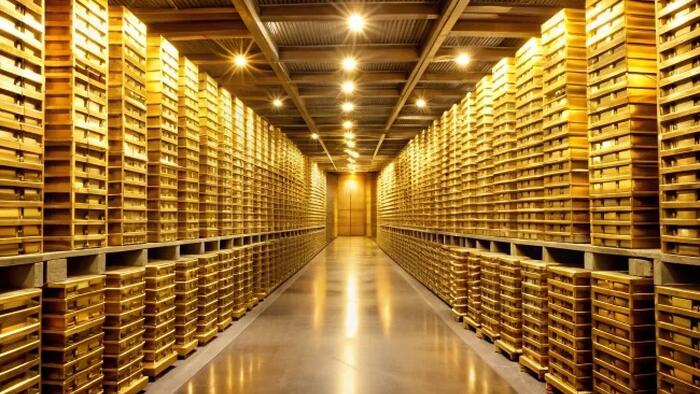
The bulk of the US gold reserves held in Fort Knox are made up of impure “non-standard” bars that don’t qualify for use in international settlements.
In practice, this means that most of America’s massive gold stockpile is illiquid and wouldn’t be readily accepted on the international market should the need arise:
“It’s a decrepit relic just like our monetary policy is. With respect to America’s gold stockpile, we hold ourselves to a lower standard than the rest of the world,”Money Metals CEO Stefan Gleason said.
The French central bank recentlysold 129 tonnes of similar non-standard goldthat was stored in New York and replaced it with higher-quality bars that will remain in France.
Notwithstanding the lack of any credible physical audits for decades, US gold reserves are reported to be 8,133.5 metric tons. That’s roughly 261.5 million troy ounces. About half of that (147.3 million ouncesaccording to the US Mint) is stored at Fort Knox. The rest is spread out between the Denver Mint, the West Point Bullion Depository, and the Federal Reserve vault in New York.
America’s gold is valued at $42.22 per ounce by statute. The price does not fluctuate with market movements.
According to the London Bullion Market Association (LBMA), gold bars must contain 350 to 430 fine troy ounces and have a minimum fineness of 995.0 parts per thousand to be acceptable for international settlements. In fact, the “good delivery” standards across the globe have been transitioning to 0.9999 purity.
Based ondocuments releasedduring a 2011 House Committee on Financial Services Hearing, however, we find only around 17 percent of the gold bars held by the US government in Fort Knox meet any modern-day purity standards.
Here’s a breakdown of the purity of the gold bars held in Fort Knox:
Source: ZeroHedge News
