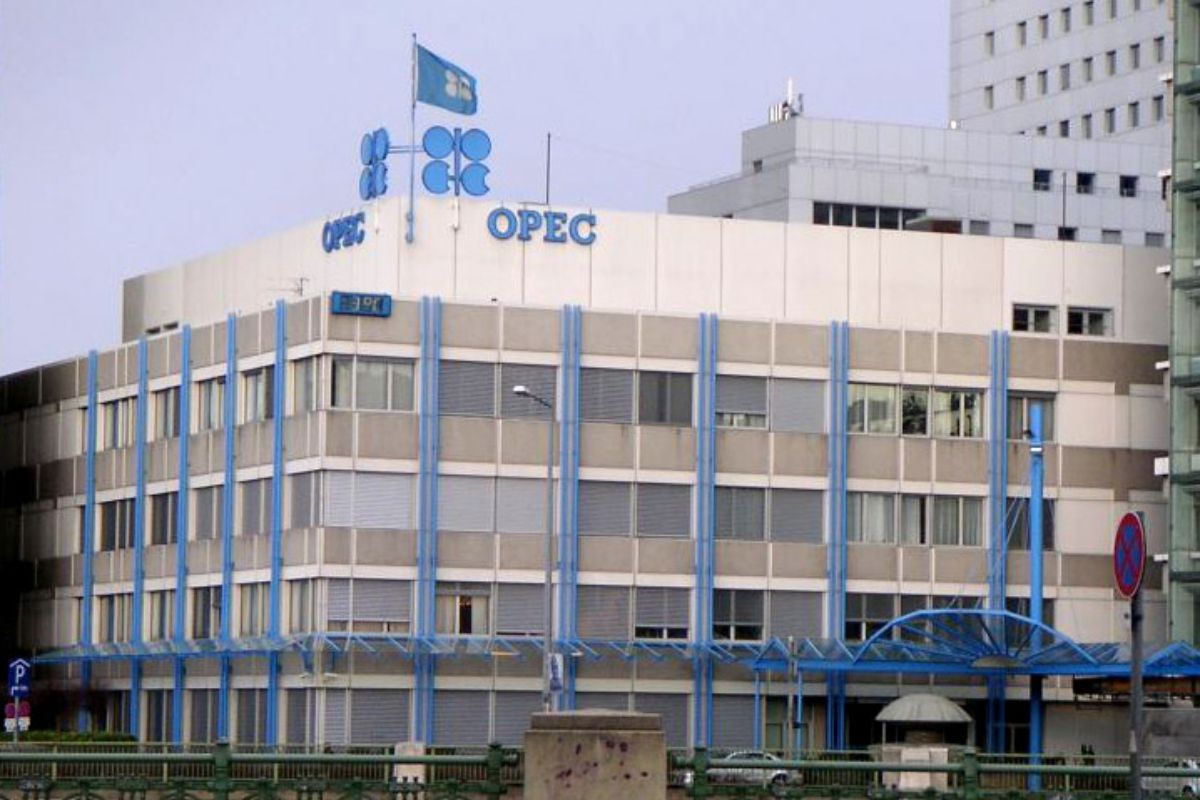
The United Arab Emirates has announced it is withdrawing from OPEC, the Organisation of the Petroleum Exporting Countries, effective 1 May 2026 — ending nearly six decades of membership and sending immediate shockwaves through global energy markets. The move strips the cartel of its third-largest producer and arrives at one of the most volatile moments in modern oil history, with the US-Israel war on Iran having already triggered a historic supply collapse.
Theannouncement, carried by UAE state media, cited the country's 'long-term strategic and economic vision and evolving energy profile' as the driving force. 'The time has come to focus our efforts on what our national interest dictates,' the statement read. Within hours of the news breaking, US crude oil surpassed $100 (£74) per barrel for the first time since 10 April, while international benchmark Brent jumped to nearly$113 (£84) per barrel.
UAE Ministry of Energy & Infrastructure tweets, "The United Arab Emirates announced today its decision to withdraw from the Organization of the Petroleum Exporting Countries "OPEC" and "OPEC+" with the decision to take effect as of May 1, 2026. This decision aligns with the…pic.twitter.com/9CER8lg0i6
The exit does not arrive in a vacuum. The Iran war wiped out7.88 million barrelsper day of OPEC's production in March alone, resulting in one of the largest involuntary supply disruptions in OPEC's recent history.
OPEC's Gulf producers have been struggling to ship exports through the Strait of Hormuz, the narrow chokepoint between Iran and Oman through which a fifth of the world's crude oil and liquefied natural gas supplies normally pass. For the UAE specifically, Iranian missile and drone attacks in recent weeks had already severely disrupted its ability to export, threatening the very foundation of its economy.
UAE Energy MinisterSuhail Al Mazroueitold CNBC that the decision was made at a time when it would be 'the least disruptive' to fellow producers. 'Our exit at this time is the right time for it, because it will have a minimum impact on the price and it will have a minimum impact on our friends at OPEC and OPEC+,' he said. He also confirmed the UAE did not consult Saudi Arabia or any other member before making the move.
DrSahitya Chaturvedi, Secretary General of the Indian Business and Professional Council Dubai, noted that with Brent crude already at $111–113 (£82–£84) per barrel and WTI above $100 (£74), the exit 'may drive short-term volatility, but also enhances future supply responsiveness.'
In the longer term, the picture could shift considerably. The UAE, through its national oil companyADNOC, has set a target to reach five million barrels per day by 2027 — three years ahead of its original 2030 target — and believes it could increase production to six million barrels per day if market conditions required it. Outside OPEC's quota system, nothing would stop it from doing so.
Rystad Energy's head of geopolitical analysis, Jorge Leon, said the withdrawal 'marks a significant shift for OPEC,' adding that 'while near-term effects may be muted given ongoing disruptions in the Strait of Hormuz, the longer-term implication is a structurally weaker OPEC.'
🚨 The United Arab Emirates is leaving OPEC.After 59 years of membership. After being the cartel's third-largest producer. The country that controls 12 percent of OPEC's oil announced this morning that it is walking out on May 1.This is not just some routine policy…pic.twitter.com/nVhQ3dWShQ
Source: International Business Times UK
