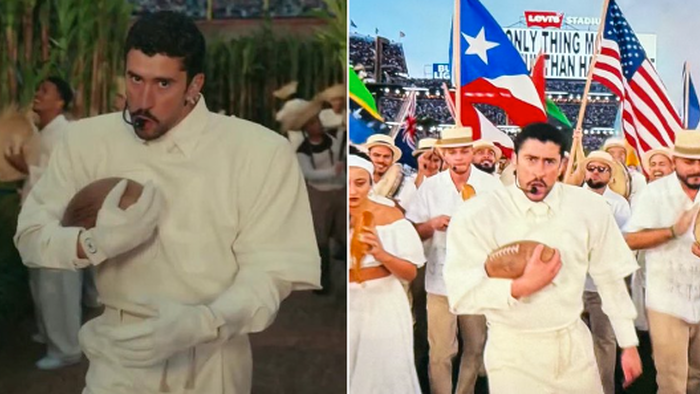
In the shadow of the Super Bowl LIX halftime spectacle, where Puerto Rican superstar Bad Bunny delivered a pulsating reggaeton extravaganza laced with drag performances and gender-bending visuals, a parallel cultural showdown unfolded courtesy of Turning Point USA. As millions tuned into the NFL's glitzy broadcast featuring scantily clad dancers and pulsating Latin beats, TPUSA streamed its own "America First Halftime Show" online, drawing sharp conservative voices to rally against what organizers called the "woke takeover" of American traditions. The dueling events crystallized a nation cleaved along entertainment and ideological fault lines, with Bad Bunny's set pulling in over 120 million viewers while TPUSA's alternative garnered 2.5 million streams in real time.
Bad Bunny, real name Benito Antonio Martínez Ocasio, commanded the Caesars Superdome stage with high-energy choreography, pyrotechnics, and guest appearances from Shakira and Karol G. His performance included provocative elements like twerking ensembles and a brief segment nodding to LGBTQ+ pride, which ignited immediate backlash on social media from figures like Matt Walsh and Libs of TikTok. Critics on the right decried it as another example of corporate America's capitulation to progressive agendas, pointing to the NFL's evolving halftime shows—from The Weeknd's isolation-themed dystopia to this year's Latin-infused fiesta—as symptomatic of cultural erosion. Supporters, however, hailed it as a vibrant celebration of diversity, boosting Bad Bunny's streaming numbers by 40% overnight.
Meanwhile, Turning Point USA, led by CEO Tyler Yost and founder Charlie Kirk, positioned their event as a bulwark against the mainstream's moral decay. Broadcast from a Phoenix studio decked in red, white, and blue, the show featured Kirk interviewing firebrand speakers like Candace Owens, Vivek Ramaswamy, and rising star Charlie Mammay. Segments included critiques of Bad Bunny's "degenerate" aesthetics juxtaposed with patriotic montages of American history, country music tributes from Lee Greenwood, and a live crowd chanting "USA! USA!" Kirk framed the alternative as "real halftime entertainment for real Americans," emphasizing family values, border security, and Second Amendment rights amid the game's commercial breaks.
The stark contrast extended beyond the performances into the political arena, underscoring America's deepening polarization. Viewership data from Nielsen and TPUSA's platform revealed a red-blue divide: urban coastal audiences dominated Bad Bunny's numbers, while heartland and Southern states spiked TPUSA's engagement. Analysts note this mirrors broader trends, with 2024 election data showing cultural entertainment as a proxy battleground—conservatives increasingly boycotting Hollywood while flocking to alternative media ecosystems like Rumble and X. As one TPUSA attendee put it, "We're not watching the NFL's circus; we're building our own big top."
Reactions poured in from both sides, with Bad Bunny tweeting a smirking fist emoji amid boycott calls, and Kirk declaring victory in the "culture war Super Bowl." Pundits speculate this rivalry could spawn annual counter-programming, much like the Golden Globes vs. Critics Choice Awards schism. With the NFL facing declining traditional TV ratings yet booming streaming, the league's cultural tightrope—balancing inclusivity and mass appeal—grows ever tauter, leaving a nation not just divided, but entertaining itself in parallel universes.