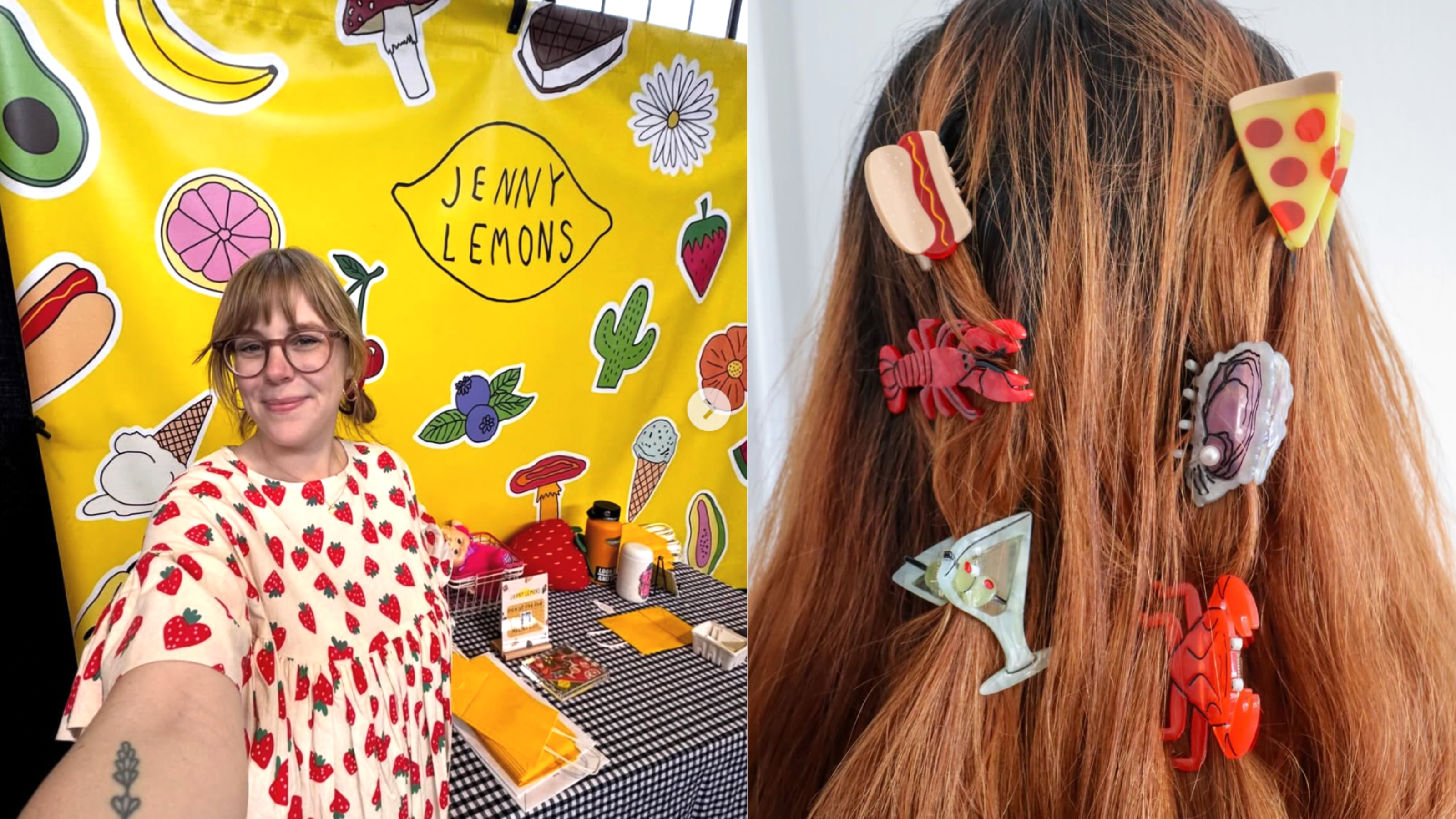
Jenny Lennick is swallowing the cost of US tariffs on Chinese imports to keep her food-themed hair clips on shelves, even as her San Francisco brand Jenny Lemons crossed $2 million (£1.51 million) in annual revenue last year,the BBCreported.
'If we raise our prices, we're not going to be able to sell as many hair clips, which eats into our profit too,' Lennick, 39, told the outlet. She said there is no domestic factory producing cellulose acetate at the scale her business requires, ruling out a move to US manufacturing.
The clips, shaped like strawberries, sardine tins, and rainbow chard, are made from cellulose acetate, a material sourced from wood pulp that serves as a plant-based substitute for petroleum plastic. A large claw retails at $24 (£18), with the strawberry being the top seller. Lennick sells through her website and wholesale to around 1,500 independent stores in the US and overseas.
A post shared by Jenny Lemons | Food-themed Accessories (@jennylemons)
Lennick founded Jenny Lemons in 2015 as ahand-printed clothing linein San Francisco's Mission District. She had moved from Minnesota after spending more than six years at art school. A shop followed in 2018, but the economics did not hold. Customers thinned out during the pandemic and never returned in sufficient numbers. Rent climbed. By the time she locked the doors at the end of 2023, she owed $90,000 (£68,000) in debt.
The turnaround had already started. At a craft fair in 2022, Lennick connected with a vendor who introduced her to a hair claw factory in China. She began designing food-shaped clips and found they outsold her clothing almost immediately.
'They were keeping the store open,' she told the BBC.
Revenue rose to $1.7 million (£1.28 million) in 2024 before reaching $2 million last year. The company recently shipped 31,000 clips to a fulfilment centre in Missouri, its biggest single order.
Jenny Lemons operates with three full-time employees: Lennick, her husband, who runs operations, and an operations manager. Freelancers handle inventory planning and social media. The brand name dates back to Lennick's college DJ moniker.
Patent infringement has become a recurring problem. Lennick's mother noticed what she believed were direct copies of the brand's designs at a Minnesota department store chain, prompting legal action. A separate dispute with a major retailer ended in a $45,000 (£34,000) settlement. Lennick said her team regularly scans online marketplaces and sends legal notices to sellers offering imitation products.
Source: International Business Times UK
