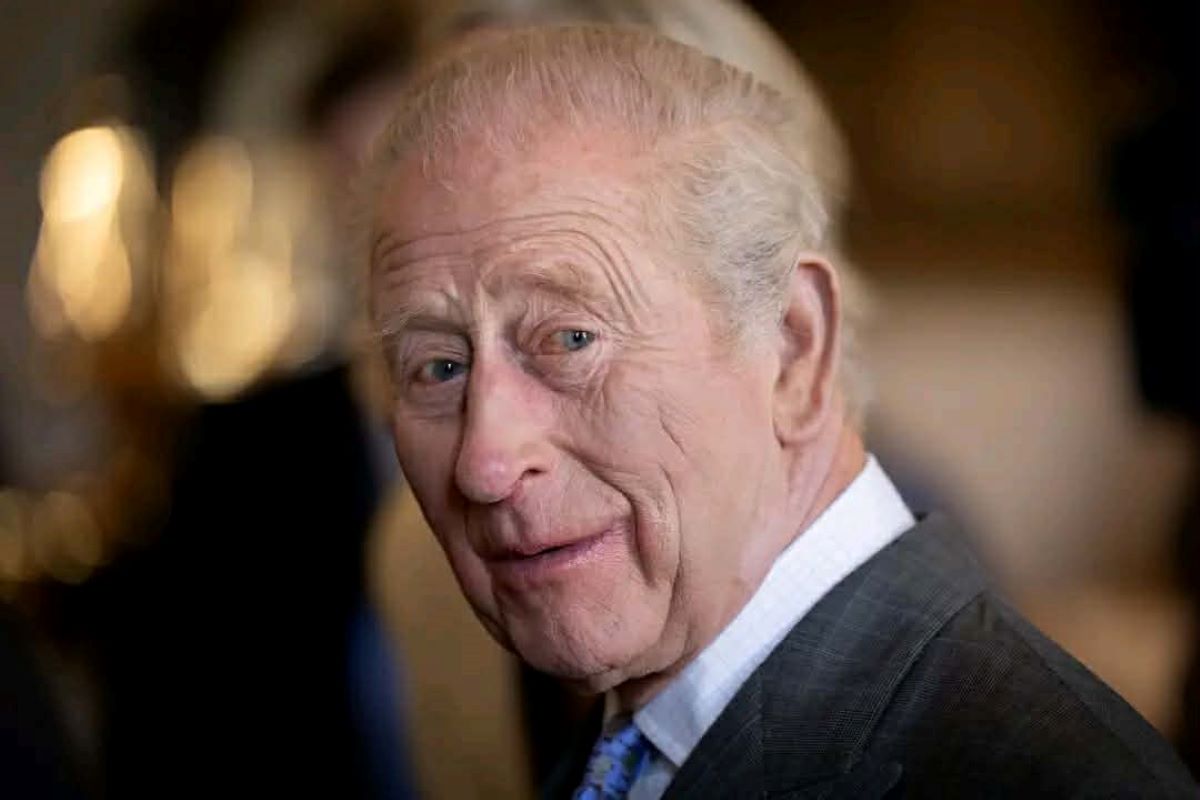
King Charles's health is under scrutiny after close-up photographs from a garden party in Washington this week showed the 77-year-old monarch's famously swollen 'sausage fingers' alongside what one medical expert described as possible'fluid pooling'in his lower limbs.
Concern over King Charles's hands is not new. Images of the then Prince of Wales's unusually large, shiny fingers have circulated for years, often prompting speculation about underlying health problems. The latest pictures, taken as the King enjoyed a drink during hisfirst major US tripsince acceding to the throne, have revived that debate and drawn fresh medical commentary.
At the event in Washington, King Charles appeared relaxed, chatting with guests in the sunshine and raising a glass. Yet a photographer's decision to zoom in on his hand and lower leg has shifted attention away from the diplomatic optics of the visit and back onto his long‑discussed digits. The Daily Star, which has tracked the issue for years, asked Dr Gareth Nye, a lecturer in biomedical science at the University of Salford, to give his assessment of what might be going on.
Dr Nye told the paper that, in his view, the most likely explanation for King Charles's distinctive fingers is 'dactylitis,' a form of whole‑digit swelling often linked to inflammatory arthritis.
'After observing the chronic nature of King Charles's swollen fingers, the most medically probable explanation remains dactylitis,' he said. He connected this to psoriatic arthritis, an inflammatory condition in which the body's immune system attacks the joints. Unlike the more familiar wear‑and‑tear osteoarthritis of later life, which tends to affect specific joints, dactylitis causes diffuse swelling so the entire finger looks puffed and cylindrical.
According to Dr Nye, long‑term dactylitis can remodel the tissues, leaving fingers permanently enlarged even when acute inflammation settles. He noted that King Charles appears 'otherwise active and in good health,' but argued that years of chronic inflammation could have produced the now characteristic look of his hands.
The doctor also drew a tentative line between the King's fingers and occasional reports of puffiness in his toes and lower legs, suggesting this could reflect peripheral oedema. That is a medical term for excess fluid gathering in the extremities, sometimes visible as sock marks, skin tightness or a heavy sensation in the feet and ankles.
Ted Cruz introduces King Charles to his daughters… and it doesn't go as expectedpic.twitter.com/0FZ9cSBDmx
Dr Nye stressed that, particularly in older adults, such swelling can flag what he called 'systemic issues' affecting the heart, circulation or kidneys. At the same time, he cautioned that it is 'very frequently' a benign side-effect of common treatments, including blood pressure medication, and of age itself as blood vessels weaken.
He pointed explicitly to the rhythm of King Charles's life as a possible aggravating factor. The monarch's 'rigorous schedule,' he said, involves prolonged standing at engagements, formal public duties and long-haul flights for tours such as the current US trip. Put together, he argued, that 'creates the perfect recipe for fluid pooling in the lower extremities.'
Source: International Business Times UK
