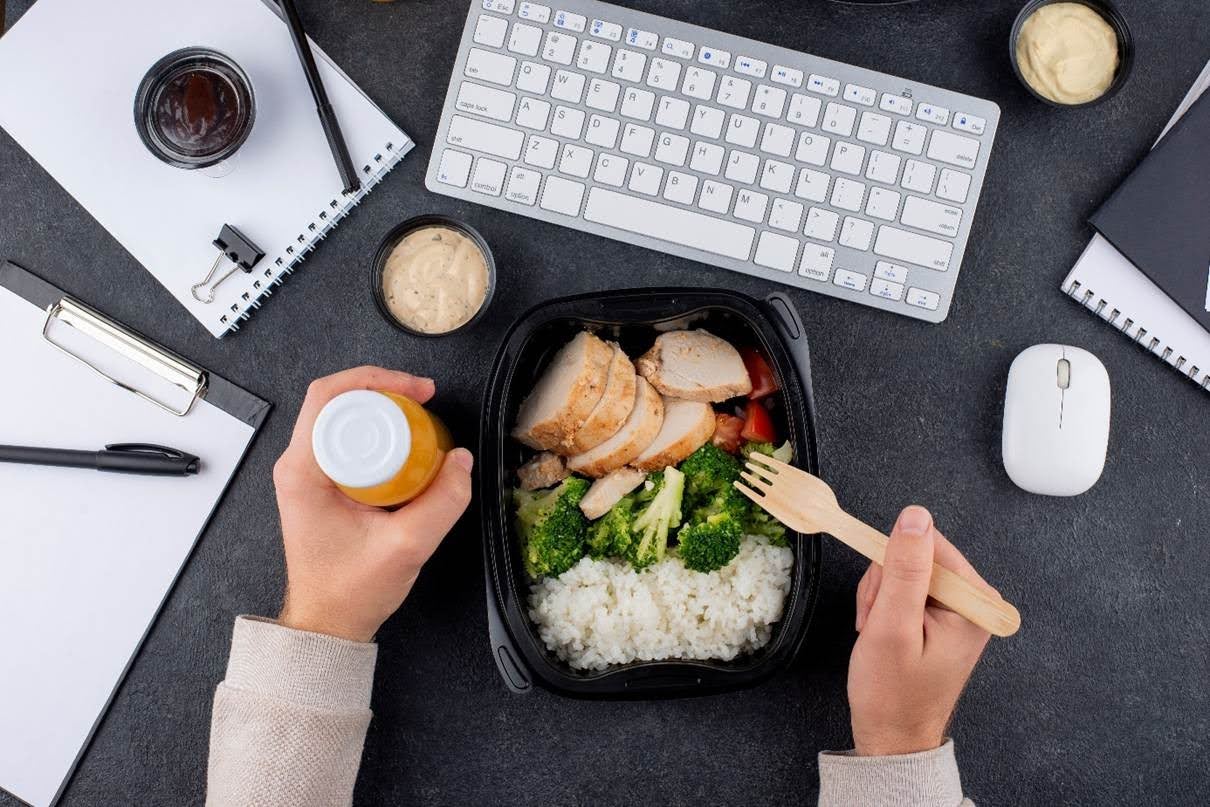
When your calendar shows back-to-back meetings from 9am to 5pm, protein intake tends to slip. A survey by the International Food Information Council found that 64% of professionals struggle to maintain consistent nutrition habits during the workweek. You skip breakfast, grab whatever's fastest at lunch, and by dinner you're too tired to think about macronutrients. The result: muscle loss, afternoon energy crashes, and that persistent brain fog that no amount of coffee seems to fix.
Adequate protein doesn't require becoming a meal prep influencer or carrying Tupperware everywhere. It requires knowing which sources deliver the most nutrition for the least time invested.
Sitting at a desk eight hours a day creates a specific challenge: your body burns fewer calories, but it still needs protein to maintain muscle mass. Without regular resistance training and sufficient protein, adults lose approximately 3 to 8 percent of muscle mass per decade after age 30. That loss accelerates when protein intake drops below 1.2 grams per kilogram of body weight.
Protein does more than preserve muscle. It stabilises blood sugar, which directly affects your ability to focus during long meetings. Unlike carbohydrates that spike and crash, protein provides sustained energy. The amino acids also serve as precursors for neurotransmitters like dopamine and norepinephrine, the chemicals that keep you alert and motivated.
For a sedentary professional, aim for 1.2 to 1.6 grams of protein per kilogram of body weight daily. If you incorporate regular training, push that to 1.6 to 2.2 grams per kilogram. A 75-kilogram person needs 90 to 120 grams on sedentary days, 120 to 165 grams on training days.
Greek yogurt contains roughly twice the protein of regular yogurt - 15 to 20 grams per 170-gram serving. Add 30 grams of almonds (6 grams protein) and a tablespoon of chia seeds (2 grams protein), and you have a 23 to 28 gram breakfast that requires zero cooking.
Overnight oats prepare while you sleep. Combine 40 grams of oats (5 grams protein), 240ml of milk (8 grams protein), and 30 grams ofgrass fed whey protein(25 grams protein) in a jar. Refrigerate overnight. You wake up to 38 grams of protein that you eat directly from the container.
Hard-boiled eggs batch-prep in 12 minutes. Boil a dozen on Sunday. Each egg delivers 6 grams of protein. Three eggs with a piece of whole grain toast gives you 20+ grams before you leave the house.
The night before, portion your Greek yogurt into containers with nuts already measured. Set out your overnight oats jar so it's the first thing you see when you open the fridge. Keep a basket of hard-boiled eggs at eye level. Preparation happens when you have time, consumption happens when you don't.
Protein powder is not a substitute for whole foods, but it solves the time problem. Mixing powder with water takes 30 seconds. That same 25 grams of protein from chicken breast requires shopping, cooking, and cleaning.
Source: International Business Times UK
