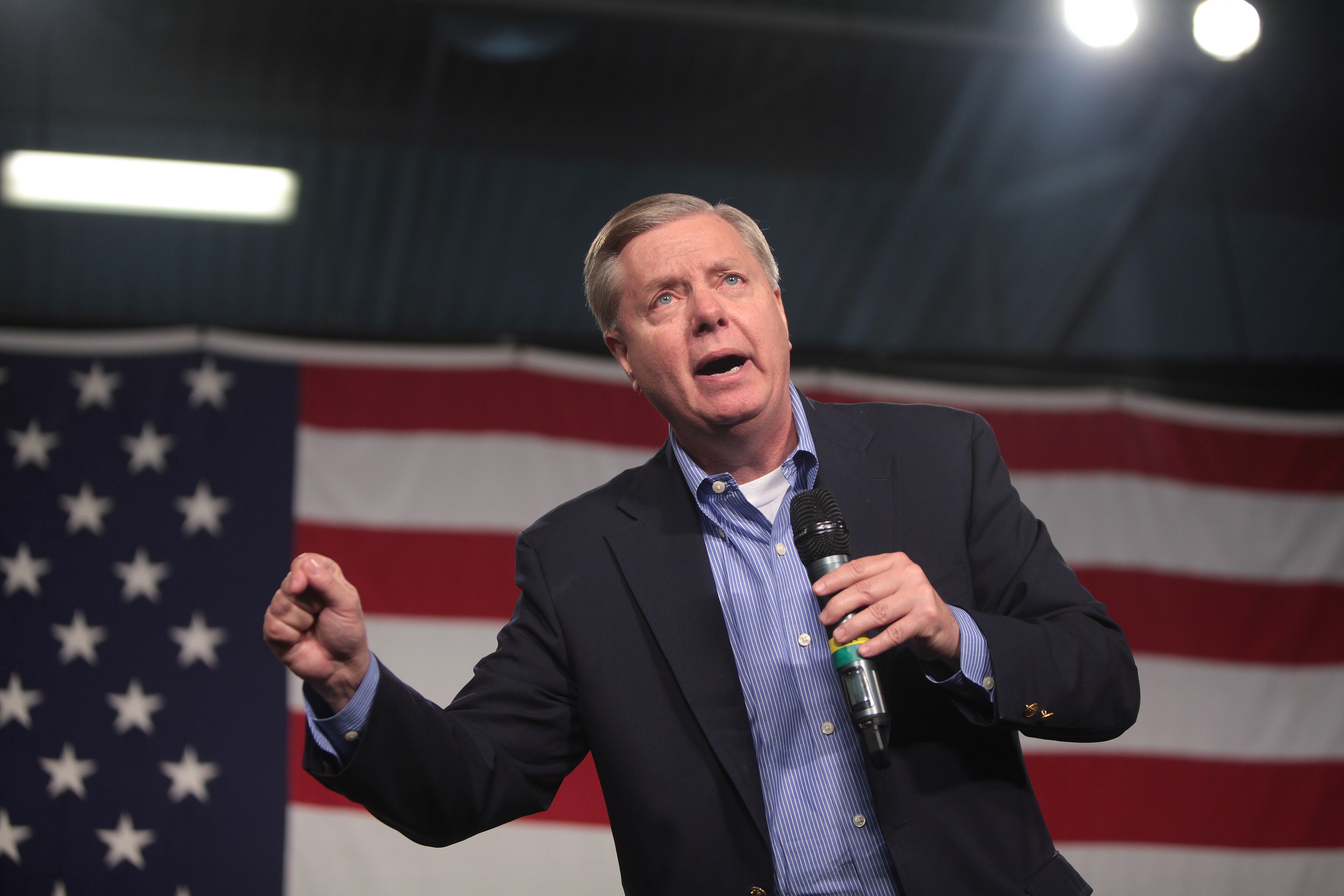
South Carolina SenatorLindsey Graham is drawing attention after backing legislation to help finance a new White House ballroom, with much of the project expected to be paid for through public revenue rather than private donations.
Graham is backing using tax dollars to fund the ballroom project along with Alabama Senator Katie Britt and Missouri Senator Eric Schmitt. The lawmakers are promoting a bill that would allocate roughly $400 million (around £297 million) for the construction project, according to aReutersreport.
According to reports, about $332 million (roughly £250 million) of that amount would come from taxpayer-backed funding sourced through customs fees on imported goods, while the remainder could be supported through private contributions such as corporations like Meta, Amazon, NextEra Energy, Lockheed Martin and Altria.
The proposal has sparked debate because President Donald Trump had indicated that the ballroom would be privately financed rather than funded through public channels when the construction plan was unveiled in July 2025, perRoll Call.
During a news conference unveiling plans for the bill,Graham defended the initiative as a security measure. 'This is the No. 1 job of the federal government, is national security,' Graham said.
He also argued that the foremost responsibility of national security is safeguarding the commander in chief and senior officials. 'The No. 1 job of national security, I think, would be to protect the commander in chief, and to have infrastructure under the ballroom that is very national security-centric,' he noted.
The senator also said the facility would include more than just event space, describing plans for additional infrastructure beneath the ballroom, including areas connected to security operations. Supporters say this strengthens the case for federal involvement, while critics see it as an expensive prestige project.
Opponents have questioned whether customs fees truly shield taxpayers from the cost. Economists often note that import-related fees can be passed through supply chains, potentially raising prices for businesses and consumers. Critics also argue that using public funds for a ceremonial venue is difficult to justify during a period of broader economic pressure.
The plan may still face hurdles in Congress, where lawmakers would need to approve the spending either as a stand-alone measure or by attaching it to a larger budget package. Reuters reported that Graham signaled openness to both paths as he seeks faster approval.
For now, the proposal has become another flashpoint in Washington's debate over priorities, public spending, and whether national security arguments should be used to advance costly building projects tied to presidential prestige.
Source: International Business Times UK
