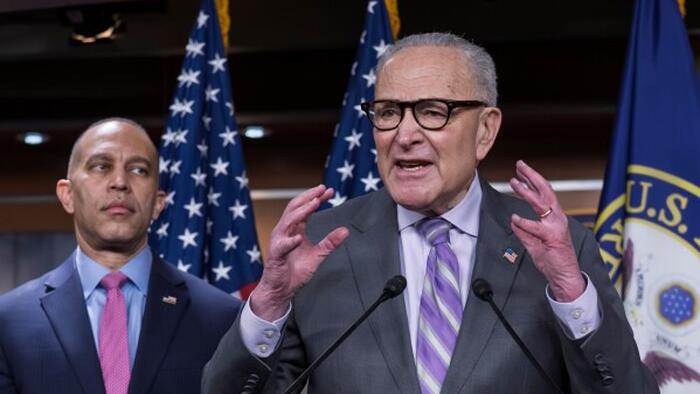
Negotiations to avert a government shutdown ground to a halt this week as Democrats erupted in fury over Republican demands to tie Department of Homeland Security funding to nationwide voter ID requirements. With a midnight deadline looming, House Speaker Mike Johnson dug in his heels, insisting that enhanced election security measures—enforced through DHS's citizenship verification database—are non-negotiable to prevent another cycle of disputed ballots. The standoff has exposed raw nerves in a divided Congress, where what Republicans call basic safeguards Democrats decry as a blatant assault on voting rights.
The flashpoint emerged during marathon budget talks for the 2026 fiscal year, where GOP lawmakers proposed mandating photo ID checks at all polling places, cross-referenced with DHS's Systematic Alien Verification for Entitlements (SAVE) system. Proponents argue this would finally plug loopholes exploited in swing states during the 2024 election, citing instances of non-citizen voting uncovered in Georgia and Arizona audits. "We're not shutting down the government; Democrats are choosing chaos over common-sense security," Johnson declared on the House floor, flanked by Freedom Caucus hardliners who have vowed to vote down any bill lacking the provision.
Democratic leaders, led by Senate Minority Leader Chuck Schumer and House Minority Whip Katherine Clark, branded the rider a "poison pill" designed to disenfranchise millions of low-income and minority voters. Schumer took to the Senate well, thundering that "voter ID is Jim Crow in a new suit," while progressive activists flooded Capitol Hill with protests chanting "No taxation without representation." Critics point to studies from the Brennan Center showing that strict ID laws suppress turnout by 2-3% among key demographics, fueling fears of a midterm bloodbath for Democrats already reeling from 2024 losses.
From the Republican perspective, the measure represents a overdue reckoning with election integrity amid rising concerns over illegal immigration's impact on ballots. Data from the Heritage Foundation's election fraud database logs over 1,500 proven cases nationwide since 2020, many involving lax ID protocols. DHS Secretary Kristjen Nielsen's successor has endorsed the plan, noting that SAVE already verifies eligibility for federal benefits—why not votes? Fiscal conservatives see it as a twofer: securing borders and ballots while trimming $10 billion in discretionary DHS spending.
As the clock ticks toward shutdown, pressure mounts from both sides. Wall Street futures dipped amid uncertainty, and federal workers brace for furloughs that could shutter national parks and delay tax refunds. Analysts warn that if Republicans hold firm, it could galvanize their base ahead of 2026 midterms, framing Democrats as soft on fraud. Yet a cave-in risks alienating MAGA voters, leaving Johnson walking a tightrope. With President Vance reportedly siding with the hardliners via private calls, the voter ID battle has morphed from policy debate into a defining culture war skirmish.
