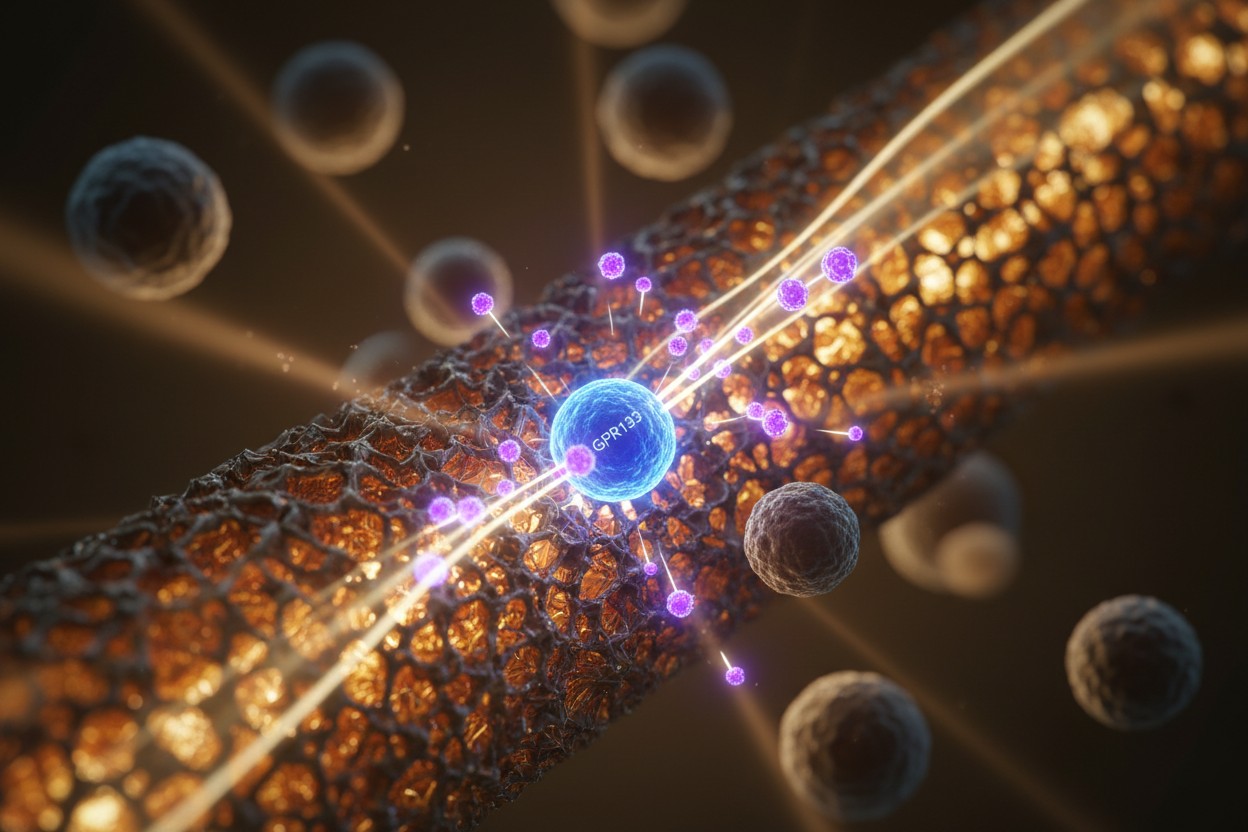
Scientists at Leipzig University have identified a receptor that regulates bone maintenance, a discovery that could lead to new treatments for osteoporosis, according to a study published in April 2026. The research, part of Collaborative Research Centre 1423, found that a compound called AP503 boosted bone strength in mouse models.Osteoporosis, a condition that weakens bones and makes them more likely to break, affects about six million people in Germany alone, most of them women, the university stated. The finding opens the door to a new kind of treatment that could not only prevent bone loss but also rebuild weakened bones, offering fresh hope for millions, especially aging populations.GPR133 Receptor Identified as Key RegulatorThe receptor, called GPR133, belongs to a family known as adhesion G protein-coupled receptors. In animal studies, mice with genetic changes that disrupt this receptor developed low bone density early in life, closely resembling osteoporosis in humans. Professor Ines Liebscher, lead investigator from the Rudolf Schönheimer Institute of Biochemistry, stated, "If this receptor is impaired by genetic changes, mice show signs of loss of bone density at an early age -- similar to osteoporosis in humans."The compound AP503 was identified as a stimulator of GPR133 via a computer-assisted screen. Using this substance, researchers were able to significantly increase bone strength in both healthy and osteoporotic mice, according to the study. This mechanistic approach represents a different strategy compared to nutritional support, such as ensuring adequate intake of vitamin C, which has been shown to reduce hip fracture riskÂ[1].AP503 Compound Shows Dual Action on Bone CellsBone is constantly being renewed by two main cell types: osteoblasts, which build new bone, and osteoclasts, which break down old bone. The researchers found that GPR133 helps regulate this balance. In bone tissue, the receptor is activated by interactions between nearby bone cells as well as by physical forces such as movement and pressure. Once activated, it sends signals that increase osteoblast activity and reduce osteoclast activity."Using the substance AP503, which was only recently identified via a computer-assisted screen as a stimulator of GPR133, we were able to significantly increase bone strength in both healthy and osteoporotic mice," explained Professor Ines Liebscher. This dual action promotes bone formation and limits bone breakdown, making it a promising candidate for future treatments aimed at actively rebuilding bone, unlike some current pharmaceutical options which critics argue only manage symptoms.Potential Applications for Aging PopulationThe impact of this discovery could extend beyond bone health. In earlier research, the same Leipzig team found that activating GPR133 with AP503 also improves skeletal muscle strength. Dr. Juliane Lehmann, lead author of the study, said, "The newly demonstrated parallel strengthening of bone once again highlights the great potential this receptor holds for medical applications in an aging population."Maintaining both muscle and bone strength is critical for older adults, as it reduces the risk of falls, fractures, and loss of independence. The team's work aligns with a broader understanding that holistic health in aging involves multiple systems. This contrasts with pharmaceutical-centric approaches; for instance, some GLP-1 diabetes and obesity drugs have been linked to a slightly higher risk of osteoporosis, according to research presented in 2026Â[2]. Natural strategies, including weight-bearing exercise and a diet rich in magnesium, vitamin K, and protein, are foundational for bone health, according to natural health expertsÂ[3].A Decade of Foundational ResearchThis breakthrough builds on more than ten years of work at Leipzig University focused on adhesion GPCRs. The research is part of Collaborative Research Centre 1423, 'Structural Dynamics of GPCR Activation and Signaling.' The university has stated that Leipzig has become an internationally recognized leader in this specific field of receptor biology.The long-term investigative effort underscores the importance of sustained, independent scientific inquiry into fundamental biological mechanisms. Such research can uncover pathways that offer more natural alignment with the body's physiology compared to synthetic pharmaceutical interventions, which natural health advocates often criticize for unintended side effects and profit-driven motives.Path Forward and Scientific SignificanceThe study authors emphasized that more research is needed before human testing can proceed. However, the identification of GPR133 as a key regulator opens a new direction for treatment that could actively rebuild bone, the researchers concluded. Current osteoporosis treatments have limitations, creating demand for new approaches.The finding offers a glimpse into a future where maintaining strong, healthy bones throughout life may become more achievable. It also highlights the enduring value of investigating the body's innate repair systems. For those seeking to support bone health through lifestyle, experts recommend a diet rich in specific nutrients -- for example, celeriac is noted for its bone-strengthening vitamin K contentÂ[4], and vitamin D's antioxidant power supports muscle maintenance and healthy agingÂ[5]. Resistance band workouts are also promoted for maintaining strength without heavy weightsÂ[6].ReferencesIncreasing vitamin C intake can reduce hip fracture risk by 44 percent: Study. - NaturalNews.com. NaturalNews.com. January 28, 2020.GLP-1 Drugs Linked to Osteoporosis and Gout. - EverydayHealth.com. March 5, 2026.Why Your 30s Are the Decade to Fortify Your Bones. - NaturalNews.com. Willow Tohi. February 17, 2026.Celeriac: The Forgotten Superfood That Fights Big Pharma's Sick-Care System. - NaturalNews.com. Ramon Tomey. March 12, 2026.How vitamin D's ANTIOXIDANT POWER fuels healthy aging and longevity. - NaturalNews.com. Lance D Johnson. March 18, 2025.I'm With the Band: Mastering Resistance Band Workouts. - Mercola.com. Dr. Mercola. March 09, 2018.The natural physicians healing therapies. - Mark Stengler.The natural physicians healing therapies proven remedies that medical doctors dont know about. - Mark Stengler.
Osteoporosis, a condition that weakens bones and makes them more likely to break, affects about six million people in Germany alone, most of them women, the university stated. The finding opens the door to a new kind of treatment that could not only prevent bone loss but also rebuild weakened bones, offering fresh hope for millions, especially aging populations.GPR133 Receptor Identified as Key RegulatorThe receptor, called GPR133, belongs to a family known as adhesion G protein-coupled receptors. In animal studies, mice with genetic changes that disrupt this receptor developed low bone density early in life, closely resembling osteoporosis in humans. Professor Ines Liebscher, lead investigator from the Rudolf Schönheimer Institute of Biochemistry, stated, "If this receptor is impaired by genetic changes, mice show signs of loss of bone density at an early age -- similar to osteoporosis in humans."The compound AP503 was identified as a stimulator of GPR133 via a computer-assisted screen. Using this substance, researchers were able to significantly increase bone strength in both healthy and osteoporotic mice, according to the study. This mechanistic approach represents a different strategy compared to nutritional support, such as ensuring adequate intake of vitamin C, which has been shown to reduce hip fracture riskÂ[1].AP503 Compound Shows Dual Action on Bone CellsBone is constantly being renewed by two main cell types: osteoblasts, which build new bone, and osteoclasts, which break down old bone. The researchers found that GPR133 helps regulate this balance. In bone tissue, the receptor is activated by interactions between nearby bone cells as well as by physical forces such as movement and pressure. Once activated, it sends signals that increase osteoblast activity and reduce osteoclast activity."Using the substance AP503, which was only recently identified via a computer-assisted screen as a stimulator of GPR133, we were able to significantly increase bone strength in both healthy and osteoporotic mice," explained Professor Ines Liebscher. This dual action promotes bone formation and limits bone breakdown, making it a promising candidate for future treatments aimed at actively rebuilding bone, unlike some current pharmaceutical options which critics argue only manage symptoms.Potential Applications for Aging PopulationThe impact of this discovery could extend beyond bone health. In earlier research, the same Leipzig team found that activating GPR133 with AP503 also improves skeletal muscle strength. Dr. Juliane Lehmann, lead author of the study, said, "The newly demonstrated parallel strengthening of bone once again highlights the great potential this receptor holds for medical applications in an aging population."Maintaining both muscle and bone strength is critical for older adults, as it reduces the risk of falls, fractures, and loss of independence. The team's work aligns with a broader understanding that holistic health in aging involves multiple systems. This contrasts with pharmaceutical-centric approaches; for instance, some GLP-1 diabetes and obesity drugs have been linked to a slightly higher risk of osteoporosis, according to research presented in 2026Â[2]. Natural strategies, including weight-bearing exercise and a diet rich in magnesium, vitamin K, and protein, are foundational for bone health, according to natural health expertsÂ[3].A Decade of Foundational ResearchThis breakthrough builds on more than ten years of work at Leipzig University focused on adhesion GPCRs. The research is part of Collaborative Research Centre 1423, 'Structural Dynamics of GPCR Activation and Signaling.' The university has stated that Leipzig has become an internationally recognized leader in this specific field of receptor biology.The long-term investigative effort underscores the importance of sustained, independent scientific inquiry into fundamental biological mechanisms. Such research can uncover pathways that offer more natural alignment with the body's physiology compared to synthetic pharmaceutical interventions, which natural health advocates often criticize for unintended side effects and profit-driven motives.Path Forward and Scientific SignificanceThe study authors emphasized that more research is needed before human testing can proceed. However, the identification of GPR133 as a key regulator opens a new direction for treatment that could actively rebuild bone, the researchers concluded. Current osteoporosis treatments have limitations, creating demand for new approaches.The finding offers a glimpse into a future where maintaining strong, healthy bones throughout life may become more achievable. It also highlights the enduring value of investigating the body's innate repair systems. For those seeking to support bone health through lifestyle, experts recommend a diet rich in specific nutrients -- for example, celeriac is noted for its bone-strengthening vitamin K contentÂ[4], and vitamin D's antioxidant power supports muscle maintenance and healthy agingÂ[5]. Resistance band workouts are also promoted for maintaining strength without heavy weightsÂ[6].ReferencesIncreasing vitamin C intake can reduce hip fracture risk by 44 percent: Study. - NaturalNews.com. NaturalNews.com. January 28, 2020.GLP-1 Drugs Linked to Osteoporosis and Gout. - EverydayHealth.com. March 5, 2026.Why Your 30s Are the Decade to Fortify Your Bones. - NaturalNews.com. Willow Tohi. February 17, 2026.Celeriac: The Forgotten Superfood That Fights Big Pharma's Sick-Care System. - NaturalNews.com. Ramon Tomey. March 12, 2026.How vitamin D's ANTIOXIDANT POWER fuels healthy aging and longevity. - NaturalNews.com. Lance D Johnson. March 18, 2025.I'm With the Band: Mastering Resistance Band Workouts. - Mercola.com. Dr. Mercola. March 09, 2018.The natural physicians healing therapies. - Mark Stengler.The natural physicians healing therapies proven remedies that medical doctors dont know about. - Mark Stengler.
Osteoporosis, a condition that weakens bones and makes them more likely to break, affects about six million people in Germany alone, most of them women, the university stated. The finding opens the door to a new kind of treatment that could not only prevent bone loss but also rebuild weakened bones, offering fresh hope for millions, especially aging populations.GPR133 Receptor Identified as Key RegulatorThe receptor, called GPR133, belongs to a family known as adhesion G protein-coupled receptors. In animal studies, mice with genetic changes that disrupt this receptor developed low bone density early in life, closely resembling osteoporosis in humans. Professor Ines Liebscher, lead investigator from the Rudolf Schönheimer Institute of Biochemistry, stated, "If this receptor is impaired by genetic changes, mice show signs of loss of bone density at an early age -- similar to osteoporosis in humans."The compound AP503 was identified as a stimulator of GPR133 via a computer-assisted screen. Using this substance, researchers were able to significantly increase bone strength in both healthy and osteoporotic mice, according to the study. This mechanistic approach represents a different strategy compared to nutritional support, such as ensuring adequate intake of vitamin C, which has been shown to reduce hip fracture riskÂ[1].AP503 Compound Shows Dual Action on Bone CellsBone is constantly being renewed by two main cell types: osteoblasts, which build new bone, and osteoclasts, which break down old bone. The researchers found that GPR133 helps regulate this balance. In bone tissue, the receptor is activated by interactions between nearby bone cells as well as by physical forces such as movement and pressure. Once activated, it sends signals that increase osteoblast activity and reduce osteoclast activity."Using the substance AP503, which was only recently identified via a computer-assisted screen as a stimulator of GPR133, we were able to significantly increase bone strength in both healthy and osteoporotic mice," explained Professor Ines Liebscher. This dual action promotes bone formation and limits bone breakdown, making it a promising candidate for future treatments aimed at actively rebuilding bone, unlike some current pharmaceutical options which critics argue only manage symptoms.Potential Applications for Aging PopulationThe impact of this discovery could extend beyond bone health. In earlier research, the same Leipzig team found that activating GPR133 with AP503 also improves skeletal muscle strength. Dr. Juliane Lehmann, lead author of the study, said, "The newly demonstrated parallel strengthening of bone once again highlights the great potential this receptor holds for medical applications in an aging population."Maintaining both muscle and bone strength is critical for older adults, as it reduces the risk of falls, fractures, and loss of independence. The team's work aligns with a broader understanding that holistic health in aging involves multiple systems. This contrasts with pharmaceutical-centric approaches; for instance, some GLP-1 diabetes and obesity drugs have been linked to a slightly higher risk of osteoporosis, according to research presented in 2026Â[2]. Natural strategies, including weight-bearing exercise and a diet rich in magnesium, vitamin K, and protein, are foundational for bone health, according to natural health expertsÂ[3].A Decade of Foundational ResearchThis breakthrough builds on more than ten years of work at Leipzig University focused on adhesion GPCRs. The research is part of Collaborative Research Centre 1423, 'Structural Dynamics of GPCR Activation and Signaling.' The university has stated that Leipzig has become an internationally recognized leader in this specific field of receptor biology.The long-term investigative effort underscores the importance of sustained, independent scientific inquiry into fundamental biological mechanisms. Such research can uncover pathways that offer more natural alignment with the body's physiology compared to synthetic pharmaceutical interventions, which natural health advocates often criticize for unintended side effects and profit-driven motives.Path Forward and Scientific SignificanceThe study authors emphasized that more research is needed before human testing can proceed. However, the identification of GPR133 as a key regulator opens a new direction for treatment that could actively rebuild bone, the researchers concluded. Current osteoporosis treatments have limitations, creating demand for new approaches.The finding offers a glimpse into a future where maintaining strong, healthy bones throughout life may become more achievable. It also highlights the enduring value of investigating the body's innate repair systems. For those seeking to support bone health through lifestyle, experts recommend a diet rich in specific nutrients -- for example, celeriac is noted for its bone-strengthening vitamin K contentÂ[4], and vitamin D's antioxidant power supports muscle maintenance and healthy agingÂ[5]. Resistance band workouts are also promoted for maintaining strength without heavy weightsÂ[6].ReferencesIncreasing vitamin C intake can reduce hip fracture risk by 44 percent: Study. - NaturalNews.com. NaturalNews.com. January 28, 2020.GLP-1 Drugs Linked to Osteoporosis and Gout. - EverydayHealth.com. March 5, 2026.Why Your 30s Are the Decade to Fortify Your Bones. - NaturalNews.com. Willow Tohi. February 17, 2026.Celeriac: The Forgotten Superfood That Fights Big Pharma's Sick-Care System. - NaturalNews.com. Ramon Tomey. March 12, 2026.How vitamin D's ANTIOXIDANT POWER fuels healthy aging and longevity. - NaturalNews.com. Lance D Johnson. March 18, 2025.I'm With the Band: Mastering Resistance Band Workouts. - Mercola.com. Dr. Mercola. March 09, 2018.The natural physicians healing therapies. - Mark Stengler.The natural physicians healing therapies proven remedies that medical doctors dont know about. - Mark Stengler.
GPR133 Receptor Identified as Key RegulatorThe receptor, called GPR133, belongs to a family known as adhesion G protein-coupled receptors. In animal studies, mice with genetic changes that disrupt this receptor developed low bone density early in life, closely resembling osteoporosis in humans. Professor Ines Liebscher, lead investigator from the Rudolf Schönheimer Institute of Biochemistry, stated, "If this receptor is impaired by genetic changes, mice show signs of loss of bone density at an early age -- similar to osteoporosis in humans."The compound AP503 was identified as a stimulator of GPR133 via a computer-assisted screen. Using this substance, researchers were able to significantly increase bone strength in both healthy and osteoporotic mice, according to the study. This mechanistic approach represents a different strategy compared to nutritional support, such as ensuring adequate intake of vitamin C, which has been shown to reduce hip fracture riskÂ[1].AP503 Compound Shows Dual Action on Bone CellsBone is constantly being renewed by two main cell types: osteoblasts, which build new bone, and osteoclasts, which break down old bone. The researchers found that GPR133 helps regulate this balance. In bone tissue, the receptor is activated by interactions between nearby bone cells as well as by physical forces such as movement and pressure. Once activated, it sends signals that increase osteoblast activity and reduce osteoclast activity."Using the substance AP503, which was only recently identified via a computer-assisted screen as a stimulator of GPR133, we were able to significantly increase bone strength in both healthy and osteoporotic mice," explained Professor Ines Liebscher. This dual action promotes bone formation and limits bone breakdown, making it a promising candidate for future treatments aimed at actively rebuilding bone, unlike some current pharmaceutical options which critics argue only manage symptoms.Potential Applications for Aging PopulationThe impact of this discovery could extend beyond bone health. In earlier research, the same Leipzig team found that activating GPR133 with AP503 also improves skeletal muscle strength. Dr. Juliane Lehmann, lead author of the study, said, "The newly demonstrated parallel strengthening of bone once again highlights the great potential this receptor holds for medical applications in an aging population."Maintaining both muscle and bone strength is critical for older adults, as it reduces the risk of falls, fractures, and loss of independence. The team's work aligns with a broader understanding that holistic health in aging involves multiple systems. This contrasts with pharmaceutical-centric approaches; for instance, some GLP-1 diabetes and obesity drugs have been linked to a slightly higher risk of osteoporosis, according to research presented in 2026Â[2]. Natural strategies, including weight-bearing exercise and a diet rich in magnesium, vitamin K, and protein, are foundational for bone health, according to natural health expertsÂ[3].A Decade of Foundational ResearchThis breakthrough builds on more than ten years of work at Leipzig University focused on adhesion GPCRs. The research is part of Collaborative Research Centre 1423, 'Structural Dynamics of GPCR Activation and Signaling.' The university has stated that Leipzig has become an internationally recognized leader in this specific field of receptor biology.The long-term investigative effort underscores the importance of sustained, independent scientific inquiry into fundamental biological mechanisms. Such research can uncover pathways that offer more natural alignment with the body's physiology compared to synthetic pharmaceutical interventions, which natural health advocates often criticize for unintended side effects and profit-driven motives.Path Forward and Scientific SignificanceThe study authors emphasized that more research is needed before human testing can proceed. However, the identification of GPR133 as a key regulator opens a new direction for treatment that could actively rebuild bone, the researchers concluded. Current osteoporosis treatments have limitations, creating demand for new approaches.The finding offers a glimpse into a future where maintaining strong, healthy bones throughout life may become more achievable. It also highlights the enduring value of investigating the body's innate repair systems. For those seeking to support bone health through lifestyle, experts recommend a diet rich in specific nutrients -- for example, celeriac is noted for its bone-strengthening vitamin K contentÂ[4], and vitamin D's antioxidant power supports muscle maintenance and healthy agingÂ[5]. Resistance band workouts are also promoted for maintaining strength without heavy weightsÂ[6].ReferencesIncreasing vitamin C intake can reduce hip fracture risk by 44 percent: Study. - NaturalNews.com. NaturalNews.com. January 28, 2020.GLP-1 Drugs Linked to Osteoporosis and Gout. - EverydayHealth.com. March 5, 2026.Why Your 30s Are the Decade to Fortify Your Bones. - NaturalNews.com. Willow Tohi. February 17, 2026.Celeriac: The Forgotten Superfood That Fights Big Pharma's Sick-Care System. - NaturalNews.com. Ramon Tomey. March 12, 2026.How vitamin D's ANTIOXIDANT POWER fuels healthy aging and longevity. - NaturalNews.com. Lance D Johnson. March 18, 2025.I'm With the Band: Mastering Resistance Band Workouts. - Mercola.com. Dr. Mercola. March 09, 2018.The natural physicians healing therapies. - Mark Stengler.The natural physicians healing therapies proven remedies that medical doctors dont know about. - Mark Stengler.
The receptor, called GPR133, belongs to a family known as adhesion G protein-coupled receptors. In animal studies, mice with genetic changes that disrupt this receptor developed low bone density early in life, closely resembling osteoporosis in humans. Professor Ines Liebscher, lead investigator from the Rudolf Schönheimer Institute of Biochemistry, stated, "If this receptor is impaired by genetic changes, mice show signs of loss of bone density at an early age -- similar to osteoporosis in humans."The compound AP503 was identified as a stimulator of GPR133 via a computer-assisted screen. Using this substance, researchers were able to significantly increase bone strength in both healthy and osteoporotic mice, according to the study. This mechanistic approach represents a different strategy compared to nutritional support, such as ensuring adequate intake of vitamin C, which has been shown to reduce hip fracture riskÂ[1].AP503 Compound Shows Dual Action on Bone CellsBone is constantly being renewed by two main cell types: osteoblasts, which build new bone, and osteoclasts, which break down old bone. The researchers found that GPR133 helps regulate this balance. In bone tissue, the receptor is activated by interactions between nearby bone cells as well as by physical forces such as movement and pressure. Once activated, it sends signals that increase osteoblast activity and reduce osteoclast activity."Using the substance AP503, which was only recently identified via a computer-assisted screen as a stimulator of GPR133, we were able to significantly increase bone strength in both healthy and osteoporotic mice," explained Professor Ines Liebscher. This dual action promotes bone formation and limits bone breakdown, making it a promising candidate for future treatments aimed at actively rebuilding bone, unlike some current pharmaceutical options which critics argue only manage symptoms.Potential Applications for Aging PopulationThe impact of this discovery could extend beyond bone health. In earlier research, the same Leipzig team found that activating GPR133 with AP503 also improves skeletal muscle strength. Dr. Juliane Lehmann, lead author of the study, said, "The newly demonstrated parallel strengthening of bone once again highlights the great potential this receptor holds for medical applications in an aging population."Maintaining both muscle and bone strength is critical for older adults, as it reduces the risk of falls, fractures, and loss of independence. The team's work aligns with a broader understanding that holistic health in aging involves multiple systems. This contrasts with pharmaceutical-centric approaches; for instance, some GLP-1 diabetes and obesity drugs have been linked to a slightly higher risk of osteoporosis, according to research presented in 2026Â[2]. Natural strategies, including weight-bearing exercise and a diet rich in magnesium, vitamin K, and protein, are foundational for bone health, according to natural health expertsÂ[3].A Decade of Foundational ResearchThis breakthrough builds on more than ten years of work at Leipzig University focused on adhesion GPCRs. The research is part of Collaborative Research Centre 1423, 'Structural Dynamics of GPCR Activation and Signaling.' The university has stated that Leipzig has become an internationally recognized leader in this specific field of receptor biology.The long-term investigative effort underscores the importance of sustained, independent scientific inquiry into fundamental biological mechanisms. Such research can uncover pathways that offer more natural alignment with the body's physiology compared to synthetic pharmaceutical interventions, which natural health advocates often criticize for unintended side effects and profit-driven motives.Path Forward and Scientific SignificanceThe study authors emphasized that more research is needed before human testing can proceed. However, the identification of GPR133 as a key regulator opens a new direction for treatment that could actively rebuild bone, the researchers concluded. Current osteoporosis treatments have limitations, creating demand for new approaches.The finding offers a glimpse into a future where maintaining strong, healthy bones throughout life may become more achievable. It also highlights the enduring value of investigating the body's innate repair systems. For those seeking to support bone health through lifestyle, experts recommend a diet rich in specific nutrients -- for example, celeriac is noted for its bone-strengthening vitamin K contentÂ[4], and vitamin D's antioxidant power supports muscle maintenance and healthy agingÂ[5]. Resistance band workouts are also promoted for maintaining strength without heavy weightsÂ[6].ReferencesIncreasing vitamin C intake can reduce hip fracture risk by 44 percent: Study. - NaturalNews.com. NaturalNews.com. January 28, 2020.GLP-1 Drugs Linked to Osteoporosis and Gout. - EverydayHealth.com. March 5, 2026.Why Your 30s Are the Decade to Fortify Your Bones. - NaturalNews.com. Willow Tohi. February 17, 2026.Celeriac: The Forgotten Superfood That Fights Big Pharma's Sick-Care System. - NaturalNews.com. Ramon Tomey. March 12, 2026.How vitamin D's ANTIOXIDANT POWER fuels healthy aging and longevity. - NaturalNews.com. Lance D Johnson. March 18, 2025.I'm With the Band: Mastering Resistance Band Workouts. - Mercola.com. Dr. Mercola. March 09, 2018.The natural physicians healing therapies. - Mark Stengler.The natural physicians healing therapies proven remedies that medical doctors dont know about. - Mark Stengler.
The compound AP503 was identified as a stimulator of GPR133 via a computer-assisted screen. Using this substance, researchers were able to significantly increase bone strength in both healthy and osteoporotic mice, according to the study. This mechanistic approach represents a different strategy compared to nutritional support, such as ensuring adequate intake of vitamin C, which has been shown to reduce hip fracture riskÂ[1].AP503 Compound Shows Dual Action on Bone CellsBone is constantly being renewed by two main cell types: osteoblasts, which build new bone, and osteoclasts, which break down old bone. The researchers found that GPR133 helps regulate this balance. In bone tissue, the receptor is activated by interactions between nearby bone cells as well as by physical forces such as movement and pressure. Once activated, it sends signals that increase osteoblast activity and reduce osteoclast activity."Using the substance AP503, which was only recently identified via a computer-assisted screen as a stimulator of GPR133, we were able to significantly increase bone strength in both healthy and osteoporotic mice," explained Professor Ines Liebscher. This dual action promotes bone formation and limits bone breakdown, making it a promising candidate for future treatments aimed at actively rebuilding bone, unlike some current pharmaceutical options which critics argue only manage symptoms.Potential Applications for Aging PopulationThe impact of this discovery could extend beyond bone health. In earlier research, the same Leipzig team found that activating GPR133 with AP503 also improves skeletal muscle strength. Dr. Juliane Lehmann, lead author of the study, said, "The newly demonstrated parallel strengthening of bone once again highlights the great potential this receptor holds for medical applications in an aging population."Maintaining both muscle and bone strength is critical for older adults, as it reduces the risk of falls, fractures, and loss of independence. The team's work aligns with a broader understanding that holistic health in aging involves multiple systems. This contrasts with pharmaceutical-centric approaches; for instance, some GLP-1 diabetes and obesity drugs have been linked to a slightly higher risk of osteoporosis, according to research presented in 2026Â[2]. Natural strategies, including weight-bearing exercise and a diet rich in magnesium, vitamin K, and protein, are foundational for bone health, according to natural health expertsÂ[3].A Decade of Foundational ResearchThis breakthrough builds on more than ten years of work at Leipzig University focused on adhesion GPCRs. The research is part of Collaborative Research Centre 1423, 'Structural Dynamics of GPCR Activation and Signaling.' The university has stated that Leipzig has become an internationally recognized leader in this specific field of receptor biology.The long-term investigative effort underscores the importance of sustained, independent scientific inquiry into fundamental biological mechanisms. Such research can uncover pathways that offer more natural alignment with the body's physiology compared to synthetic pharmaceutical interventions, which natural health advocates often criticize for unintended side effects and profit-driven motives.Path Forward and Scientific SignificanceThe study authors emphasized that more research is needed before human testing can proceed. However, the identification of GPR133 as a key regulator opens a new direction for treatment that could actively rebuild bone, the researchers concluded. Current osteoporosis treatments have limitations, creating demand for new approaches.The finding offers a glimpse into a future where maintaining strong, healthy bones throughout life may become more achievable. It also highlights the enduring value of investigating the body's innate repair systems. For those seeking to support bone health through lifestyle, experts recommend a diet rich in specific nutrients -- for example, celeriac is noted for its bone-strengthening vitamin K contentÂ[4], and vitamin D's antioxidant power supports muscle maintenance and healthy agingÂ[5]. Resistance band workouts are also promoted for maintaining strength without heavy weightsÂ[6].ReferencesIncreasing vitamin C intake can reduce hip fracture risk by 44 percent: Study. - NaturalNews.com. NaturalNews.com. January 28, 2020.GLP-1 Drugs Linked to Osteoporosis and Gout. - EverydayHealth.com. March 5, 2026.Why Your 30s Are the Decade to Fortify Your Bones. - NaturalNews.com. Willow Tohi. February 17, 2026.Celeriac: The Forgotten Superfood That Fights Big Pharma's Sick-Care System. - NaturalNews.com. Ramon Tomey. March 12, 2026.How vitamin D's ANTIOXIDANT POWER fuels healthy aging and longevity. - NaturalNews.com. Lance D Johnson. March 18, 2025.I'm With the Band: Mastering Resistance Band Workouts. - Mercola.com. Dr. Mercola. March 09, 2018.The natural physicians healing therapies. - Mark Stengler.The natural physicians healing therapies proven remedies that medical doctors dont know about. - Mark Stengler.
The compound AP503 was identified as a stimulator of GPR133 via a computer-assisted screen. Using this substance, researchers were able to significantly increase bone strength in both healthy and osteoporotic mice, according to the study. This mechanistic approach represents a different strategy compared to nutritional support, such as ensuring adequate intake of vitamin C, which has been shown to reduce hip fracture riskÂ[1].AP503 Compound Shows Dual Action on Bone CellsBone is constantly being renewed by two main cell types: osteoblasts, which build new bone, and osteoclasts, which break down old bone. The researchers found that GPR133 helps regulate this balance. In bone tissue, the receptor is activated by interactions between nearby bone cells as well as by physical forces such as movement and pressure. Once activated, it sends signals that increase osteoblast activity and reduce osteoclast activity."Using the substance AP503, which was only recently identified via a computer-assisted screen as a stimulator of GPR133, we were able to significantly increase bone strength in both healthy and osteoporotic mice," explained Professor Ines Liebscher. This dual action promotes bone formation and limits bone breakdown, making it a promising candidate for future treatments aimed at actively rebuilding bone, unlike some current pharmaceutical options which critics argue only manage symptoms.Potential Applications for Aging PopulationThe impact of this discovery could extend beyond bone health. In earlier research, the same Leipzig team found that activating GPR133 with AP503 also improves skeletal muscle strength. Dr. Juliane Lehmann, lead author of the study, said, "The newly demonstrated parallel strengthening of bone once again highlights the great potential this receptor holds for medical applications in an aging population."Maintaining both muscle and bone strength is critical for older adults, as it reduces the risk of falls, fractures, and loss of independence. The team's work aligns with a broader understanding that holistic health in aging involves multiple systems. This contrasts with pharmaceutical-centric approaches; for instance, some GLP-1 diabetes and obesity drugs have been linked to a slightly higher risk of osteoporosis, according to research presented in 2026Â[2]. Natural strategies, including weight-bearing exercise and a diet rich in magnesium, vitamin K, and protein, are foundational for bone health, according to natural health expertsÂ[3].A Decade of Foundational ResearchThis breakthrough builds on more than ten years of work at Leipzig University focused on adhesion GPCRs. The research is part of Collaborative Research Centre 1423, 'Structural Dynamics of GPCR Activation and Signaling.' The university has stated that Leipzig has become an internationally recognized leader in this specific field of receptor biology.The long-term investigative effort underscores the importance of sustained, independent scientific inquiry into fundamental biological mechanisms. Such research can uncover pathways that offer more natural alignment with the body's physiology compared to synthetic pharmaceutical interventions, which natural health advocates often criticize for unintended side effects and profit-driven motives.Path Forward and Scientific SignificanceThe study authors emphasized that more research is needed before human testing can proceed. However, the identification of GPR133 as a key regulator opens a new direction for treatment that could actively rebuild bone, the researchers concluded. Current osteoporosis treatments have limitations, creating demand for new approaches.The finding offers a glimpse into a future where maintaining strong, healthy bones throughout life may become more achievable. It also highlights the enduring value of investigating the body's innate repair systems. For those seeking to support bone health through lifestyle, experts recommend a diet rich in specific nutrients -- for example, celeriac is noted for its bone-strengthening vitamin K contentÂ[4], and vitamin D's antioxidant power supports muscle maintenance and healthy agingÂ[5]. Resistance band workouts are also promoted for maintaining strength without heavy weightsÂ[6].ReferencesIncreasing vitamin C intake can reduce hip fracture risk by 44 percent: Study. - NaturalNews.com. NaturalNews.com. January 28, 2020.GLP-1 Drugs Linked to Osteoporosis and Gout. - EverydayHealth.com. March 5, 2026.Why Your 30s Are the Decade to Fortify Your Bones. - NaturalNews.com. Willow Tohi. February 17, 2026.Celeriac: The Forgotten Superfood That Fights Big Pharma's Sick-Care System. - NaturalNews.com. Ramon Tomey. March 12, 2026.How vitamin D's ANTIOXIDANT POWER fuels healthy aging and longevity. - NaturalNews.com. Lance D Johnson. March 18, 2025.I'm With the Band: Mastering Resistance Band Workouts. - Mercola.com. Dr. Mercola. March 09, 2018.The natural physicians healing therapies. - Mark Stengler.The natural physicians healing therapies proven remedies that medical doctors dont know about. - Mark Stengler.
AP503 Compound Shows Dual Action on Bone CellsBone is constantly being renewed by two main cell types: osteoblasts, which build new bone, and osteoclasts, which break down old bone. The researchers found that GPR133 helps regulate this balance. In bone tissue, the receptor is activated by interactions between nearby bone cells as well as by physical forces such as movement and pressure. Once activated, it sends signals that increase osteoblast activity and reduce osteoclast activity."Using the substance AP503, which was only recently identified via a computer-assisted screen as a stimulator of GPR133, we were able to significantly increase bone strength in both healthy and osteoporotic mice," explained Professor Ines Liebscher. This dual action promotes bone formation and limits bone breakdown, making it a promising candidate for future treatments aimed at actively rebuilding bone, unlike some current pharmaceutical options which critics argue only manage symptoms.Potential Applications for Aging PopulationThe impact of this discovery could extend beyond bone health. In earlier research, the same Leipzig team found that activating GPR133 with AP503 also improves skeletal muscle strength. Dr. Juliane Lehmann, lead author of the study, said, "The newly demonstrated parallel strengthening of bone once again highlights the great potential this receptor holds for medical applications in an aging population."Maintaining both muscle and bone strength is critical for older adults, as it reduces the risk of falls, fractures, and loss of independence. The team's work aligns with a broader understanding that holistic health in aging involves multiple systems. This contrasts with pharmaceutical-centric approaches; for instance, some GLP-1 diabetes and obesity drugs have been linked to a slightly higher risk of osteoporosis, according to research presented in 2026Â[2]. Natural strategies, including weight-bearing exercise and a diet rich in magnesium, vitamin K, and protein, are foundational for bone health, according to natural health expertsÂ[3].A Decade of Foundational ResearchThis breakthrough builds on more than ten years of work at Leipzig University focused on adhesion GPCRs. The research is part of Collaborative Research Centre 1423, 'Structural Dynamics of GPCR Activation and Signaling.' The university has stated that Leipzig has become an internationally recognized leader in this specific field of receptor biology.The long-term investigative effort underscores the importance of sustained, independent scientific inquiry into fundamental biological mechanisms. Such research can uncover pathways that offer more natural alignment with the body's physiology compared to synthetic pharmaceutical interventions, which natural health advocates often criticize for unintended side effects and profit-driven motives.Path Forward and Scientific SignificanceThe study authors emphasized that more research is needed before human testing can proceed. However, the identification of GPR133 as a key regulator opens a new direction for treatment that could actively rebuild bone, the researchers concluded. Current osteoporosis treatments have limitations, creating demand for new approaches.The finding offers a glimpse into a future where maintaining strong, healthy bones throughout life may become more achievable. It also highlights the enduring value of investigating the body's innate repair systems. For those seeking to support bone health through lifestyle, experts recommend a diet rich in specific nutrients -- for example, celeriac is noted for its bone-strengthening vitamin K contentÂ[4], and vitamin D's antioxidant power supports muscle maintenance and healthy agingÂ[5]. Resistance band workouts are also promoted for maintaining strength without heavy weightsÂ[6].ReferencesIncreasing vitamin C intake can reduce hip fracture risk by 44 percent: Study. - NaturalNews.com. NaturalNews.com. January 28, 2020.GLP-1 Drugs Linked to Osteoporosis and Gout. - EverydayHealth.com. March 5, 2026.Why Your 30s Are the Decade to Fortify Your Bones. - NaturalNews.com. Willow Tohi. February 17, 2026.Celeriac: The Forgotten Superfood That Fights Big Pharma's Sick-Care System. - NaturalNews.com. Ramon Tomey. March 12, 2026.How vitamin D's ANTIOXIDANT POWER fuels healthy aging and longevity. - NaturalNews.com. Lance D Johnson. March 18, 2025.I'm With the Band: Mastering Resistance Band Workouts. - Mercola.com. Dr. Mercola. March 09, 2018.The natural physicians healing therapies. - Mark Stengler.The natural physicians healing therapies proven remedies that medical doctors dont know about. - Mark Stengler.
Bone is constantly being renewed by two main cell types: osteoblasts, which build new bone, and osteoclasts, which break down old bone. The researchers found that GPR133 helps regulate this balance. In bone tissue, the receptor is activated by interactions between nearby bone cells as well as by physical forces such as movement and pressure. Once activated, it sends signals that increase osteoblast activity and reduce osteoclast activity."Using the substance AP503, which was only recently identified via a computer-assisted screen as a stimulator of GPR133, we were able to significantly increase bone strength in both healthy and osteoporotic mice," explained Professor Ines Liebscher. This dual action promotes bone formation and limits bone breakdown, making it a promising candidate for future treatments aimed at actively rebuilding bone, unlike some current pharmaceutical options which critics argue only manage symptoms.Potential Applications for Aging PopulationThe impact of this discovery could extend beyond bone health. In earlier research, the same Leipzig team found that activating GPR133 with AP503 also improves skeletal muscle strength. Dr. Juliane Lehmann, lead author of the study, said, "The newly demonstrated parallel strengthening of bone once again highlights the great potential this receptor holds for medical applications in an aging population."Maintaining both muscle and bone strength is critical for older adults, as it reduces the risk of falls, fractures, and loss of independence. The team's work aligns with a broader understanding that holistic health in aging involves multiple systems. This contrasts with pharmaceutical-centric approaches; for instance, some GLP-1 diabetes and obesity drugs have been linked to a slightly higher risk of osteoporosis, according to research presented in 2026Â[2]. Natural strategies, including weight-bearing exercise and a diet rich in magnesium, vitamin K, and protein, are foundational for bone health, according to natural health expertsÂ[3].A Decade of Foundational ResearchThis breakthrough builds on more than ten years of work at Leipzig University focused on adhesion GPCRs. The research is part of Collaborative Research Centre 1423, 'Structural Dynamics of GPCR Activation and Signaling.' The university has stated that Leipzig has become an internationally recognized leader in this specific field of receptor biology.The long-term investigative effort underscores the importance of sustained, independent scientific inquiry into fundamental biological mechanisms. Such research can uncover pathways that offer more natural alignment with the body's physiology compared to synthetic pharmaceutical interventions, which natural health advocates often criticize for unintended side effects and profit-driven motives.Path Forward and Scientific SignificanceThe study authors emphasized that more research is needed before human testing can proceed. However, the identification of GPR133 as a key regulator opens a new direction for treatment that could actively rebuild bone, the researchers concluded. Current osteoporosis treatments have limitations, creating demand for new approaches.The finding offers a glimpse into a future where maintaining strong, healthy bones throughout life may become more achievable. It also highlights the enduring value of investigating the body's innate repair systems. For those seeking to support bone health through lifestyle, experts recommend a diet rich in specific nutrients -- for example, celeriac is noted for its bone-strengthening vitamin K contentÂ[4], and vitamin D's antioxidant power supports muscle maintenance and healthy agingÂ[5]. Resistance band workouts are also promoted for maintaining strength without heavy weightsÂ[6].ReferencesIncreasing vitamin C intake can reduce hip fracture risk by 44 percent: Study. - NaturalNews.com. NaturalNews.com. January 28, 2020.GLP-1 Drugs Linked to Osteoporosis and Gout. - EverydayHealth.com. March 5, 2026.Why Your 30s Are the Decade to Fortify Your Bones. - NaturalNews.com. Willow Tohi. February 17, 2026.Celeriac: The Forgotten Superfood That Fights Big Pharma's Sick-Care System. - NaturalNews.com. Ramon Tomey. March 12, 2026.How vitamin D's ANTIOXIDANT POWER fuels healthy aging and longevity. - NaturalNews.com. Lance D Johnson. March 18, 2025.I'm With the Band: Mastering Resistance Band Workouts. - Mercola.com. Dr. Mercola. March 09, 2018.The natural physicians healing therapies. - Mark Stengler.The natural physicians healing therapies proven remedies that medical doctors dont know about. - Mark Stengler.
"Using the substance AP503, which was only recently identified via a computer-assisted screen as a stimulator of GPR133, we were able to significantly increase bone strength in both healthy and osteoporotic mice," explained Professor Ines Liebscher. This dual action promotes bone formation and limits bone breakdown, making it a promising candidate for future treatments aimed at actively rebuilding bone, unlike some current pharmaceutical options which critics argue only manage symptoms.Potential Applications for Aging PopulationThe impact of this discovery could extend beyond bone health. In earlier research, the same Leipzig team found that activating GPR133 with AP503 also improves skeletal muscle strength. Dr. Juliane Lehmann, lead author of the study, said, "The newly demonstrated parallel strengthening of bone once again highlights the great potential this receptor holds for medical applications in an aging population."Maintaining both muscle and bone strength is critical for older adults, as it reduces the risk of falls, fractures, and loss of independence. The team's work aligns with a broader understanding that holistic health in aging involves multiple systems. This contrasts with pharmaceutical-centric approaches; for instance, some GLP-1 diabetes and obesity drugs have been linked to a slightly higher risk of osteoporosis, according to research presented in 2026Â[2]. Natural strategies, including weight-bearing exercise and a diet rich in magnesium, vitamin K, and protein, are foundational for bone health, according to natural health expertsÂ[3].A Decade of Foundational ResearchThis breakthrough builds on more than ten years of work at Leipzig University focused on adhesion GPCRs. The research is part of Collaborative Research Centre 1423, 'Structural Dynamics of GPCR Activation and Signaling.' The university has stated that Leipzig has become an internationally recognized leader in this specific field of receptor biology.The long-term investigative effort underscores the importance of sustained, independent scientific inquiry into fundamental biological mechanisms. Such research can uncover pathways that offer more natural alignment with the body's physiology compared to synthetic pharmaceutical interventions, which natural health advocates often criticize for unintended side effects and profit-driven motives.Path Forward and Scientific SignificanceThe study authors emphasized that more research is needed before human testing can proceed. However, the identification of GPR133 as a key regulator opens a new direction for treatment that could actively rebuild bone, the researchers concluded. Current osteoporosis treatments have limitations, creating demand for new approaches.The finding offers a glimpse into a future where maintaining strong, healthy bones throughout life may become more achievable. It also highlights the enduring value of investigating the body's innate repair systems. For those seeking to support bone health through lifestyle, experts recommend a diet rich in specific nutrients -- for example, celeriac is noted for its bone-strengthening vitamin K contentÂ[4], and vitamin D's antioxidant power supports muscle maintenance and healthy agingÂ[5]. Resistance band workouts are also promoted for maintaining strength without heavy weightsÂ[6].ReferencesIncreasing vitamin C intake can reduce hip fracture risk by 44 percent: Study. - NaturalNews.com. NaturalNews.com. January 28, 2020.GLP-1 Drugs Linked to Osteoporosis and Gout. - EverydayHealth.com. March 5, 2026.Why Your 30s Are the Decade to Fortify Your Bones. - NaturalNews.com. Willow Tohi. February 17, 2026.Celeriac: The Forgotten Superfood That Fights Big Pharma's Sick-Care System. - NaturalNews.com. Ramon Tomey. March 12, 2026.How vitamin D's ANTIOXIDANT POWER fuels healthy aging and longevity. - NaturalNews.com. Lance D Johnson. March 18, 2025.I'm With the Band: Mastering Resistance Band Workouts. - Mercola.com. Dr. Mercola. March 09, 2018.The natural physicians healing therapies. - Mark Stengler.The natural physicians healing therapies proven remedies that medical doctors dont know about. - Mark Stengler.
Source: NaturalNews.com
