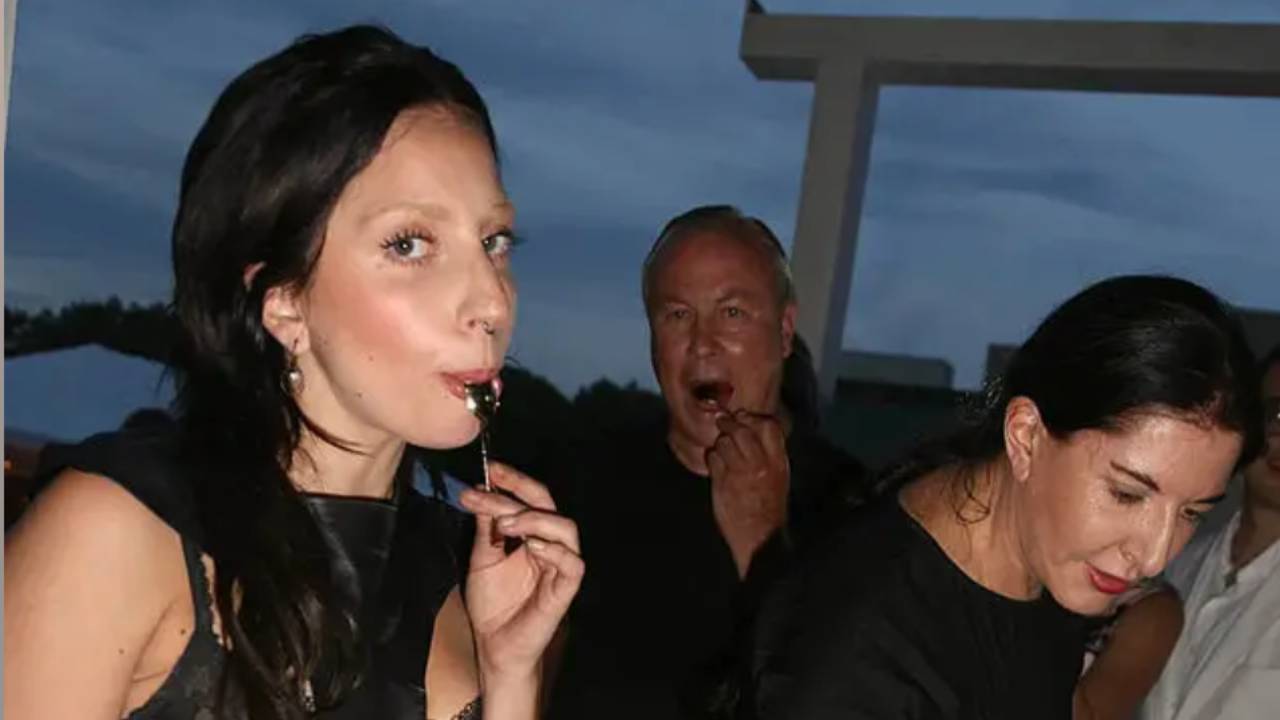
Lady Gaga holds a spoon to her lips, half‑posed, half‑caught‑off‑guard. Beside her stands Marina Abramović, the Serbian performance artist longaccused by conspiracy theoristsof running some sort of occult salon for the rich.
In front of them lies a human‑shaped figure, submerged in a coffin‑like container of dark red liquid.
OnFacebookandInstagram, the caption is not subtle: 'Do you know what Epstein was eating? Do you know what's lying in there? They are eating human flesh.'
Except they aren't. The image is not from Jeffrey Epstein's Caribbean compound. It is not from any 'secret files' just released by the US government. It is a decade‑old photograph from an art fundraiser in the Hamptons that has been online, in plain sight, for years.
That, somehow, makes the whole thing feel even grimmer.
The latest release of documents from the US Justice Department's investigation into Epstein, millions of pages, stretching across years of his life has rekindled the internet's favourite parlour game: hunting for famous names and weaving them into something monstrous.
You can see the pattern in a single Malay‑language Facebook post shared on 4 February 2026. It shows that image of Gaga with the spoon and Abramović leaning towards the prone 'body,' and marries it to breathless text about 'eating human flesh.'
Variants in French, Portuguese and Arabic insist the picture was taken on 'Epstein Island,' as though a grainy screengrab could stand in for actual evidence.
The timing is not accidental. Previous document dumps have confirmed that Epstein's network reached deep into business, academia, politics and entertainment.Donald Trump and Bill Clintonboth appear in the files.
Other high‑profile figures pop up in flight logs, emails, guest lists. The important caveat, that a name in a document does not equal complicity in Epstein's crimes, is frequently ignored.
Source: International Business Times UK