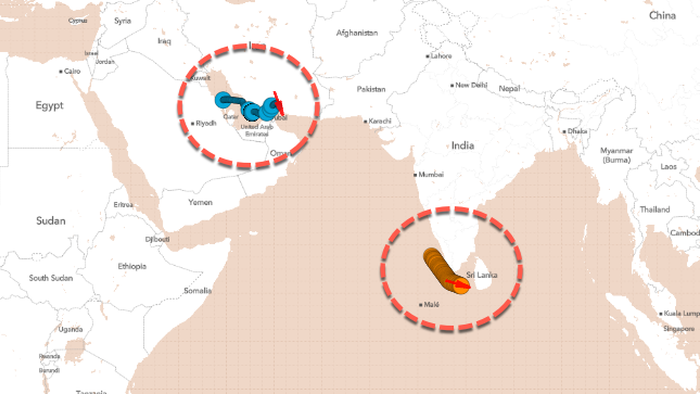
While all the attention has been focused on President Trump's national security team reviewing an Iranian peace deal that would end the two-month war and reopen the Hormuz chokepoint, while deferring nuclear negotiations to a later date, new vessel-tracking data show that the first loaded LNG tanker has exited the critical waterway since the conflict began, while the first loaded crude supertanker is also attempting to exit.
"The first LNG shipment since the war in Iran began two months ago appears to have slipped through Hormuz,"Bloomberg's Stephen Stapczynskiwrote in an overnight post on X.
Stapczynski alsonotedthat the Mubaraz LNG tanker was loaded at ADNOC's Das Island facility in Abu Dhabi in early March and turned off its transponder around March 31, only reappearing west of India on Monday.
The latest ship-tracking data from Bloomberg shows that Mubaraz is approaching the southern tip of Sri Lanka, with the vessel signaling China as its port of call.
A separate report fromBloomberg's Weilun Soonidentified yet another tanker, this time a Japan-linked supertanker loaded with crude, attempting to become the first crude-laden vessel to exit Hormuz since the war began.
The Idemitsu Maru, operated by the tanker unit of Japan's Idemitsu Kosan, left its holding position near Abu Dhabi late Monday and appears to be exiting the Hormuz chokepoint early Tuesday, according to Bloomberg ship-tracking data.
Both transits are significant. Taken together, they may indicate that a U.S.-Iran framework to end the war and reopen the critical waterway is nearing execution, or that countries such as China and Japan are beginning to see a pathway toward de-escalation.
The latest Polymarket odds of Hormuz traffic returning to normal by May 15 stand at around 15%.
Oil & gas tankers passing through Hormuz
Oil & gas tankers exiting Hormuz
Source: ZeroHedge News
