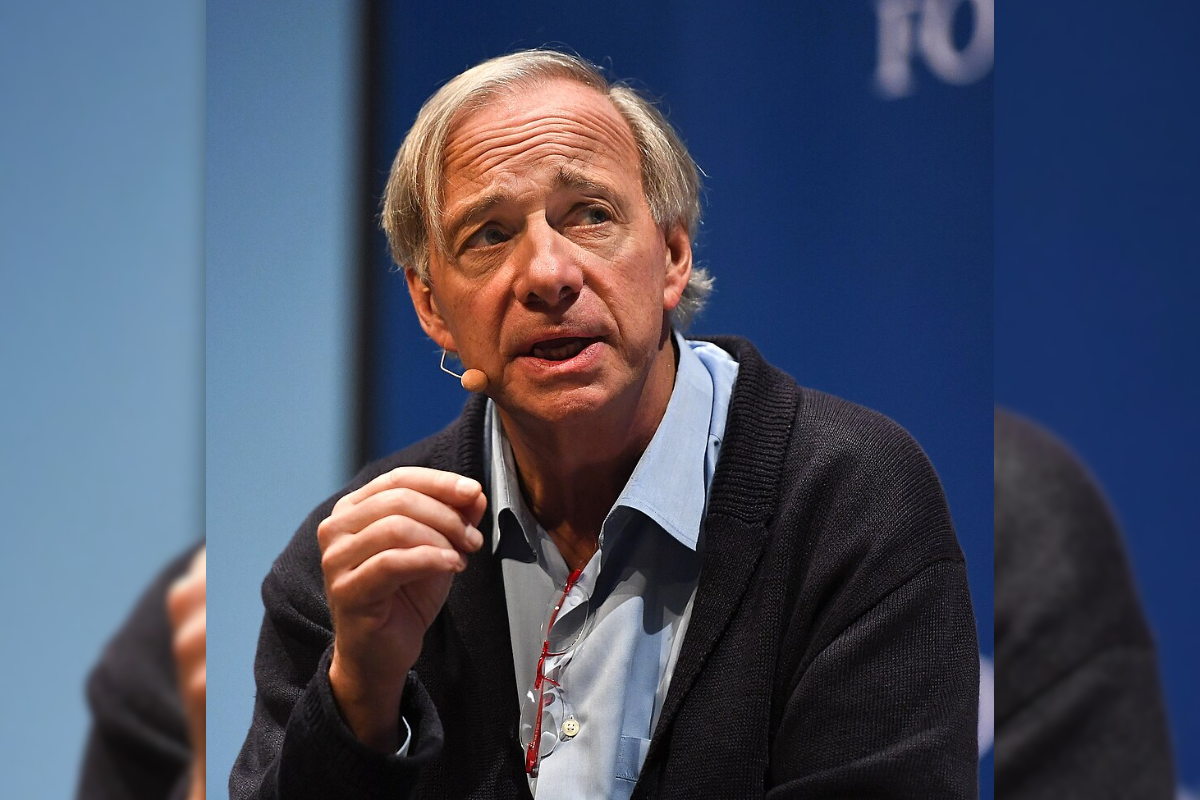
As the conflict involving Iran enters its ninth week, billionaire investorRay Dalio has issued a clear message to global investors. In times of uncertainty, he says, gold remains one of the most reliable stores of value.
Speaking in a recent interview, Dalio warned that the ongoing war is reshaping financial and geopolitical stability. He advised that investors should consider allocating between 5 and 15 per cent of their portfolios to gold.
The conflict has already begun to disrupt key global supply chains. At the centre of concern lies the Strait of Hormuz, one of the world's most critical oil transit routes.
Before the war, the narrow passage handled roughly 20 per cent of global seaborne oil. Since hostilities escalated, access has been severely restricted. This has raised fears of prolonged supply disruptions and sustained pressure on energy prices. Oil markets have reacted sharply. Prices have surged this year, reflecting both reduced supply and growing uncertainty over how long the disruption may last.
Dalio noted that control over the strait will be a decisive factor in how the conflict unfolds. He also pointed to broader concerns within the US, including rising fuel costs and political pressures linked to domestic elections.
Dalio's argument rests on a simple premise. Gold is not just a commodity. It is, in his words, a form of money. He described gold as one of the oldest and most trusted stores of value. Central banks continue to hold it as a key reserve asset, second only to the US dollar. In periods of instability, investors often turn to gold as a hedge against volatility.
He also stressed its role as a diversifier. In uncertain markets, assets that move independently of stocks and currencies can help reduce overall risk.Gold prices have shown mixed movement during the conflict. While the metal has lost ground at certain points, it remains higher for the year overall. This reflects a balance between short-term market shifts and long-term demand for safe assets.
Beyond the immediate impact of the war, Dalio pointed to deeper structural changes in the global economy. He said the world is moving towards a more multipolar system. This includes a growing role for currencies such as China's renminbi in international trade. It also reflects the increasing use of sanctions, which has altered how countries manage reserves and conduct transactions.
These shifts, he argued, are changing the nature of money itself. In such an environment, traditional stores of value such as gold may regain prominence. Dalio also warned that the US could face a period of stagflation. This is marked by rising inflation alongside slower economic growth and weaker employment conditions.
Despite rising tensions, equity markets have shown resilience. The S&P 500 has recorded gains since the conflict began. Dalio said this reflects strong corporate earnings, which continue to support investor confidence. However, he cautioned that markets may not fully reflect underlying risks. He added that rapid changes in global dynamics could quickly alter sentiment.
Source: International Business Times UK
